
Sweden · Swimrun
ÖTILLÖ Swimrun World Championship
Sandhamn to Utö, Stockholm archipelago
70 kmFirst Monday of September (6 September 2027)
DurationEpic
TerrainMountain
ColdCold
Cut-offsQualify
Disciplines
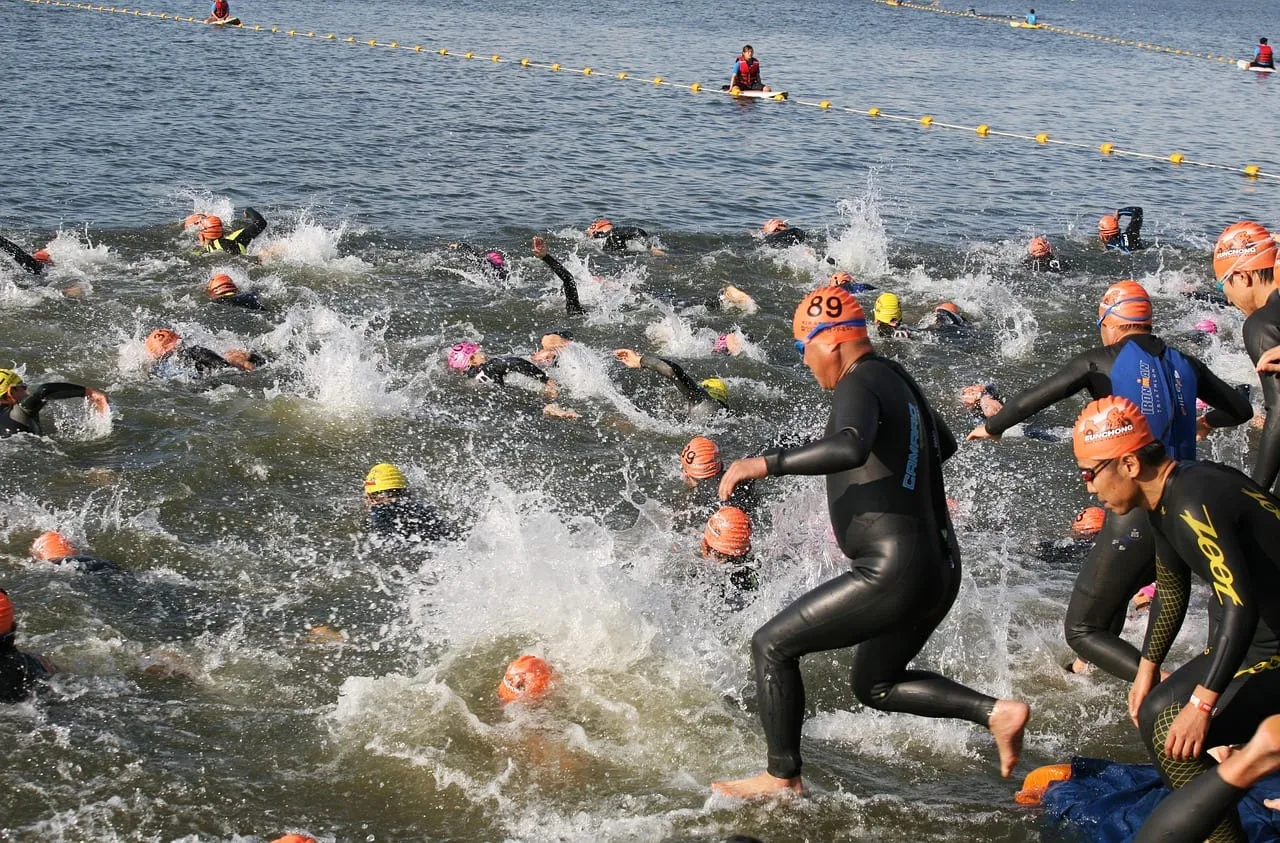
Swimrun is running and swimming in alternation along a marked course through nature, in the same kit from start to finish: a wetsuit, trail shoes that go in the water, usually a pull buoy and hand paddles. It was born in the Stockholm archipelago, from a bet in 2002 and the first ÖTILLÖ race in 2006, and Sweden still has the deepest calendar, with Norway and Finland close behind. Most of the field are ordinary runners and swimmers who found that the sea, the lakes and the rocks were already outside the door.
A swimrun course is a loop or point-to-point through terrain and open water with dozens of transitions: you run off the rocks into the water, swim to the next island or shore, climb out and keep running. Nothing is changed or left behind, so you run in a wetsuit and swim in shoes. The sport began as a race for teams of two and the ÖTILLÖ World Championship is still teams only, tethered or not but never more than five metres apart; most other races now have solo classes too. Distances span a wide range. ÖTILLÖ's own series uses Experience (about 7 to 9 km), Sprint (15 to 23 km) and World Series (32 to 47 km) formats; the championship itself is 70 km across 24 islands, 61 km of trail running and 9 km of swimming in about 50 sections, with swims from 30 to 1,600 metres. Local races are often gentler: Ångaloppet near Nyköping runs 11 and 22 km courses where the longest swim is about 200 metres, and Ärjä Arctic Swim-Run in Kajaani is 10 km with four swims.
Race day follows the same pattern everywhere. You collect bibs together with your teammate, showing photo-ID, and may be picked for a random check of mandatory kit; teams missing an item do not start. The course is marked with orange flags on land, signs at every swim entry, orange beach flags at every swim exit and buoys on long swims (at ÖTILLÖ you must pass between red and green buoys). Energy stations serve drink into the cup or soft flask you carry; cut-off times are firm and if you miss one your race is over and a boat or staff take you to the finish. Teams must pass every timing point and the finish line together, and a finisher's meal is part of the entry at most Nordic races.
The sport is the Stockholm archipelago's invention. In 2002 four friends bet that they could cross from Utö to Sandhamn, about 70 km, in pairs, swimming and running from island to island, with the last team paying for dinner; the first crossing took about 26 hours. In 2006 two adventure racers turned it into ÖTILLÖ (ö till ö, island to island), raced every year since on the first Monday of September over an unchanged course, now from Sandhamn to Utö Värdshus. The course record is 7 hours 59 seconds from 2022, the 2024 edition had 160 teams from 22 nations, and you qualify through ranking points from the ÖTILLÖ series and merit races, with a few wild cards each year. In 2026 ÖTILLÖ marks twenty years with an open 7 km anniversary race around Stockholm University on 5 September.
What makes the Nordic version its own is cold water, granite and the right to roam. The championship swims are in 14 to 16 degree Baltic water in September; Rockman in Lysefjorden tells you to expect 11 to 17 degrees and rapidly changing mountain weather, and finishes with the 4,444 steps at Flørli. Allemansrätten in Sweden and the equivalent rights in Norway and Finland mean you can train the whole thing for free along any shoreline outside gardens and nature-reserve restrictions, swimming between islands and running the rocks, as long as you respect residents and wildlife; race rules repeat the same duty. The calendar reflects where the water is: Utö opens the Swedish season in June, Gothenburg's west-coast islands in July, Ångaloppet (a 2026 fifteen-year jubilee) and ÖTILLÖ Åland in August, lake swimruns from Västerås and Eksjö to Kuopio and Oulujärvi in Finland, fjord and lake races around Stavanger in Norway, and even a winter swimrun with short swims at Hellasgården outside Stockholm. Denmark and Iceland have very few races, so their swimrunners mostly travel to Sweden.
Organisers list the minimum, and the ÖTILLÖ standard rules are the common reference in the Nordics: one wetsuit per person with legs and torso in one piece, suited to the water temperature (you may leave it off only if the water is above 19 degrees); a whistle per person, reachable while swimming; a foldable cup or soft flask per person for the energy stations; and one waterproof first-aid pressure bandage per team or solo racer. The organiser supplies a bib worn visibly all race, a swim cap worn on every swim, a timing chip and at some races a GPS tracker (lost ones are charged). Pull buoys are limited to 32 by 30 by 15 centimetres and fins are banned at ÖTILLÖ, while some local races, Ångaloppet among them, allow fins and tethers. Rockman asks for a flask of at least half a litre and provides a tow buoy for the fjord crossing. Everything you carry out must come back with you; a dropped paddle is littering, and littering can mean disqualification.
The practical kit is a wetsuit cut for swimrun (front zip, arms and legs shortened so you can run and stay cool), light trail shoes that drain and grip wet rock, hand paddles, a small pull buoy strapped to the thigh or back, a tether of elastic cord between teammates and, in cold water, a neoprene cap under the race cap. Insurance that covers swimrun is required at ÖTILLÖ events and sensible everywhere. What people waste money on is a second suit before they have finished a race: an old triathlon or surf wetsuit with the legs cut above the knee works for a first season, and a pull buoy can be any that fits the size limit.
The Nordic swimrun season runs from late May to the end of September, with June races in colder water and the biggest fields in July and August. For 2027 the markers are ÖTILLÖ Utö on 12 June, Rockman on 19 June, ÖTILLÖ Gothenburg on 24 July, Ångaloppet on 7 August, ÖTILLÖ Åland on 13 to 14 August and the World Championship on 6 September. Water is the variable that decides the day. Lakes in southern Sweden and Finland can reach the high teens by July; the Baltic archipelagos are typically 14 to 16 degrees in early September; a Norwegian fjord may be 11 degrees in June. Organisers plan around it: Ångaloppet publishes the lake and sea temperature in the days before the race and makes neoprene compulsory under 14 degrees, and the ÖTILLÖ rules say that when air plus water temperature falls below about 20 degrees the race directors decide whether to shorten or cut swims. Wind and current are part of the archipelago; the championship warns of rough swims and strong currents.
The off-season is not off. Swimrunners here run trails all winter, swim in pools or, within the winter-swimming tradition, keep short cold dips going from a sauna; cold water is a shock, so build up in short sessions and never alone. Spring is for the first wetsuit swims as soon as the ice is gone, running in wet shoes and practising transitions on the rocks with a partner. The frostbite swimrun at Hellasgården in Nacka, mostly running with brief swims, exists for those who cannot wait.
Pick a short course with short swims and a cup of support at every corner. Good first races are an Experience distance in the ÖTILLÖ series (Utö is 7 km with 1.1 km of swimming over 58 metres of climb; Gothenburg 8.8 km), Ångaloppet 11 km with ten swims of at most 190 metres, Ärjä Arctic Swim-Run's 10 km on Oulujärvi, or any local sprint on a lake. You can enter solo at many of these, but the sport is better learnt in a pair, and ÖTILLÖ runs a find-a-teammate page. For ÖTILLÖ World Series and sprint races you must be 18, an experienced swimmer and aware of the length; under-18s may enter with a guardian's certificate at Experience distance. Rockman's 40 and 20 km are teams only, 18 and over, with 77 team places on the long course.
Enter early: team fields are small (Ångaloppet caps each distance at 100 teams), and entries are generally final, with no refund and no transfer to another year, though you can usually swap one teammate. Fees run from a few hundred kronor for a local sprint to several hundred euros per team for the fjord and archipelago classics. The day itself: arrive together, show ID, lay out your mandatory kit for the check, be in the start box early for the briefing, enter the water feet first (diving in is banned at Ångaloppet), stay within five metres of your partner, drink from your own cup at the energy stations, and respect cut-offs and the people enforcing them. Afterwards there is a meal, sometimes a sauna, and a ferry home.
Find a lake or sheltered bay you can reach after work and swim short loops along the shore with a friend or a local open-water group, in a wetsuit, from the first warm days of May. Twenty minutes twice a week builds the comfort that race swims need.
Do your trail runs along the shoreline and go in and out of the water every ten minutes in your shoes. Wet feet, slippery granite and the first hundred metres of running after a swim are the whole sport in miniature.
Cut the legs of an old wetsuit above the knee, strap a small pull buoy to your thigh, put paddles on your hands and swim with all of it. Practise the tether with your partner so neither of you is surprised by the pull.
Ask at the local triathlon, swimming or trail-running club, or use ÖTILLÖ's find-a-teammate page. Most towns near water have a group that trains swimrun on a weekday evening in summer.
Enter an Experience or sprint distance in June or August before you feel ready; the field is small and sells out. One finished race teaches more about pacing, cold and transitions than a season of reading.
Sweden · Swimrun
Sandhamn to Utö, Stockholm archipelago
70 kmFirst Monday of September (6 September 2027)
You need to be a calm swimmer in cold open water with a wetsuit, buoy and paddles for help; speed matters less than not panicking. Short courses have swims of 100 to 200 metres, so start there. For the longer ÖTILLÖ distances the organiser requires that you are an experienced swimmer who understands the length of the course.
At most Nordic races yes, with separate solo classes at ÖTILLÖ, Ångaloppet and Rockman's 10 km. The World Championship and Rockman's long courses are teams of two only. Teams must stay within five metres (ten in the water and twenty on land at Rockman) and finish together.
Count on 11 to 17 degrees in a Norwegian fjord in June, 14 to 16 in the Stockholm archipelago in September and the high teens in southern lakes in July. A wetsuit is compulsory below 19 degrees at ÖTILLÖ and neoprene below 14 at Ångaloppet. Cold water is a shock: start short, build up over weeks and never swim alone.
Not for the first race. The rule is a wetsuit covering legs and torso in one piece, so an old triathlon or surf suit with the legs cut above the knee is fine. A suit cut for swimrun (front zip, short arms and legs, pockets) is more comfortable once you know you will keep going.
Your race ends there. Staff stop you, collect the bib, chip and tracker, and you are taken by boat or transport to the finish. Cut-offs exist to keep everyone in daylight and within reach of the safety boats, and organisers ask you to treat the people enforcing them with respect.