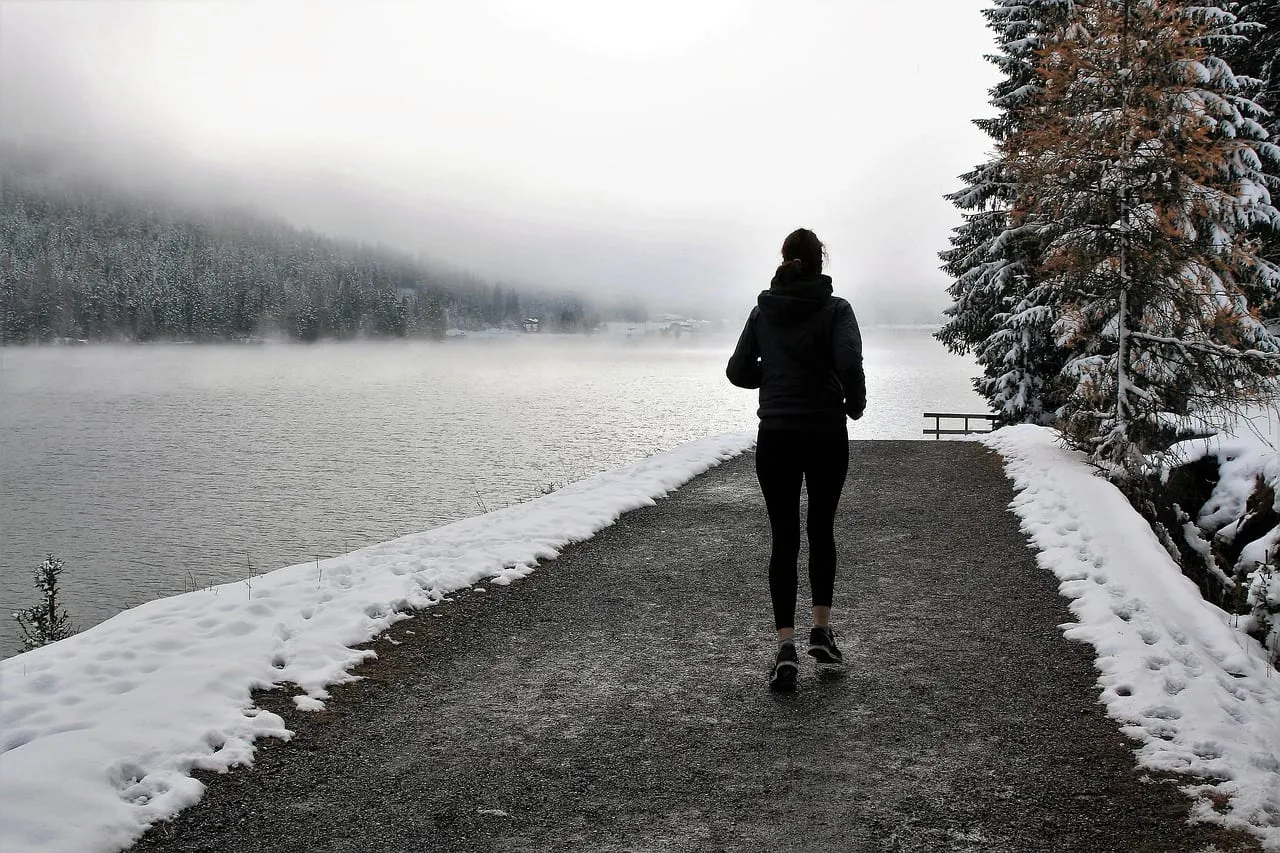
Train outside all year
November to March is not the off season. It is the season. Here is how to dress for it, see in it and keep going through it.
The weather is the point
The easiest mistake is to think of winter as something to get through. Keep running until the first snow, then move inside until the thaw, then start again from a lower place than you left. Most Nordic people do the opposite. Winter is when the forest is quiet, the ground is firm, the lakes freeze and the ski tracks open. The cold makes a hard session feel clean rather than sticky, and a run in falling snow under a head torch is one of the best things you can do on a Tuesday evening.
The argument of the Nordic way is that consistency over years is what counts. Four months a year indoors is a third of the year lost. So the aim of this chapter is practical: dress so the cold is a detail, see so the dark is a detail, and set things up so that going is the default.
Dressing: three layers and one rule
The system is the same whether you are running, skiing, walking with a rucksack or standing at a bus stop. Three layers, each doing one job.
Next to the skin: wool or synthetic, never cotton. A thin merino or synthetic base layer moves sweat away and stays warm when damp. Cotton soaks and chills you. This is the layer that matters most and the one people skimp on. A long-sleeved wool top and wool underwear will do most of the winter.
In the middle: warmth. A fleece, a thicker wool top or a light insulated jacket, depending on the temperature and how hard you are working. For a hard run you may skip it entirely. For a slow walk at minus ten you want it.
On the outside: wind and wet. A thin windproof shell for dry cold; a waterproof one for sleet and rain. Wind is what steals heat. A shell weighing a few hundred grams turns a miserable run into a normal one.
The one rule: dress for ten degrees warmer than it is, and be slightly cold for the first ten minutes. If you are comfortable at the door you have overdressed. In ten minutes you will be sweating, and wet is cold. For running, that means at zero degrees you wear roughly what you would wear for a brisk walk at ten degrees.
Legs need less than you think. Running tights are enough to around minus ten for most people, with wind-proof tights or a thin layer under them below that. Skiers and walkers moving more slowly want a bit more.
Hands, feet, head
Extremities are where winter actually hurts, and they are the easiest problem to solve.
Hands: thin gloves to about minus five, mittens below that. Hands warm up as the rest of you warms up, so start with them slightly cold; if they are still cold after fifteen minutes, swing your arms in big circles for twenty seconds. It works every time.
Feet: wool socks, one pair, in your usual shoes. Two pairs squeeze the foot and make it colder. Shoes with a mesh upper let snow in; a thin waterproof sock or a gaiter solves that on deep days. For ice and packed snow you will want grip, and the winter running chapter covers studs, spikes and how to run on it.
Head: a thin hat, and take it off when you heat up. A buff round the neck that you can pull over your mouth and nose on the coldest days warms the air you breathe and protects your face in wind. Below about minus fifteen most people cover the cheeks.
Seeing in the dark
The cold is manageable. The dark is what stops people. In Stockholm the sun rises around 8.40 and sets around 2.50 on the shortest day, just over six hours of light, against almost nineteen hours in June. Further north it is less, and above the Arctic Circle the sun stays below the horizon for weeks. If you work normal hours, weekday training from November to February is in the dark. Accept it and equip for it.
A head torch is the whole answer. A couple of hundred lumens with a wide beam is plenty for forest paths, and with snow on the ground you will be surprised how much you can see. Carry a spare battery or keep the torch inside your jacket until you start, because cold drains batteries fast. Reflectors on your ankles and wrists are what drivers see first, because they move.
Then find the lit tracks. Almost every Swedish and Norwegian town has an elljusspår or lysløype, a lit loop through the forest of two to ten kilometres, used for running in autumn and skiing in winter and free to anyone. They are busiest between six and eight in the evening and feel like a club without the membership. Ask at the local sports hall or search the town name with “elljusspår” or “lysløype”.
And use the weekend light. The long easy session belongs on Saturday or Sunday in the middle of the day, when you can see the forest. The hard interval session is short and can be done in the dark on a hill or a lit track.
Snow, ice and wind
Snow is good. Fresh snow is soft, slow and forgiving, a strength session disguised as a run. Packed snow is fast and grippy. Ice is the enemy, and it hides under a dusting of snow and on north-facing paths in March. Studded shoes or strap-on spikes cost little, last years and turn ice into a surface. The winter running chapter goes through the choices.
Wind is the thing to check before you go, more than the temperature. Minus five with a strong wind takes heat off you far faster than minus fifteen in still air. On windy days run into the wind first so you come home with it behind you, and choose the forest over the open shore.
Go shorter and slower below about minus fifteen, cover all skin below minus twenty, and do not do hard intervals in very cold air until you are used to it; the deep breathing stings. Numb fingers or face that do not come back after a few minutes of warming are the signal to go home.
Keeping going
Clothing and torches solve the cold and the dark. What stops most people in January is neither. It is the decision, made fresh every evening, about whether to go. The Nordic answer is to stop making the decision.
Fix the days. Tuesday is intervals, Thursday is strength, Saturday is the long one. They happen. The weather decides what you wear, not whether you go.
Lay the kit out. Base layer, shell, hat, gloves, torch, shoes by the door the night before. The whole argument with yourself happens in the gap between deciding to go and getting out, so make the gap short.
Count ten minutes. Agree with yourself that you can turn back after ten minutes. Almost nobody does, because by then you are warm and the forest is quiet, but the deal makes leaving the house easier.
Find a track with people on it. The lit loop at seven on a Tuesday has twenty other head torches on it. Nobody talks much, and that is the point: you are not the only one.
Earn the sauna. If you have one within reach, a sauna after the session is the best reason to do the session. The cold water and sauna chapter explains how to use it and how to start with the lake sensibly.
The shoulder seasons
October and April are wetter than midwinter and in some ways harder to dress for: three degrees and raining is colder than minus eight and dry. A waterproof shell, a hat with a brim and wool next to the skin get you through. Change out of wet clothes the minute you are home. The payoff comes in May, when everyone else is starting from nothing and you have five months of base behind you, and the twelve-week base programme is built to start in exactly that place.
The whole thing is simpler than it sounds. Wool, a shell, a torch, a fixed day, and a door you walk through. The weather really is just a detail.
Questions
How cold is too cold to train outside?
Most Nordic people train normally down to about minus fifteen and go shorter and slower below that. Wind matters more than the number: minus five with a strong wind feels like minus fifteen still. Cover skin, keep moving, and if your fingers or face go numb and do not come back when you warm them, go home.
What should I wear to run at zero degrees?
A thin wool base layer, a long-sleeved running top, a light windproof shell, tights, a thin hat and thin gloves. You should feel slightly cold for the first ten minutes. If you are warm at the door you will be sweating by the second kilometre and cold by the fifth. Add a buff you can pull over your mouth, and take the hat off when you heat up.
Do I need a head torch?
Yes, if you want to train on weekday evenings between November and February. A torch of a couple of hundred lumens with a wide beam is enough for forest paths and far better than a phone. Keep a spare battery in the winter, because cold drains them, and wear reflectors on moving parts, ankles and wrists, where drivers notice them.
How do I keep my hands warm?
Mittens, not gloves, below about minus five: fingers together stay warm. Start with your hands slightly cold, because hands warm up with the rest of you after ten minutes. If they do not, swing your arms hard for twenty seconds. A thin liner glove under a mitten lets you take the mitten off to tie a lace without losing all your heat.