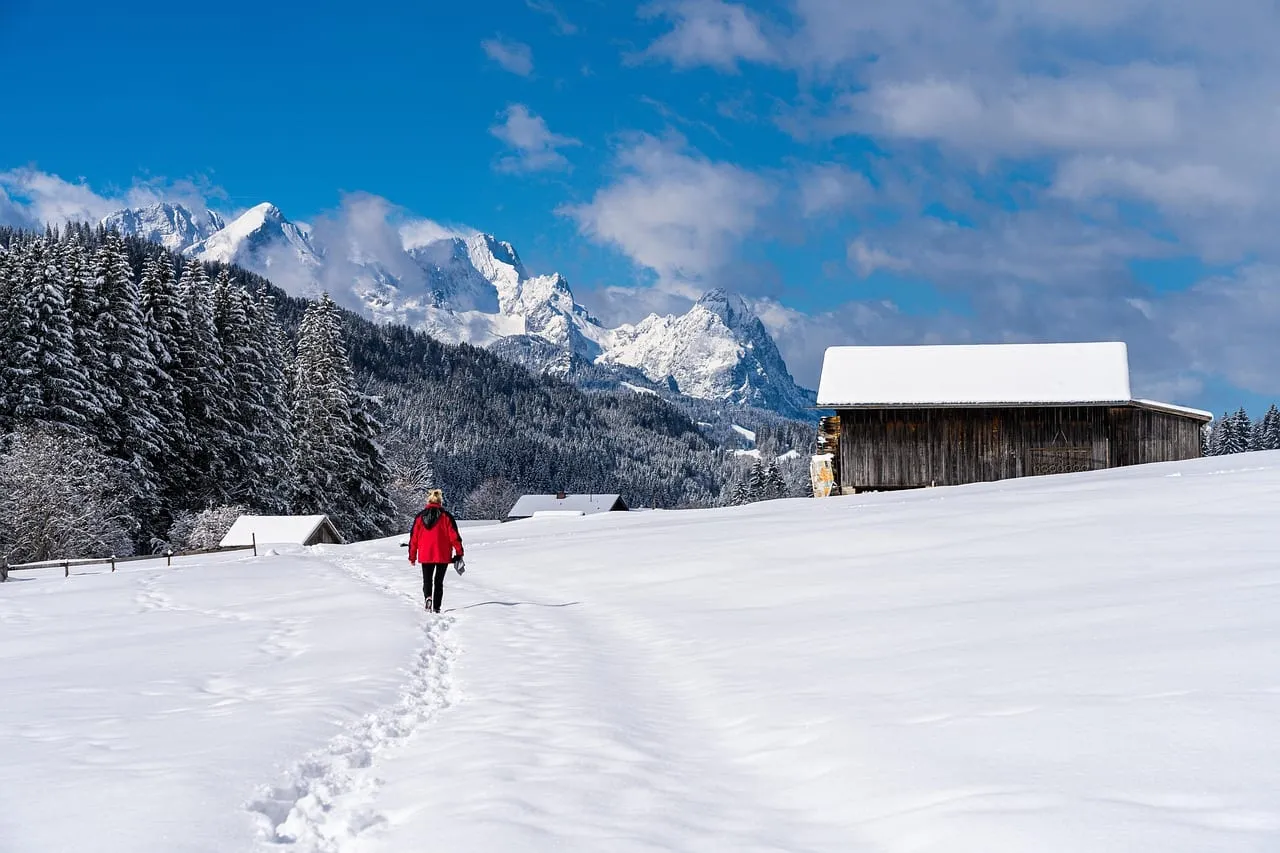
Winter running
Four months of darkness, snow and ice are not a reason to stop. With the right shoes, a light and a few habits, winter is the best running of the year.
The decision
From November to March most of the Nordic countries have snow and ice for at least some of the time, and all of them have darkness: the sun is down before half past three in Stockholm in December, and north of the Arctic Circle it does not come up at all. The runner who stops for those months starts April from nothing. The runner who keeps going, slower and wrapped up, starts April with a base that the spring starter will chase all summer. Train outside all year makes the general case; this chapter is about running in particular, because running is where the ice bites.
The good news is that a winter run is often the best run of the week. Cold air, a quiet forest, snow that lights the path under a headtorch, and the satisfaction of having done it when it would have been easier not to.
Shoes for ice and snow
Three options, each honest about what it is.
Studded running shoes. A running shoe with small carbide studs set in the sole, bought as such. They grip on ice, packed snow and frozen gravel, and they are what most Nordic runners wear from the first ice to the last. The cost is noise and wear on bare tarmac, so people keep a second pair of ordinary shoes for the thaw days. If you will run through a whole winter, this is the purchase.
Strap-on spikes or chains. A rubber harness with spikes or small chains that stretches over any shoe. Cheaper, and right for the runner whose routes are mostly clear with the odd icy stretch. They can shift on the sole and they get lost in deep snow, so check the straps before you set off.
Ordinary trail shoes. Deep lugs grip well on snow, including fresh snow, as long as there is no ice under it. On a cold, dry week at minus 10 the snow is grippy and this is all you need.
The surface to respect is not deep cold. It is wet ice at around zero, after a thaw or freezing rain, when a thin glaze covers the path and nothing grips. Studs help; feet under your hips help more; walking the worst stretch helps most.
Dressing
The Nordic rule is to dress for ten degrees warmer than the thermometer says, because running makes its own heat. You should be slightly cold for the first ten minutes. If you are comfortable at the door, you will be sweating and then freezing by the halfway point.
Layers, thin ones: a wool or synthetic base layer next to the skin, a long-sleeved mid layer, a thin jacket that stops the wind, and tights with a wind-proof panel at the front. A hat or a thick headband, thin gloves, and mittens in the pocket for the cold minutes. Wool socks. A buff over the mouth and nose below about minus 10, which also takes the sting out of the air. Nothing made of cotton, which holds sweat and chills you.
Wind changes everything. The Swedish Meteorological and Hydrological Institute, SMHI, publishes the standard wind-chill table: at minus 10 with a wind of 10 m/s the cooling effect on bare skin is that of minus 20 in still air, and at minus 20 the same wind makes it feel like minus 34. Plan the route so the wind is at your back on the way home, when you are tired and damp.
Watch the exposed skin: cheeks, nose, fingertips, ears. A white or numb patch is the warning. Cover it, warm it with a hand, and turn for home. That is not the day to push.
Darkness
A headtorch is not optional. A decent one bright enough to show the ice, with a beam you can tilt down to the path, and charged. Reflectors are the second half. Trygg Trafikk, Norway’s road-safety organisation, puts it plainly: without a reflector a driver on dipped headlights sees you from 25 to 30 metres; with one, from 140 metres. Reflective bands on the ankles and wrists work best because they move. A reflective vest over the jacket costs almost nothing.
Then use the thing the Nordics built for exactly this: the lit forest trail, the Swedish elljusspår, the Norwegian lysløype, the Finnish valaistu latu. A loop of two to five kilometres through the forest with lamp posts, maintained by the municipality, free, in nearly every town. In winter many are groomed for skiing, so run on the edge, never in the classic tracks, and give way to skiers. On a snowy evening it is the safest and most beautiful place you can run.
Tell someone your route and carry a phone, in an inside pocket where the cold does not kill the battery.
Technique on snow and ice
Snow and ice reward a small adjustment that every Nordic runner makes without thinking. Shorter steps, a quicker cadence, and the foot landing under the hips rather than out in front, so that there is nothing to slip against. Push off less hard. Keep the arms a little wider for balance. Look at the path a few metres ahead, where the light shows the sheen of ice, not at your feet.
Then accept the pace. At the same effort a winter run on snow is often one to two minutes per kilometre slower than a summer run on tarmac, and that is the terrain, not you. Run by effort and by time, not by pace. The watch is for the spring.
Deep, fresh snow is its own training. Twenty minutes of lifting your knees through 15 cm of powder is a strength session for the hips, done at a jog. Treat it as one and keep it short.
Sessions that work in winter
Easy runs stay easy; in winter they are naturally a little slower, which is fine. For the hard session, take the 4×4 intervals to a hill with snow on it: the snow makes the gradient harder, so you reach the right effort at a jog and never need to run fast on ice. Four minutes up, walk or jog down, four times. It is how Norwegian clubs run their intervals in January.
Keep one longer run on the groomed trail or the lit loop, growing slowly. Add snow and hills as strength rather than speed. And a treadmill on the day of freezing rain is not a betrayal of anything; it is a sensible choice. The culture is about getting the training done, not about suffering for its own sake.
Freezing rain and a thawing glaze on the paths are the days to walk, ski or go to the sauna. Dry cold at minus 15 is a running day. Wet ice at zero is a broken wrist.
When not to run
Freezing rain and glaze ice, as above. Strong wind below about minus 15 or minus 20, when the wind-chill table says the air is doing more harm than the run is doing good. A storm warning. The rest is judgment: if you have asthma or cold air makes your chest tighten, a buff over the mouth warms the air and most people find that enough, and anything beyond that is a question for a doctor, not for a training guide.
Winter is also when the races happen. The ski classics in March, the winter trail runs and the ice-swimming events on the events pages all reward the runner who kept going through December. The road-running and trail-running discipline pages list the rest.
Questions
Do I need studded shoes to run in winter?
If your routes have ice, yes, in one form or another. Studded running shoes with small carbide studs in the sole are the best answer for a whole winter on mixed paths; strap-on spikes or chains over ordinary shoes are cheaper and fine for occasional ice. On snow without ice, an ordinary trail shoe with deep lugs grips well enough. Wet ice at around zero is what catches people, not deep cold.
How cold is too cold to run?
Most Nordic runners keep going to about minus 15 and many to minus 20, with a buff over the mouth and nothing exposed but the eyes. Wind is the real limit: SMHI's wind-chill table puts minus 10 with a 10 m/s wind at the cooling effect of minus 20 in still air. Below that, or in freezing rain, walk instead or use the day for a sauna and strength.
What do I wear running at minus 10?
A thin wool or synthetic base layer, a long-sleeved mid layer, a thin wind-proof jacket, running tights with a wind-proof front, a hat, thin gloves with mittens over them, and wool socks. Dress so that you are slightly cold for the first ten minutes; if you are warm at the door, you are overdressed. No cotton anywhere.
How do I run safely in the dark?
A headtorch bright enough to show the ice, reflectors on your ankles and wrists where they move, and the lit forest trails that nearly every Nordic town maintains. Norway's road-safety body Trygg Trafikk says a driver on dipped headlights sees you at 25 to 30 metres in dark clothing and at 140 metres with a reflector. Tell someone your route and carry your phone.