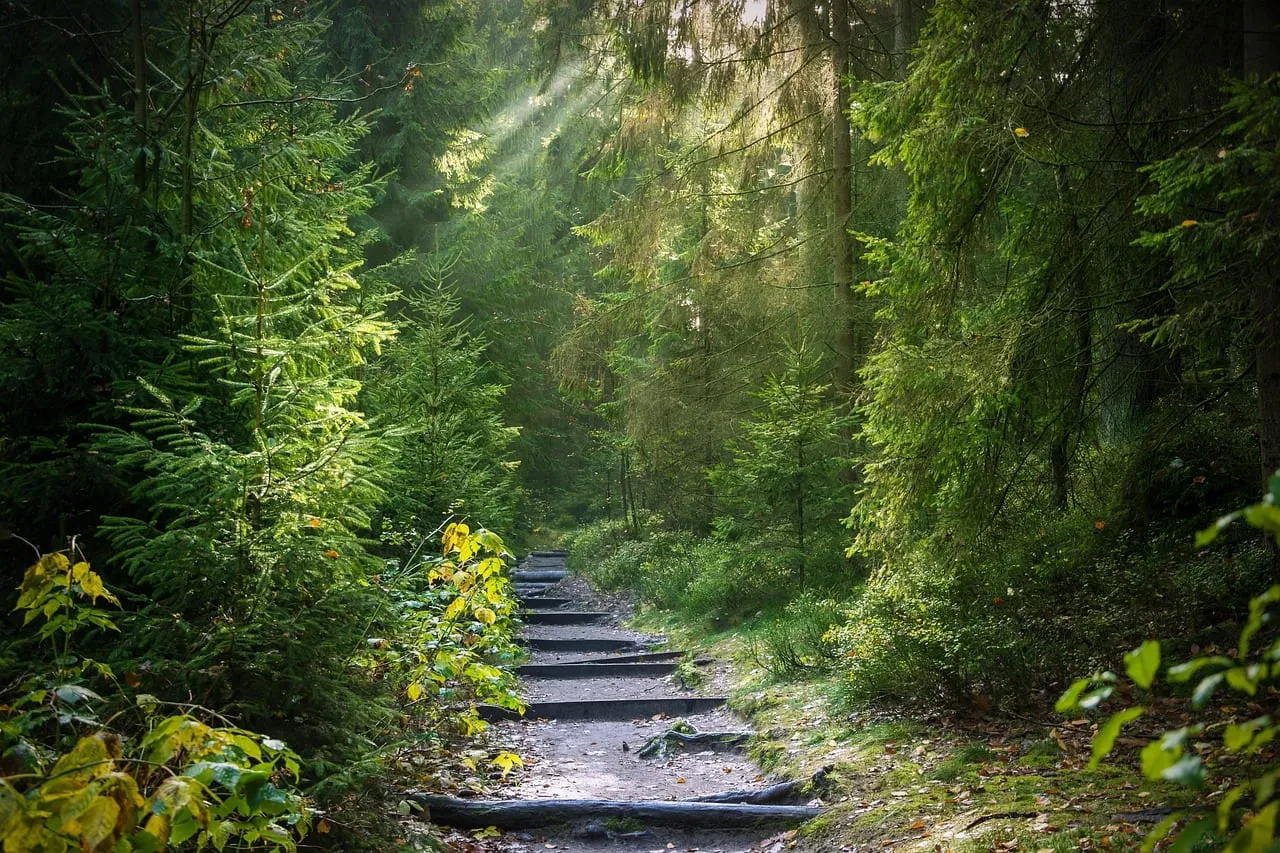
The Nordic way
Outside, simple, consistent. Nordic training is not a secret method. It is a set of habits that ordinary people keep for decades, and it works because of that.
Not a method, a habit
Ask a Norwegian in her fifties how she trains and she will look puzzled. She skis in winter because the tracks are lit and five minutes from the door. She runs in the forest in summer because that is where the paths are. She swims in the lake because it is there and the sauna is warm afterwards. She would not call it a programme. She has done it for thirty years.
That is the Nordic way, and the first thing to understand is that it is ordinary. It is not a secret regimen handed down by ski coaches, and it is not a lifestyle to buy into. It is what a lot of people in Sweden, Norway, Finland, Denmark and Iceland do with their evenings and weekends, and the reason it produces people who can finish a 90 km ski race or a mountain run at sixty is that they never stopped.
Consistency over years beats intensity over weeks. Everything else in this guide follows from that.
Outside, whatever the sky does
The saying every Nordic child hears is that there is no bad weather, only bad clothing. It sounds like a joke until you watch a nursery class go out in sleet, in overalls, and come back pink and pleased. The adults do the same. The Tuesday run happens in rain. The Saturday ski happens at minus fifteen. The October swim happens.
It is not toughness for show. It is the plain discovery that a session outside leaves you better than a comfortable one indoors, and that if you wait for good conditions in November you will wait until April. Once the decision to go is made in advance, the weather becomes a detail to dress for, and dressing for it is a skill you learn in a winter. The next chapter, train outside all year, covers it.
There is also the light. For a few months the sun rises after you start work and sets before you finish. On the shortest day Stockholm gets just over six hours of daylight, and north of the Arctic Circle the sun does not rise at all for weeks. The answer is a head torch and lit tracks, not a treadmill, and the dark forest with snow on the ground is one of the better places to run.
Simple sessions, done for years
The training itself has four parts, and none of them is clever.
Long and easy. Most hours are spent at a pace where you could talk. A two-hour walk with a rucksack, a slow run on forest paths, a long ski on a Sunday. This is the base that everything else sits on, and it is where most people go wrong by going too fast. If you cannot hold a conversation, it is not easy.
A few hard intervals. Once or twice a week, properly hard, then done. The session the Norwegians made famous is four efforts of four minutes with three minutes between them. Researchers at the Norwegian University of Science and Technology in Trondheim have tested it on everyone from students to people in their seventies, and the 4×4 chapter explains what they found. The point here is the shape of the week: a lot of easy, a little hard, and little in between.
Strength with real things. A pull-up bar in a door frame, a log, a sandbag, a sled on snow, a hill. Gyms are fine and many Nordic people use them, but the culture leans to lifting and carrying things that have a shape and a weight you have to deal with. It builds the kind of strength that a mountain or an obstacle course asks for. See strength with little equipment and carrying and rucking.
Recover like you mean it. Sauna after the session, a lake or the sea to cool down, an early night. The sauna is a Finnish institution and a Swedish and Norwegian habit, and the cold dip is part of the ritual. The cold water and sauna chapter says how to start sensibly and what the research does and does not show.
Three sessions a week of this, kept up for a year, will get most people to the start of a half-day race. The four-week programme starts from nothing with no equipment at all.
Little equipment, most of it free
Count what the woman in the first paragraph owns for training. Skis, which last a decade. Running shoes. A head torch. A rucksack. A wool base layer, a shell, a hat and gloves. Perhaps a wetsuit if she does swimrun. Nothing that needs charging except the torch, and nothing with a subscription.
This matters more than it sounds. Training that depends on a membership, a class timetable or an app is training that stops when the membership lapses. Training that depends on shoes and a door is harder to stop. When the equipment is simple, the only variable left is whether you go, and that is the one that counts.
The right to roam
Behind all of this is a law. In Sweden the right of public access, allemansrätten, lets you walk, run, ski and camp on most land regardless of who owns it, as long as you leave it as you found it; the Swedish Environmental Protection Agency publishes the rules in plain language. Norway has had the same right in statute since the Outdoor Recreation Act of 1957, and Finland has its own version. In practice it means the forest behind the housing estate is a training ground, the lake is a pool, and nobody is going to ask what you are doing there.
That is why the long easy sessions are easy to keep up. Nobody drives to a facility. They step out of the door and turn left.
Why it works for ordinary people
The World Health Organization asks adults for at least 150 minutes of moderate activity a week and says that any amount is better than none. Most people who miss that are not short of discipline; they are short of a reason to go out on a wet Wednesday. The Nordic way solves that by removing the decision. The run happens on Tuesday because it always happens on Tuesday, and the weather is not consulted.
It also works because it is positive. Nobody here is punishing themselves. A hard interval session on a hill in the snow is enjoyed for what it is, and the sauna afterwards is the reward. People who train this way talk about it the way others talk about a good meal.
And it works because it does not ask for talent. The ski races and mountain runs on this site are full of people in their forties, fifties and sixties who were never fast and never meant to be. They finish because they have been going outside three times a week for twenty years. You can start that this week.
Where to go from here
The next seven chapters take the habits one at a time: dressing for winter, strength, intervals, carrying, winter running, cold water, and choosing a first race. Then three programmes to follow. If you already know which sport you want, the discipline pages say how to start in each, and every race on the site says what it demands.
Start with the next chapter and a walk outside today, in whatever the weather is doing.
Questions
What is friluftsliv?
A Norwegian word, used across the Nordic countries, for life in the open air: walking, skiing, swimming, sitting by a fire, with no result required. It is the background that Nordic training sits in. Most people who race here started by going outside for its own sake and found the fitness came along.
Do I have to live in the Nordics to train this way?
No. The habits travel: a park, a hill, a river bank and a door frame are enough. What you borrow is the attitude, that the weather is not a reason to stay in and that a hard session outside is a good one. The right to roam is particular to the Nordics, but every country has somewhere you can walk for an hour.
Is Nordic training only for skiing?
Skiing is where much of it comes from, but the same training serves trail running, swimrun, obstacle racing and long bike rides. Long easy hours, a few hard intervals, carrying and lifting real things. The sport changes what you do on the weekend outing; the week looks much the same.
How many hours a week does it take?
Three sessions a week is enough to start and to keep. One long easy outing, one hard interval session, one strength session, each under an hour except the long one. People who race half-day events usually build to five or six hours a week over a year or more, not in a month.