Carrying and rucking
Walking with a weight on your back is the oldest training there is. It builds the legs, back and patience that mountains and obstacle courses ask for, and it needs nothing you don't already own.
Why Nordic training includes carrying
Nearly every race on this site makes you carry something. A fell race hands you a mandatory kit list that weighs 3 to 5 kg on your back for the whole day. An obstacle course puts a sandbag on your shoulder and a bucket of gravel in your arms. A swimrun has you running with a wetsuit, paddles and a pull buoy for hours. Even a 90 km ski race, which asks nothing of your back, asks everything of the trunk that holds you upright over a pole plant for seven hours.
Carrying trains exactly that. It loads the hips, the trunk, the feet and the small muscles that running alone never reaches, and it does so at walking speed, where the impact is low. That makes it the one hard session you can do on a day your legs are too tired to run. It is also the training Nordic people did before anyone called it training: firewood, water, a child on the shoulders, a rucksack to the mountain cabin. Read the Nordic way if you want the culture; this chapter is the method.
Rucking: walking with a pack
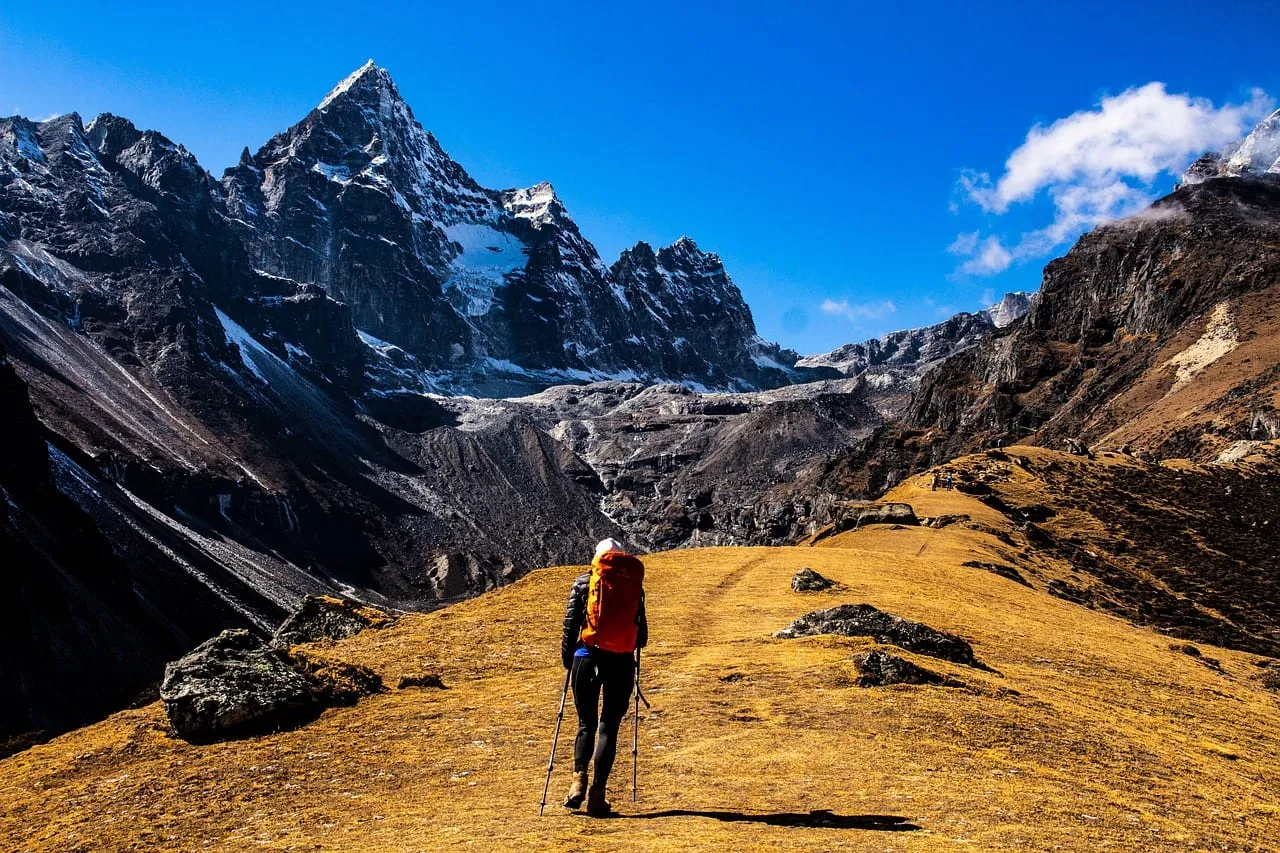
Rucking is nothing more than a walk with a loaded rucksack. Use the pack you already own and the weight you already own: bags of rice, filled water bottles, books, a sandbag. The starting load is about a tenth of your body weight, so 6 to 8 kg for most adults. Walk 30 to 45 minutes on paths and gravel roads at a brisk pace, the pace at which you can still talk in sentences.
From there, add a kilo or two every couple of weeks until you reach 15 to 20 per cent of your body weight. Then stop adding weight and add time and hills instead. A 20 kg pack up a long forest slope is a serious session; a 35 kg pack is a way to hurt your back for a race that will never ask it of you.
Three things matter about the pack itself, and they come from the people who have studied this most. A 2004 review of soldier load carriage by the US Army Center for Health Promotion and Preventive Medicine found that the energy cost of walking rises progressively with the weight carried, the speed and the gradient, that a load placed close to the body’s own centre of mass costs the least energy and keeps you walking upright, and that hip belts should be used whenever possible because they take pressure off the shoulders. The same review found that each kilogram on the feet costs 7 to 10 per cent more energy than the same kilogram on the back. So: weight high and close to the spine, hip belt tight, light shoes. Pad the load with a towel so nothing digs into your back, and stop a sharp edge before it starts a bruise.
Where to walk: anywhere with a slope. A flat ruck is a long walk; a hill with 100 metres of climb done three times is strength training. In most Nordic towns the lit forest trail is the obvious place in winter, and the right to roam in Sweden, Norway and Finland opens every forest road in summer. In the twelve-week base programme the ruck is one of the two strength days, or it becomes the weekend outing that grows week by week.
Carrying things that are not packs
A pack rides well. Races do not always give you that courtesy, so once a week carry something awkward.
Farmer’s carry. Two buckets, two jerry cans or two full shopping bags, one in each hand. Walk 30 to 40 metres, set them down, turn, walk back. Six to ten lengths. Stand tall, shoulders back, and do not let the weight pull you into a lean. This is the single best thing for grip, and grip is what gives out first on monkey bars and rope climbs.
Shoulder carry. A sandbag or a log on one shoulder, 50 to 100 metres, then the other shoulder. Keep your eyes forward, not down. The uneven load is the point: the trunk has to stop you rotating with every step.
Front carry. The sandbag hugged against the chest, arms wrapped round it. Short distances, 20 to 30 metres, because it is the hardest on the trunk and the breathing. Obstacle races love this one.
Overhead or on the head. A light log or a filled bag held over the head for 20 metres builds shoulders and teaches you to walk under a load without arching your back. Keep it light.
A sandbag is the cheapest piece of training equipment there is. A heavy-duty bag of the kind used for rubble, with sand, gravel or wood pellets sealed in two inner bags so it does not leak, filled to 15 to 25 kg. Make one, and you have the strength chapter’s “something heavy” sorted. Strength with little equipment covers what else to do with it.
A carry session is simple: 20 to 25 minutes, rotating through two or three of the carries above, with a walk between sets. Done after a short easy run it makes a complete hour.
Hauling a sled
Winter gives you a form of carrying you cannot do in summer. Put a sandbag, a log or a couple of bags of firewood in a cheap plastic children’s sled, tie the rope round your waist or through the hip belt of your pack, and walk up a snowy slope. Snow takes most of the friction away, so the sled feels light on the flat and brutal uphill. That is the session: find a slope, haul up, walk down, repeat.
Nordic people have done this with a pulk, the long sled used for winter mountain crossings, for as long as there have been winters, and the big winter challenges on the events pages still demand it. For training, a children’s sled is enough. Two formats work. Ten hard pulls of one minute each up the slope, walking back down to recover. Or a long steady haul of 30 to 40 minutes along a snow-covered forest road, which is the closest thing to a mountain crossing most of us will get on a Tuesday.
Without snow, the same session is a tyre drag on gravel: an old car tyre, a rope, a loop of webbing or an old belt round the waist. It is noisier and uglier and works just as well.
Feet, back and common sense
The injuries of carrying are well known and nearly all avoidable. The same 2004 review lists foot blisters as the most common, then stress fractures, back strains and knee pain from prolonged load carriage. Translate that into habits.
Blisters come from new shoes, wet socks and friction you ignored. Break shoes in on short walks, wear wool or synthetic socks, and tape a hot spot the moment you feel it, not at the end.
The back is protected by the weight you choose and the pace you build it. Stay light for the first month. If you feel pain, not fatigue, drop the weight by half and keep the walk; do not drop the walk and keep the weight.
Knees suffer downhill. Shorten your stride, soften the knees and let the hips take the braking. Walk heavy packs; do not run with them at first. Once a 15 kg pack over an hour of hills feels ordinary, a jog on the flat with 5 kg is a fine race rehearsal for a trail race with a kit list.
More weight is not more training. Past about a fifth of your body weight the fitness gain flattens and the injury risk climbs. Add hills, time and awkward objects instead.
Where it goes in the week
One loaded walk a week, 45 to 90 minutes, and one short session of carries. In the four-week starter programme that is a pack on your daily walk; in base it becomes the growing weekend outing; in the race programme it narrows to whatever your race will ask of you. Two carries a week is enough. Three is a lot of carrying and not much running.
The payoff is specific. An obstacle race is a carrying race with some running in between. A trail race with a mandatory kit list is a long walk uphill with a pack, with some running in between. Train the thing itself, and the race day holds no surprise.
Questions
How heavy should a rucking backpack be for a beginner?
Start at about a tenth of your body weight, which is 6 to 8 kg for most adults, and walk for 30 to 45 minutes on paths. Add a kilo or two every couple of weeks until you are at 15 to 20 per cent of your body weight, then make the walks longer and hillier instead of heavier. Very few races will ever ask more of you than that.
Is rucking better than running?
It is different, not better. Running builds the engine faster; walking with weight builds the trunk, hips and feet and lets you train on days your legs are too tired to run. A race with long climbs, a mandatory kit list or obstacles rewards having done both. Keep running as the base and add one carry a week.
Can I ruck every day?
You can walk every day, and a light pack on the commute is harmless. Proper loaded walks with 15 per cent of your body weight or more are a strength session and need the same recovery: once or twice a week is plenty, and the second one is better as short carries than another long walk.
What do I put in the pack?
Anything dense that will not shift: bags of rice or flour, filled water bottles, books, a sandbag. Put the weight high and close to your back, pad it with a towel so nothing digs in, and tighten the hip belt so the hips carry it. Water has the advantage that you can pour it out if a walk goes wrong.