Sweden · OCR
Tough Viking Stockholm (Stockholms Stadion)
Stockholms Stadion and Norra Djurgården, Stockholm
8 kmA Saturday in May (15 May 2027)
DurationHalf-day
TerrainMountain
ColdCold
Cut-offsOpen
Disciplines
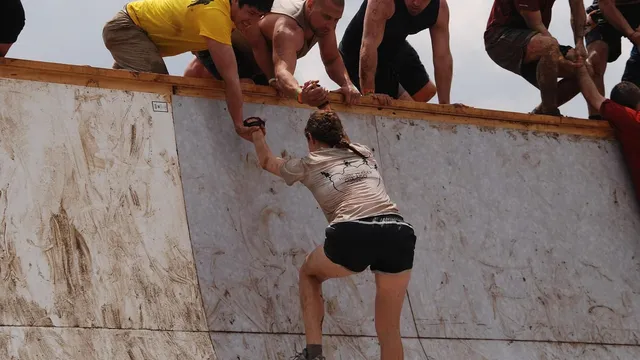
Obstacle course racing (OCR) is running through terrain with walls, rigs, carries, crawls, mud and water in the way. In the Nordics it grew from a commercial fun-run wave in the early 2010s into a federation sport: Sweden's athletics federation has run it since 2019, Gothenburg hosted the 2025 world championships, and the big series in Sweden, Norway, Denmark and Finland still put thousands of first-timers on the start line every season. Most people run it in open classes with friends, walk when they need to and finish with a medal.
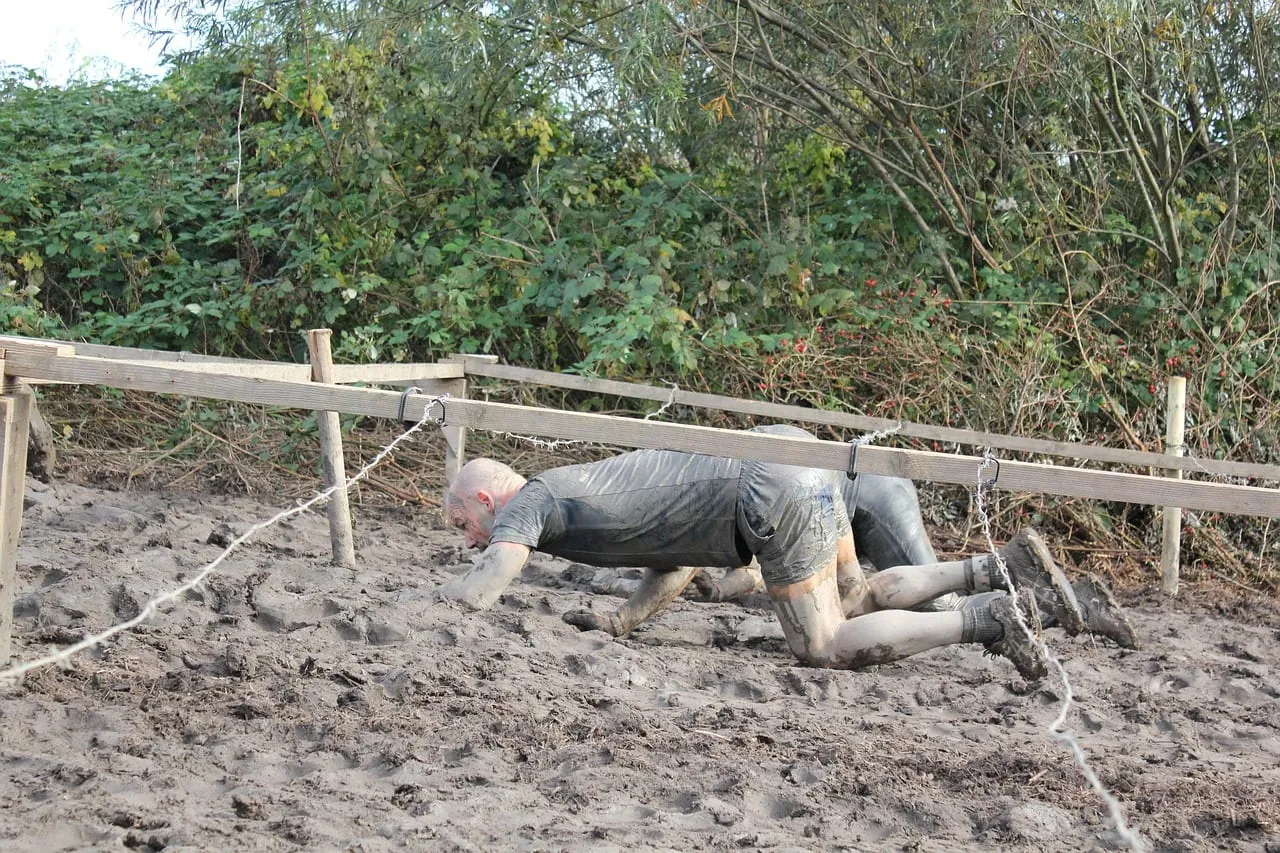
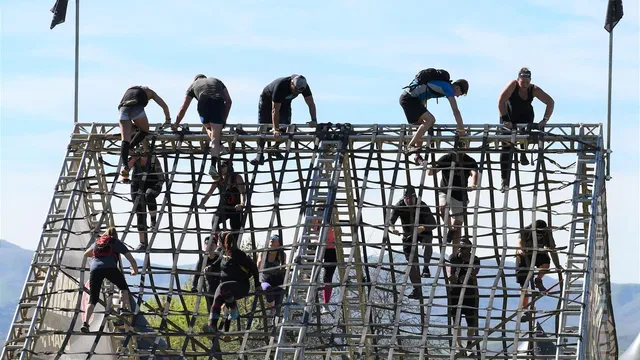
An OCR course is a trail or park loop, usually 4 to 15 km, with 20 to 40 obstacles spread along it: walls and ramps to climb, cargo nets, monkey bars and hanging rigs that test your grip, sandbag and bucket carries, crawls under wire, mud pits and short water crossings. The Swedish federation's rulebook defines the standard distances as a 100 m sprint on a standardised track, a national sprint of 300 to 500 m, cross-country courses of about 3 to 20 km (3 to 5 km and 12 to 15 km are used at championships) and long distance from 20 km. The big commercial races sit in the middle: Toughest's main race is about 8 km with 30 to 40 obstacles, Tough Viking runs 8 km in Gothenburg and at Stockholm Stadium and 15 km on Djurgården, and most organisers add a shorter 4 to 5 km course and a 2 km family loop.
Race day is run in start groups every few minutes from the morning, with competition heats first and open heats after. In open classes nothing is compulsory: if an obstacle beats you, you retry, take the short penalty run or simply move on, and you may help each other over walls. In competition classes the federation rules apply: you start with three wristbands, a marshal removes one for each failed obstacle, every missing band means a penalty loop after the last obstacle, and no bands means no official result. Timing is by chip, results are published the same day and the medal is the point for most of the field.
The sport arrived from the United States around 2013. Tough Viking describes itself as the first obstacle race launched in Sweden, built on the Swedish armed forces' coastal ranger and paratrooper training, and raced in the royal parks and the Olympic stadium in Stockholm. Toughest started in 2013 and counts more than 220,000 runners since. Norway's first race was a 5 km Viking-themed course at Tryvann in August 2013 with 600 starters; today Navy Race runs military-style courses in Horten, Oslo and Trondheim and Toughest finishes its Oslo race up the Holmenkollen ski jump. Denmark's Nordic Race ran from 2011 and closed after the 2026 season with 100 events and more than 100,000 participants behind it; its owner's Conquer the Castle race and a full calendar of local Danish races continue. In Finland the fun-run end of the scale is ExtremeRun, where a 2019 university survey found 77 per cent of the field were women, while the competitive end is Valhalla in Vaasa, which hosts Finnish sprint championships.
What makes the region different is that the sport was taken into the national federations early. Svenska Friidrottsförbundet took over OCR from a folded standalone federation in 2019, ran the first national championship in Eskilstuna in 2021 and has held official Swedish championships since; Tough Viking's Swedish races have been sanctioned since 2023 and host the 2027 Swedish championship, and club membership is required to race in the championship classes. Denmark has the Danish OCR Union, a full member of World Obstacle, which runs a Danish championship and picks national teams. Norway has a national championship in obstacle racing on the calendar for June 2027, organised by an athletics club in Hønefoss, and Finland's championship races follow the same international rulebook. The 2025 world championships in Gothenburg's Slottsskogen, co-organised by the Swedish federation, the city and Tough Viking, drew an expected 5,000 entries including open classes. World Obstacle voted in March 2026 to integrate into the modern pentathlon federation, which is why the sport may appear at the 2028 Olympics. Terrain is the other Nordic ingredient: courses use ski slopes, forest trails, beaches and city parks, and water obstacles in April or May mean 7 to 9 degree water.
You need trail shoes with grip that you do not mind soaking, and tight clothing in synthetic fabric. Tough Viking's advice is long tights and a long-sleeved tight top to protect knees and elbows, no cotton because you will be wet for most of the race, and dry warm clothes to change into afterwards. Thin gloves help on wet rigs and ropes; a few people wear a light helmet. Federation rules add what you cannot wear in competition classes: no metal spikes or cleats, no open-toed shoes, no bare chest, club kit on, and no headphones or phone. Organisers hand out a race number on a headband or write it on you, and a timing chip for the ankle.
The things people waste money on are obstacle-specific gadgets and kit for water. Water obstacles are short, optional in open classes and rarely more than 20 m; Toughest says swimming ability is not required and gives children life vests. Most organisers will not let you carry anything that can snag, so keep pockets empty. Both big Swedish organisers run indoor OCR gyms and online training portals, and clubs in the athletics federation have obstacle sections, but a pull-up bar, a hill and a pair of trail shoes cover the first season.
The Nordic OCR season runs from late April to September. Tough Viking opens in Slottsskogen in Gothenburg in late April, races Stockholm Stadium in May and Djurgården in August; Toughest goes Malmö in May, Stockholm in June, Sälen in August and Oslo and Gothenburg in September; the Danish championship is in late August, the Norwegian in June and Finland's Spartan weekend in Lahti in August. Early-season water is 7 to 9 degrees, so courses in April and May keep water crossings short; by July and August the lakes are 18 to 20 degrees. Rain turns the clay and mud sections into the slow part of the day and makes the ramps slippery, which is why organisers advise grippy shoes and gloves.
From October the scene moves indoors to obstacle gyms and ninja halls, where clubs run technique sessions on rigs through the winter, and a few outdoor events hang on: a zombie-themed urban run in Örebro in October, backyard-format obstacle loops in Norway in spring. Through the dark months the simplest preparation is running on uneven ground and hills, hanging and pulling work for grip, and carrying heavy awkward things, which is exactly the Nordic way of training anyway.
Pick a 4 to 5 km open course with no time pressure for your first one: Toughest Xplore (about 4 km, the hardest obstacles removed, no timing, unlimited retries), Tough Viking's 5 km on Djurgården, Navy Race Oslo's 5 km, or the short or fun-run distance at a Danish or Norwegian local race. Family races from 2 km take children from five years old with an adult; main races are normally 18 and over, with Toughest allowing 13 and over in adult company. Nine out of ten Toughest runners enter as a group, so sign up with the same team name to start together.
Enter early: fees climb in steps through the year, from about 700 SEK for a Tough Viking race entered a year ahead to about 1,000 SEK at the gate, and from about 670 to 870 SEK for Toughest Xplore. Start lists and your start time arrive by e-mail four or five days before. On the day, collect your number at least an hour before your start, use the bag drop, expect no changing rooms at the event area and take public transport. Jog the first kilometre, try every obstacle, take the penalty loop without shame, and ask the marshals in vests at each obstacle for the best line. Have warm, dry clothes waiting at the finish.
Grip is what fails first on monkey bars and rigs. Hang from a bar or a tree branch for time, then add pull-ups and towel hangs. Tough Viking's own preparation page says rings and rope climbing are the training that matters.
Leave the pavement and run forest trails, sand and hills once a week; most courses are built on ski slopes and park terrain. Build volume slowly: the common beginner injuries organisers see come from increasing load too fast, not from the obstacles.
In Sweden many athletics clubs now have OCR sections, and both big organisers run obstacle gyms and open classes; Denmark's OCR union lists training facilities across the country, and Finland has indoor courses in the Helsinki area and a permanent outdoor course in Vaasa. One session on a real rig teaches more than a month of guessing.
Sign up for a 4 to 5 km open heat a few months out and put it in the calendar. Having a date and a team name makes the training happen, and the open-class rules mean there is nothing you can fail.
Sweden · OCR
Stockholms Stadion and Norra Djurgården, Stockholm
8 kmA Saturday in May (15 May 2027)
Sweden · OCR
Lida Friluftsgård, Tullinge, south of Stockholm
8 kmA Saturday in June (5 June 2027)
No. Open classes let you walk, rest, skip obstacles or take a short penalty run, and the big organisers report that almost everyone finishes. Water obstacles are optional, short and placed in shallow water where possible, with life vests for children.
In open classes you can retry as often as you like, take the penalty run or move on. In competition classes you start with three wristbands, lose one per failed obstacle, run a penalty loop per missing band, and get no official time with none left.
Yes. In Sweden the competition classes at sanctioned races follow the athletics federation's rules and require membership of a club in the federation; results feed a national ranking used to pick teams for the European and world championships. Denmark, Norway and Finland have national championships under the same international rulebook.
Tight synthetic layers that cover knees and elbows, trail shoes with grip, optional thin gloves, and nothing in your pockets. Competition classes ban metal spikes, open-toed shoes and headphones. Bring dry clothes for after; you will be wet and muddy.
Roughly 400 to 1,000 SEK depending on distance and how early you book; prices rise in steps through the year and most races sell out their popular start groups. Enter when registration opens and change to a later date if you must; transfers usually carry a fee.