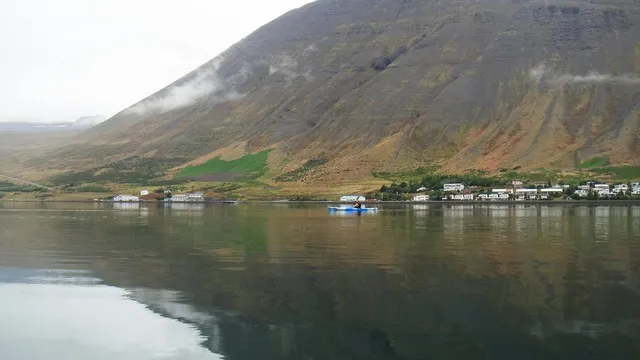
Iceland · Ski
Fossavatnsgangan
Seljalandsdalur above Ísafjörður, Westfjords
50 kmThe last Saturday of the Icelandic winter, mid April: 18 April 2026, 17 April 2027, 8 April 2028, 14 April 2029
DurationLong day
TerrainRough
ColdCold
Cut-offsGenerous
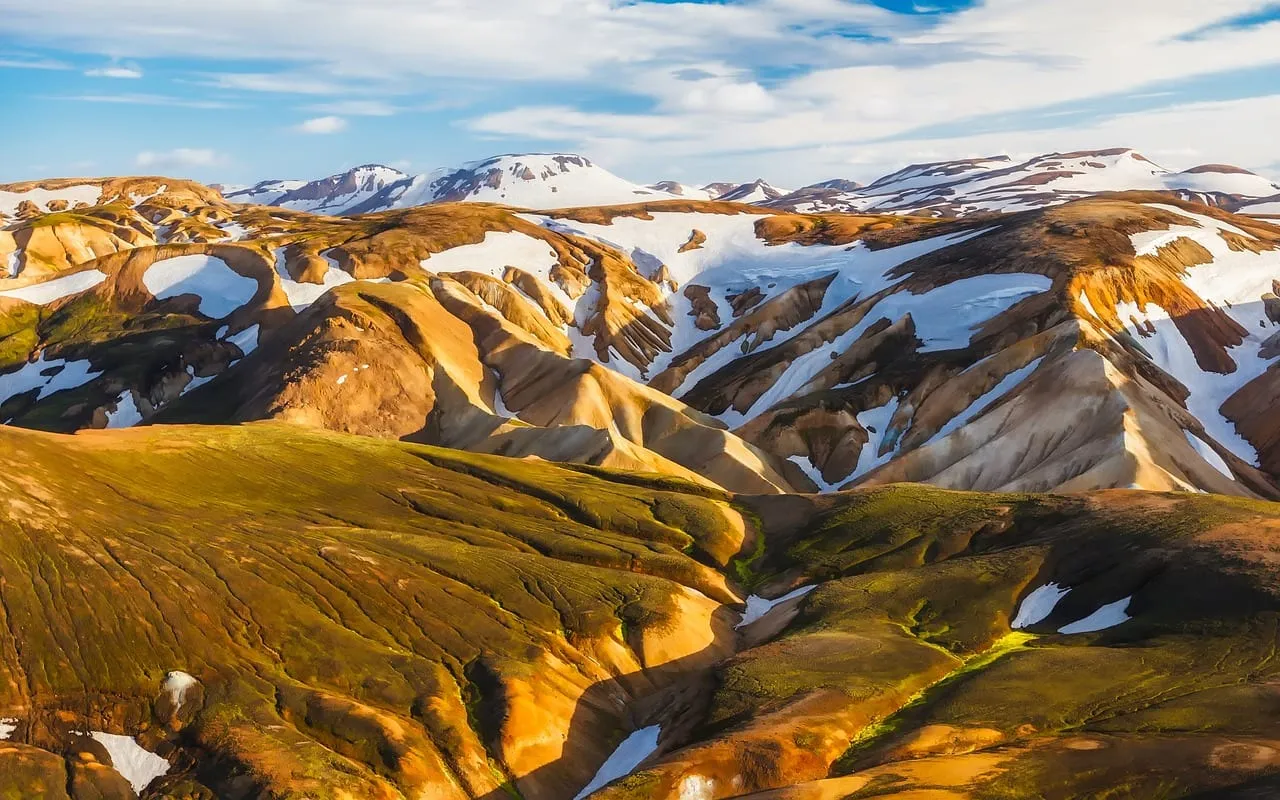
Countries
Iceland has fewer than 400,000 people and a racing calendar that punches well above that: the Reykjavík Marathon weekend draws more than 16,000 entrants, the Laugavegur Ultra fills by lottery in a week each November, and the country's oldest ski race, a 50 km classic in the Westfjords, still ends the winter. What a visitor should know first is that the weather, not the course, is the opponent: the met office issues colour-coded warnings all year, the highland roads only open in June or July, and the country's own search-and-rescue association runs a site, safetravel.is, built around the idea that you tell someone where you are going.
Iceland · Ski
Seljalandsdalur above Ísafjörður, Westfjords
50 kmThe last Saturday of the Icelandic winter, mid April: 18 April 2026, 17 April 2027, 8 April 2028, 14 April 2029

Iceland · Trail
Hveragerði and the Hengill volcanic massif, 45 km east of Reykjavík
53 kmFirst weekend of June: 5 to 6 June 2026, 4 to 5 June 2027
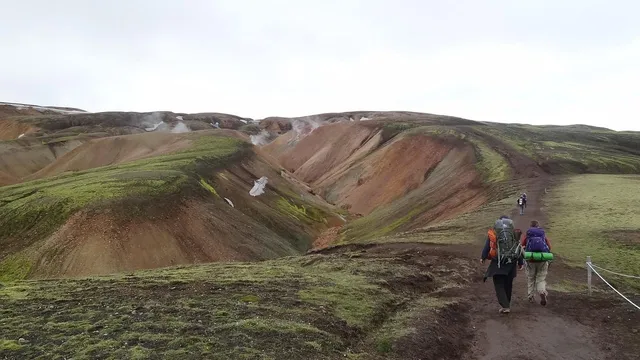
Iceland · Trail
Landmannalaugar to Þórsmörk (Húsadalur), Fjallabak, southern highlands
55 kmA Saturday in mid July: 11 July 2026, 17 July 2027, 15 July 2028
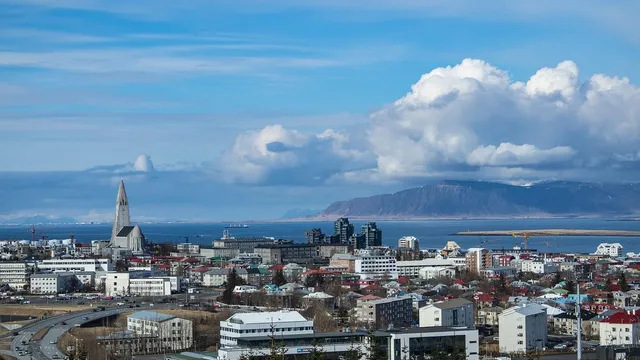
Iceland · Road
Reykjavík city centre, start on Sæmundargata, finish on Geirsgata by the harbour
42.195 kmThe Saturday on or after 18 August, Reykjavík Culture Night: 22 August 2026, 21 August 2027, 19 August 2028
Iceland · Road
Laugardalur, Reykjavík
21.098 kmA Thursday evening around the solstice: 24 June 2027, 22 June 2028 (the half starts at about 20:40 to 20:50)
The year starts indoors and in the dark. The Reykjavík International Games fill January and early February, the Northern Lights Run (7 February 2026) is a lit-up party run in the capital, and ÍSÍ's Lífshlaupið campaign turns February into a national step-counting contest (21,189 participants and 1,718 teams in 2026). Cross-country skiing depends on snow that does not always come: the Bláfjöll area above Reykjavík managed only 31 days of operation in the 2025–26 winter and relied on snowmaking, while the north and the Westfjords are more dependable. The ski season ends with the Fossavatnsgangan in Ísafjörður in mid-April (17 April 2027, with night and skate races in the days before).
From May the running calendar on hlaup.is fills up every weekend. The Hengill Ultra in Hveragerði opens the trail season in the first week of June (5–6 June 2026, its fifteenth edition, with distances from 5 km to 106 km), the Midnight Sun Run in Laugardalur follows in late June (2,500 runners from 66 countries in 2026), and the Laugavegur Ultra Marathon runs from Landmannalaugar to Þórsmörk in mid-July (11 July 2026, 17 July 2027). The Reykjavík Marathon is the big one, on the Saturday of the city's Culture Night in late August (22 August 2026, 21 August 2027), and the Tindahlaupið peaks race in Mosfellsbær closes the month. Autumn brings the Félag maraþonhlaupara autumn marathon in Elliðaárdalur (10 October 2026, which doubled as the national marathon championship), the national cross-country championship (17 October 2026, Kjarnaskógur, Akureyri) and a winter series of short cross-country and town runs that carries on through the dark months. Cycling peaks in May and June: ÍSÍ's Hjólað í vinnuna (Cycle to Work) ran 1–31 May 2026 with 3,442 participants, and the HRÍ road, gravel and cyclo-cross calendar runs May to October. The ring-road relay, the Cyclothon, is gone: its founders announced on 3 December 2021 that it would not be held again.
Reykjavík is cool and windy rather than cold. Averaged from the Icelandic Met Office's monthly station data for 1991–2020, the mean temperature is 0.7 °C in January and 0.6 °C in February, 3.7 °C in April, 9.8 °C in June, 11.6 °C in July (mean daily maximum 14.9 °C), 11.0 °C in August and 8.5 °C in September. Akureyri in the north is almost identical in summer (11.2 °C in July) and a little colder in winter (−0.5 °C in January). The highlands are another climate: at Hveravellir, high on the Kjölur route, the station's monthly data give a July mean of around 8 °C and a June mean of around 5.5 °C, with frost possible in any month. On race morning at Landmannalaugar you should expect something between the two: single figures, wind and the chance of rain or sleet in July. The Met Office's forecast on the day this page was checked, 14 October 2026, carried orange and yellow warnings for most of the country and a 934 hPa low; that is what autumn and winter racing is like here, and the warning colours (yellow, orange, red) are the signal to change your plan.
Daylight is the other extreme. The University of Iceland's almanac gives Reykjavík sunrise at 02:54 and sunset at 00:05 on 21 June, 21 hours of sun and no real darkness from mid-April to the end of July, which is why the Midnight Sun Run starts in the evening and the Hengill 106 km sets off at 20:00. On 22 December the sun rises at 11:22, sets at 15:31 and climbs only 2.7 degrees above the horizon. Iceland keeps Greenwich time all year, so solar noon in Reykjavík is around 13:30 and a 'morning' run in winter is in the dark. For kit that means a windproof shell in every season, a hat and gloves in your pack even in July (the Hengill and Laugavegur mandatory kit lists exist for this reason), and a head torch from October to March. Sea temperature at Nauthólsvík was 7 °C on 14 October 2026; the heated lagoon there runs at 15–19 °C in summer.
Iceland's almannaréttur comes from the Nature Conservation Act (lög um náttúruvernd nr. 60/2013). The Environment Agency's English pages put it plainly: everyone has the right to travel around the country and enjoy its nature as long as they are tidy and careful not to damage it, and you may cross uncultivated private land on foot without asking, although landowners may limit routes with signs on gates and paths. State-owned land, including conservation and forestry areas, is open to everyone with few exceptions, such as closures in bird-breeding seasons. Cyclists use the same rule but are expected to stay on roads and tracks; off-road driving (which includes riding or driving anywhere off a road or marked trail) is strictly prohibited and punishable by fines or imprisonment, because the volcanic soil ruts and takes decades to recover.
Camping is narrower than in Scandinavia. Under the Act you may pitch an ordinary tent for one night on uncultivated land beside a public route in inhabited areas if there is no campsite nearby and no sign forbids it; in uninhabited areas you may pitch a tent on private or national land; and you need the landowner's permission near farms and houses, for more than one night, for more than three tents, or on cultivated land. Campervans, caravans and trailer tents must use organised campsites or urban areas. Campfires are prohibited (safetravel.is). Protected areas have their own rules, and the ones racers meet are strict: in the Fjallabak Nature Reserve, which holds Landmannalaugar and the first half of the Laugavegur trail, overnight stays are only allowed in huts and designated campsites; Þingvellir and most of Vatnajökull National Park are the same. From 20 June to 14 September 2025 anyone driving themselves to Landmannalaugar between 09:00 and 16:00 had to reserve and pay for parking in advance, a system introduced in 2024. Since 1 January 2025 nature conservation and the rangers have sat with a new agency, Náttúruverndarstofnun; its web pages are still being built, so the Environment Agency's pages linked below remain the place to read the rules.
Almost everyone arrives at Keflavík (KEF), about 50 km south-west of Reykjavík, which handled 893,214 passengers in August 2026 and 711,978 in September. Iceland has no railway. Strætó's public bus route 55 runs between BSÍ in Reykjavík (or Fjörður in Hafnarfjörður) and the airport, and from 1 October 2026 the terminal has three bus stops instead of one; airport coaches run the same road. Domestic flights to Akureyri, Ísafjörður and Egilsstaðir leave from Reykjavík Airport in the city itself, which is how most people reach the Fossavatnsgangan in Ísafjörður in April, when the mountain roads to the Westfjords are at their worst.
For the highland races the organisers do the driving. Laugavegur bib pick-up is on the Thursday or Friday in Laugardalur, and the race buses leave from Múlavegur 1 at 04:30 and 05:00 on the Saturday; buy your seat when the organiser's shop opens on your entrant page, because the road in, F208 from Sigalda to Landmannalaugar, is an F-road that in 2019–2023 opened between 24 May and 23 June (average 10 June) and needs a proper four-wheel-drive. Kjalvegur (Gullfoss–Hveravellir) opened between 24 May and 12 June in those years and Sprengisandur not until 21 June to 13 July; F-roads usually close again by mid-September. Check umferdin.is or phone 1777 before any highland plan. Hengill starts in the centre of Hveragerði, a short drive east of Reykjavík on the ring road, with the race office in the sports hall. The Reykjavík Marathon starts on Sæmundargata and, from 2026, finishes on Geirsgata by the harbour, after the city moved the finish from Lækjargata; streets close from 08:00 to 15:00. Registration for the following year's marathon opens the day after the race, and Laugavegur entry is a one-week window in early November with a lottery if it is oversubscribed, so the things that fill early in Iceland are places, not hotel rooms. Carry your European Health Insurance Card: Iceland is in the EEA, and island.is explains that the card gives care at a state-run provider at the same fee a resident pays, not at private clinics. The emergency number is 112, with 599-0112 as a backup since the 2G/3G shutdown.
Training in Iceland is organised around clubs and swimming pools. ÍSÍ and UMFÍ counted 191,982 registered sports participations in 2025, up 5.8 per cent on the year before, in a country of under 400,000 people. Running is mostly done in groups: hlaup.is lists around fifty hlaupahópar, from the big club groups (ÍR, KR, Breiðablik, Fjölnir, Ármann) to a mothers' group, a Polish-speaking group and a Laugavegur-preparation group, and a newcomer is expected to turn up and join the next session. The ITRA database holds about 7,400 Icelandic trail runners, which for a nation this size is a crowd.
The pool is where the day ends. Reykjavík runs eight public pools with hot tubs and steam rooms, open most of the day year-round, and Icelandic swimming-pool culture is now on UNESCO's list of intangible cultural heritage; a Reykjavík Marathon entry includes a free pool visit on race day. Sea swimming is a mainstream habit rather than an eccentricity: the city's Nauthólsvík geothermal beach has changing rooms, hot tubs and a steam bath beside the open fjord, and its own rules for cold-water swimmers, which begin with never swim alone. In winter the Bláfjöll area grooms cross-country trails above the capital, lights some of them in the evenings, and the Ullur club runs sessions and public courses from its lodge; in Ísafjörður the Fossavatnsgangan organisers run weekly Fossaþrek group sessions through the autumn to get people ready for April. The national campaigns are the glue: Lífshlaupið in February, Hjólað í vinnuna in May and Syndum, a national swimming challenge, in November. The safety culture is just as everyday. ICE-SAR has more than 4,500 volunteers, its highland patrol is only on duty in summer, and leaving a travel plan on safetravel.is before a long run in the hills is what locals do.
The Reykjavík Marathon, run since 1984 on Culture Night Saturday in August, is the country's biggest sporting day: more than 16,000 registered in 2026, over 3,000 of them from abroad, across the marathon, half, 10 km and a fun run, with the rain on the day doing nothing to the mood. The Laugavegur Ultra Marathon is the one runners abroad have heard of: 55 km through the southern highlands from Landmannalaugar to Þórsmörk, entry only for runners holding 370 ITRA performance points, places drawn by lottery after a one-week registration window each November. The Hengill Ultra in Hveragerði has grown in fifteen years from a local trail race into a two-day festival with a 106 km double loop over the Hengill massif (about 4,000 m of climbing, 22-hour cut-off) and an exhibition in the sports hall. The Fossavatnsgangan in Ísafjörður is the country's oldest and best-known ski race, a 50 km classic-technique event in the mountains above the town that the Norwegian Andreas Nygaard won in 2:22:34 in 2026, with 25 km, 12.5 km, skate and night races around it. The one classic you will still see in old guides but not on the road is the Cyclothon, the 1,358 km relay round the ring road that began as a race between friends in 2012, drew over 1,300 riders as the WOW Cyclothon in 2017, ran once more as the Síminn Cyclothon in 2021 and was then retired by its founders.
No. Road races sell a general ticket to anyone; the Reykjavík Marathon's competition ticket, which adds FRÍ-certified results, prizes and a time you can use to enter races abroad, is optional. Trail races set their own entry conditions instead: the Laugavegur Ultra requires 370 ITRA performance points (checked October 2026), and Hengill checks mandatory kit at the briefing for the 53 km and 106 km.
You may cross uncultivated land on foot without asking and use roads and tracks by bike, but never ride or drive off them. A single tent for one night on uncultivated land is allowed outside protected areas, with permission needed near farms, for more than one night or more than three tents. In the Fjallabak reserve, which covers Landmannalaugar and the first half of the Laugavegur, you may only sleep in huts and designated campsites, and campfires are banned everywhere (Environment Agency and safetravel.is, read October 2026).
In July and August the mean is 11–12 °C with daily highs around 14–15 °C (Met Office data for 1991–2020), so the marathon is usually run in 10–14 °C with wind and a fair chance of showers, as in 2026. Early June for Hengill and October for the autumn marathon are typically 5–10 °C. At Hveravellir in the highlands, July means are around 8 °C and sleet is possible.
It depends on snow, not the calendar. The road administration's handbook gives 2019–2023 openings of 24 May to 23 June for F208 into Landmannalaugar, 24 May to 12 June for Kjalvegur and 21 June to 13 July for Sprengisandur; they usually close again by mid-September. Check umferdin.is or phone 1777 on the day, and for Laugavegur take the organiser's bus.
Not any more. The Cyclothon, a 1,358 km team relay on the ring road that began in 2012 and ran under WOW air's and then Síminn's names, was held for the last time in June 2021, and its founders announced on 3 December 2021 that it would not return. Safetravel.is now advises against riding the ring road at all in summer because of traffic and the lack of shoulders.