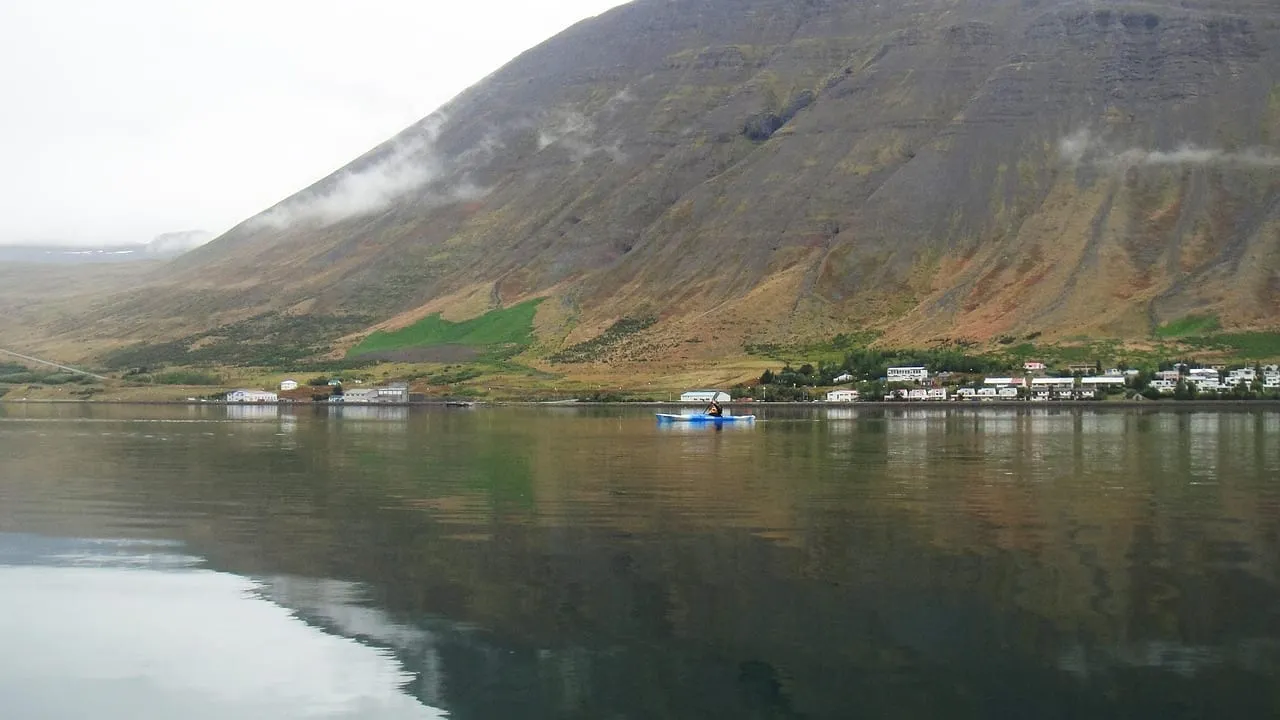
Iceland · Cross-country skiing
Fossavatnsgangan
Seljalandsdalur above Ísafjörður, Westfjords
Fossavatnsgangan is Iceland's oldest ski race, first held in 1935, and its Worldloppet event: a 50 km classic-technique loop on groomed track in the mountains above the fishing town of Ísafjörður in the Westfjords, run on the last Saturday of the Icelandic winter in mid April. It is small (267 finishers in the 50 km in 2026) and friendly, with a floating start, a mandatory 1.5 kg backpack of warm clothes, 1,250 m of climb including the feared Miðfellsháls at 40 km, and a coffee buffet and party afterwards. Getting there is the adventure: a 40-minute flight or a 414 km drive from Reykjavík, with buses up to the start because private cars are banned on race morning.
Official site (opens in a new tab)No. 21 of 41 in the toughness ranking
The race in brief
- Distance
- 50 km
- Climb
- 1,250 m
- Format
- 50 km classic technique only (skating is disqualified), one lap out to the Steinn near Fossavatn and back, floating start between 08:00 and 09:00 with time counted from when you leave, mandatory backpack
- When
- The last Saturday of the Icelandic winter, mid April: 18 April 2026, 17 April 2027, 8 April 2028, 14 April 2029
- Mid-pack time
- 4 h 38 min (median of 267 finishers in the 50 km, 2026)
- Cut-off
- Past the Heiðin aid station (about 10 km) by 10:30 and back through it (about 35 km) by 14:30, counted from a start between 08:00 and 09:00; skiers outside the limits are stopped and driven to the finish
- Entry fee
- ISK 19,000–26,000 (50 km, 2027: ISK 19,000 until 30 November 2026, 23,000 until 31 December, 26,000 until the race (about 130 to 180 euros); 50% off the shorter race if you enter two)
- Field
- 267 finishers in the 50 km (2026); 236 in 2025; the 25 km skate had 72 finishers and the 35 km night race 8 in 2026
- First held
- 1935
- Other distances
- 25 km classic, Saturday 09:15 to 10:00 (from age 13, backpack required, no cut-offs) · 12.5 km classic, Saturday 09:15 to 10:00 · Fossavatnsskautið 25 km skate, Thursday 17:00 · NæturFossavatnið 70 km and 35 km free technique, Wednesday 22:00 by headtorch on a 7.25 km loop · Family 5 km and children's 1 km, Thursday
- Organiser
- Fossavatnsgangan (Skíðafélag Ísfirðinga, the Ísafjörður ski club)
Next edition: 2027-04-17 · Entries opened 1 August 2026 at skraning.fossavatn.is and stay open until the race with price steps on 30 November and 31 December; night races 14 April, skate and family races 15 April · Entries (opens in a new tab)
Checked 2026-10-14
How tough is it?
Four meters, each 1 to 5, rated by our published method. The basis under each one shows the figures behind the score. How we rate.
Median finishing time 4 h 37 min 34 s at rank 134 of 267 finishers in the 50 km (timataka.net results, 2026-04). Winner 2 h 22 min 35 s, 25th percentile 3 h 40 min, 75th percentile 5 h 44 min, slowest 9 h 52 min. In 2025 the median was 4 h 31 min of 236 finishers, when thin snow forced two 25 km loops instead. As of 2026-04.
Groomed classic track over 50 km with 1,250 m of total climb (FIS data on the results page and the organiser's course page, 2026-04): start at 290 m, high point Fellsháls at 614 m crossed twice, 155 m of climb in the first 4 km, an 8 km climb back over Fellsháls from Nónvatn, and the 115 m Miðfellsháls hairpin at about 40 km followed by fast descents the organiser warns can be dangerous for the inexperienced. As of 2026-04.
Mid April at 300 to 600 m in the Westfjords: the 2026 race was around 0 °C, clear and calm, the 2025 forecast gave frost on the mountains early and thawing by day with rain, sleet or snow the evening before (organiser's reports, 2025-04 and 2026-04). The organiser says all weather is possible and requires a 1.5 kg backpack with warm trousers, jacket, hat and gloves in the 50 km and 25 km, with a 15-minute penalty if it is missing. Borderline 3 to 4. As of 2026-04.
Two cut-offs, 10:30 at Heiðin (about 10 km) and 14:30 at the same station on the way back (about 35 km), generous against a median of 4 h 38 min, and the 2026 list ranks finishers up to 9 h 52 min. Entry is open from 1 August to race day with no ballot or qualification, age 16 and over; fees are non-refundable and a missing backpack costs 15 minutes or no time at all (rules page, 2026). As of 2026-04.
The course
You leave the ski lodge on Seljalandsdalur at 290 m whenever you like between 08:00 and 09:00 and your clock starts then. After an easy opening kilometre round the stadium the track climbs steeply onto Háabrún, a viewpoint over Skutulsfjörður, 155 m of climb in the first 4 km, then eases to the first aid station under Búrfell at 5 km. The Hnífar ridge follows and, after 8 km, a 2 km climb to the Heiðin aid station at the junction of the Breiðadalsheiði and Botnsheiði roads, the first cut-off point. The track keeps rising for another 4.5 km to Fellsháls at 614 m, the high point: 15 hard kilometres, then 5 easy ones down to Nónvatn.
From Nónvatn the going is gentle round Engidalur to the Steinn, the rock near Fossavatn where the race used to start, which marks halfway. You turn there, climb back up to the Nónvatn station and then face the hardest stretch, an 8 km climb back over Fellsháls, reaching the top at about 33 km before a descent to the Heiðin station and the second cut-off. Five easier kilometres take you back under Búrfell at 39 km, where the climb between Búrfell and Miðfell begins, up to the Gyltuskarð gap with a view down to Súgandafjörður.
A right turn from Gyltuskarð brings the famous Miðfellsháls, a long, steep traverse that has broken skiers for decades and arrives with empty legs. From the top it is 7 km home with long glides and double-poling, fast enough in places that the organiser warns beginners to take care, to the finish at Seljalandsdalur. Aid stations are at Búrfell, Heiðin and Nónvatn in both directions (5.2, 4.5, 9.7, 8.3, 6.7, 5.4 and 10.2 km apart); there are no cups, so carry your own, and litter costs 15 minutes. A coffee buffet at the Torfnes sports hall from 15:00 to 17:00 is included, with age-group prizes at about 15:30.
How to enter
Entries for 2027 opened on 1 August 2026 at skraning.fossavatn.is and stay open until the race; there is no ballot, qualification or Worldloppet-passport requirement, and the 50 km is open to anyone turning 16 in the race year (13 for the 25 km). The price rises in steps: the 50 km costs ISK 19,000 until 30 November 2026, ISK 23,000 until 31 December and ISK 26,000 after that (about 130 to 180 euros); the 25 km is ISK 14,000 to 18,000 and the night races ISK 12,000 to 17,000. Anyone entering two races gets 50% off the shorter one, and the race's surplus goes to the Ísafjörður ski club's youth and elite programmes.
Entry is binding and not refunded for illness or injury; if the race is cancelled the organiser may keep up to 50% of the fee, and if it is moved or shortened nothing is refunded. The fee includes timing, aid stations without cups, the coffee buffet and prize-giving at Torfnes, and the free buses to the start on Saturday and on the Thursday afternoon. The Saturday night seafood buffet and Fossavatnspartý (ISK 13,000, 18 and over) and the official ski-waxing service are bought separately in the online shop and often sell out. A name change before the start is possible at the race office for a small fee.
How to train for it
Train classic, not skate
Skating is banned in the Saturday races and staff film the course to enforce it; a skate stroke means disqualification. If you normally skate, spend the winter on classic technique, especially striding on steep climbs, because the 8 km climb back over Fellsháls and the Miðfellsháls traverse are diagonal-stride ground.
Build for 15 hard kilometres at the start
The first 15 km gain most of the course's height, with 155 m in the first 4 km. Practise long sustained climbs early in a session and arriving at the top with something left, since the easy middle section is where you recover before the second crossing of Fellsháls.
Ski with the pack
The 1.5 kg backpack with warm trousers, jacket, hat and gloves is mandatory and checked at the finish, with a 15-minute penalty or no time if it fails. Train with the same pack so it does not change your double-poling, and know where your food and bottle are in it, since stations have no cups.
Rehearse the fast descents
The 7 km home from Miðfellsháls and the drops to Nónvatn and Heiðin are fast and, in the organiser's words, risky for the unpractised. Work on tucking and controlling speed on icy spring snow, and on double-poling the long glides when your legs are gone.
Plan your wax for spring snow
Race morning in mid April can be frozen at the top and thawing lower down; the organiser publishes expert waxing advice the day before and bans fluorinated waxes. Practise klister and skin skis in similar conditions, or book the official waxing service when you enter.
What you need
- Mandatory backpack weighing at least 1.5 kg (no waist bags) with warm trousers, a warm jacket, a hat and gloves; 15-minute penalty or no recorded time without it
- Your own cup or bottle; aid stations have no cups
- Classic skis with grip wax, klister or skins for spring snow; fluorinated waxes are banned
- A phone and some food in the pack, as most skiers carry
- The race bib worn unfolded on the chest with the timing chip at the top intact; no music in your ears during the race
- A bag of dry clothes for the start area, stored outdoors, and a number tag from registration to label it
- Sun cream: the organiser's own race-day reminder for April on the mountain
Getting there and staying
Ísafjörður is 414 km from Reykjavík by road over Dynjandisheiði (454 km via the Ísafjarðardjúp road), or a roughly 40-minute Icelandair flight from Reykjavík's domestic airport twice a day, with an airport bus into town for every flight; there is no railway. International visitors arrive at Keflavík, about 50 km from the domestic airport in Reykjavík. Hertz is the organiser's car-rental partner, and the Wild Westfjords agency sells packages from Keflavík and can arrange accommodation; Hótel Ísafjörður offers race deals and the organiser points to Visit Westfjords and a Facebook group for private rooms, which are scarce on race weekend.
Bibs are collected at the race office in Edinborgarhúsið, Aðalstræti 7, on Thursday 15 April 2027 from 12:00 to 19:00 and Friday 16 April from 14:00 to 21:00, where the shops are also open. On the Saturday private cars are banned on the road up to Seljalandsdalur until 09:00; free buses leave the Torfnes sports hall from 06:30 every 15 minutes until 08:45, with parking there and at the football ground and college. Buses wait at the finish and run down every quarter hour. On the Thursday free buses go up at 15:00 and 15:30 for the skate race and extra West Travel services cost ISK 1,500 each way.
The afternoon coffee buffet and prize-giving are at Torfnes from 15:00 to 17:00, the seafood buffet and party there from 19:30 to 01:00, and Worldloppet passport holders are invited to a reception on the Friday at 17:00. The organiser's own weather stations on the course are linked from its home page, and training conditions on Seljalandsdalur are reported by the town ski area in the days before, when private cars are allowed up.
History
The first Fossavatnsganga was held on Easter Monday 1935 with seven skiers over 18 km, won in 1 h 50 min, and it is the oldest ski race still held in Iceland; it has run every year since 1955. For decades it was a 20 km course from the Steinn near Fossavatn to Seljalandsdalur, with 10 km and 7 km distances added in 1987 and 1989. The 50 km arrived in 2004, the race joined the FIS calendar in 2005 and co-founded the FIS Nordic Ski Marathon Cup with Holmenkollen, Tornedalsloppet and Oulun Tervahiihto, and it is now one of the Worldloppet series and a Ski Classics Challenger, as well as the western leg of the Icelandic Landvættur challenge since 2013.
Kristján Rafn Guðmundsson of Ísafjörður won twelve times in the 1960s and 1970s; Norwegian Pål Gunnar Mikkelsplass raced it in 1985 and later visitors include Thomas Alsgaard, Oskar Svärd and Petter Northug (2017). Thomas Bing won in 2025, when thin snow forced two 25 km loops, and Andreas Nygaard set the fastest recent time, 2:22:34.8, in 2026. Since 2023 the date has been fixed as the last Saturday of winter, a few weeks earlier than the old end-of-April slot, to keep the snow.
Where to find out more
- Fossavatnsgangan 50 km (opens in a new tab): The organiser's course description with the elevation profile, aid-station spacing and the backpack rule.
- Price list 2027 (opens in a new tab): All distances and the three price steps.
- Dates (opens in a new tab): The dating rule and the race dates to 2029.
- Programme 2027 (opens in a new tab): Start times for every race from the Wednesday night races to the Saturday party.
- Rules and terms (opens in a new tab): Technique rule, backpack contents, age limits, cut-offs and refund terms.
- Buses (opens in a new tab): Free race-morning buses from Torfnes and the Thursday services.
- Race office (opens in a new tab): Bib collection times at Edinborgarhúsið.
- Getting to Ísafjörður (opens in a new tab): Flights, driving distances and the organiser's travel and hotel partners.
- Results 2026 (timataka.net) (opens in a new tab): Full results with splits for every race, used for the median time here.
Questions about Fossavatnsgangan
Can I skate the 50 km?
No. The Saturday races are classic technique only; staff film the course and a skate stroke means disqualification. If you prefer skating, enter the 25 km Fossavatnsskautið on the Thursday evening or the 35 km or 70 km night races on the Wednesday, which are free technique.
What is in the mandatory backpack?
At least 1.5 kg including warm trousers, a warm jacket, a hat and gloves; waist bags do not count. Staff may weigh and check it at the finish, and a light or incomplete pack adds 15 minutes while skiing without one means no recorded time. Most people also carry food, a bottle, wax and a phone, and the organiser sells a suitable pack in its shop.
Are there cut-offs?
Yes, two in the 50 km: you must pass the Heiðin station at about 10 km by 10:30 and come back through it at about 35 km by 14:30, based on a start between 08:00 and 09:00. Skiers outside the limits are stopped and driven to the finish. The 25 km has no cut-off.
How do I get to the start?
By the free buses from the Torfnes sports hall in Ísafjörður, from 06:30 every 15 minutes until 08:45 on race morning; private cars are banned on the road up to Seljalandsdalur until 09:00 and parking at the top is very limited. Buses wait at the finish and run back down every quarter hour.
Does it count for Worldloppet or Landvættur?
Both. Fossavatnsgangan is one of the Worldloppet series (passport holders get a reception on the Friday), a Ski Classics Challenger, part of the seven-race Íslandsgangan, and the 50 km is the western leg of Landvættur, the Icelandic four-sport challenge that must be completed within twelve months; the 70 km night race also counts for Landvættur.
Similar races
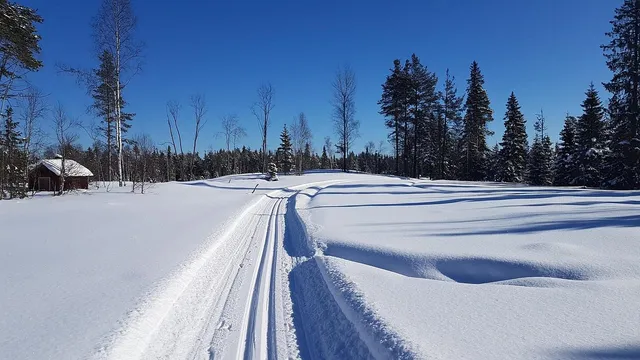
Sweden · Ski
Vasaloppet
Sälen (Berga by) to Mora, Dalarna
90 kmFirst Sunday of March (7 March 2027)
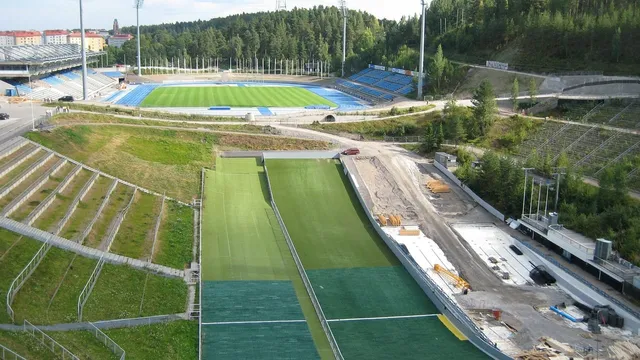
Finland · Ski
Finlandia-hiihto
Lahti Sports Centre, Lahti and Hollola, Päijät-Häme
62 kmThird or fourth weekend of February; 20–21 February 2027
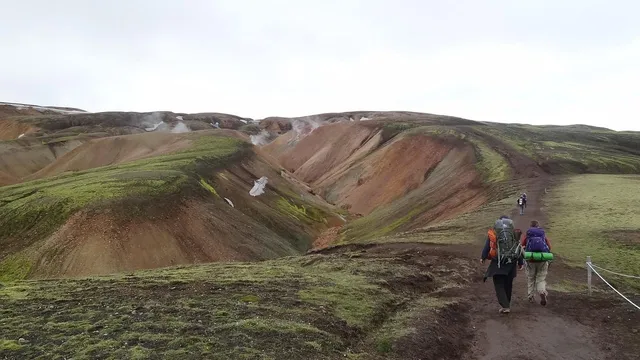
Iceland · Trail
Laugavegur Ultra Marathon
Landmannalaugar to Þórsmörk (Húsadalur), Fjallabak, southern highlands
55 kmA Saturday in mid July: 11 July 2026, 17 July 2027, 15 July 2028
Sources
Figures and rules on this page come from these pages, read on the dates given. Organisers change dates, fees and rules: check the official site before you enter.
- Fossavatnsgangan, home page (opens in a new tab) (read 2026-10-14)
- Fossavatnsgangan 50 km (opens in a new tab) (read 2026-10-14)
- Fossavatnsgangan 25 km (opens in a new tab) (read 2026-10-14)
- NæturFossavatnið 70 km (opens in a new tab) (read 2026-10-14)
- Dagsetningar Fossavatnsgöngunnar (opens in a new tab) (read 2026-10-14)
- Dagskrá 2027 (opens in a new tab) (read 2026-10-14)
- Verðskrá 2027 (opens in a new tab) (read 2026-10-14)
- Reglur og skilmálar (opens in a new tab) (read 2026-10-14)
- Rútur 2026 (opens in a new tab) (read 2026-10-14)
- Mótsskrifstofa (opens in a new tab) (read 2026-10-14)
- Komdu vestur (travel) (opens in a new tab) (read 2026-10-14)
- Mótaraðir (series) (opens in a new tab) (read 2026-10-14)
- Um Fossavatnsgönguna (organisation) (opens in a new tab) (read 2026-10-14)
- Saga Fossavatnsgöngunnar (history) (opens in a new tab) (read 2026-10-14)
- Skráning fyrir 2027 hafin (news, 1 August 2026) (opens in a new tab) (read 2026-10-14)
- Andreas Nygaard sigrar Fossavatnsgönguna 2026 (news, 18 April 2026) (opens in a new tab) (read 2026-10-14)
- Veðurspá og áburðarráð 2025 (news, 11 April 2025) (opens in a new tab) (read 2026-10-14)
- Snjór, veður og brautir (news, 7 April 2025) (opens in a new tab) (read 2026-10-14)
- timataka.net: Fossavatnsgangan 2026, 50 km classic overall (opens in a new tab) (read 2026-10-14)
- timataka.net: Fossavatnsgangan 2025, 50 km classic overall (opens in a new tab) (read 2026-10-14)
- timataka.net: Fossavatnsgangan 2026 results index (opens in a new tab) (read 2026-10-14)