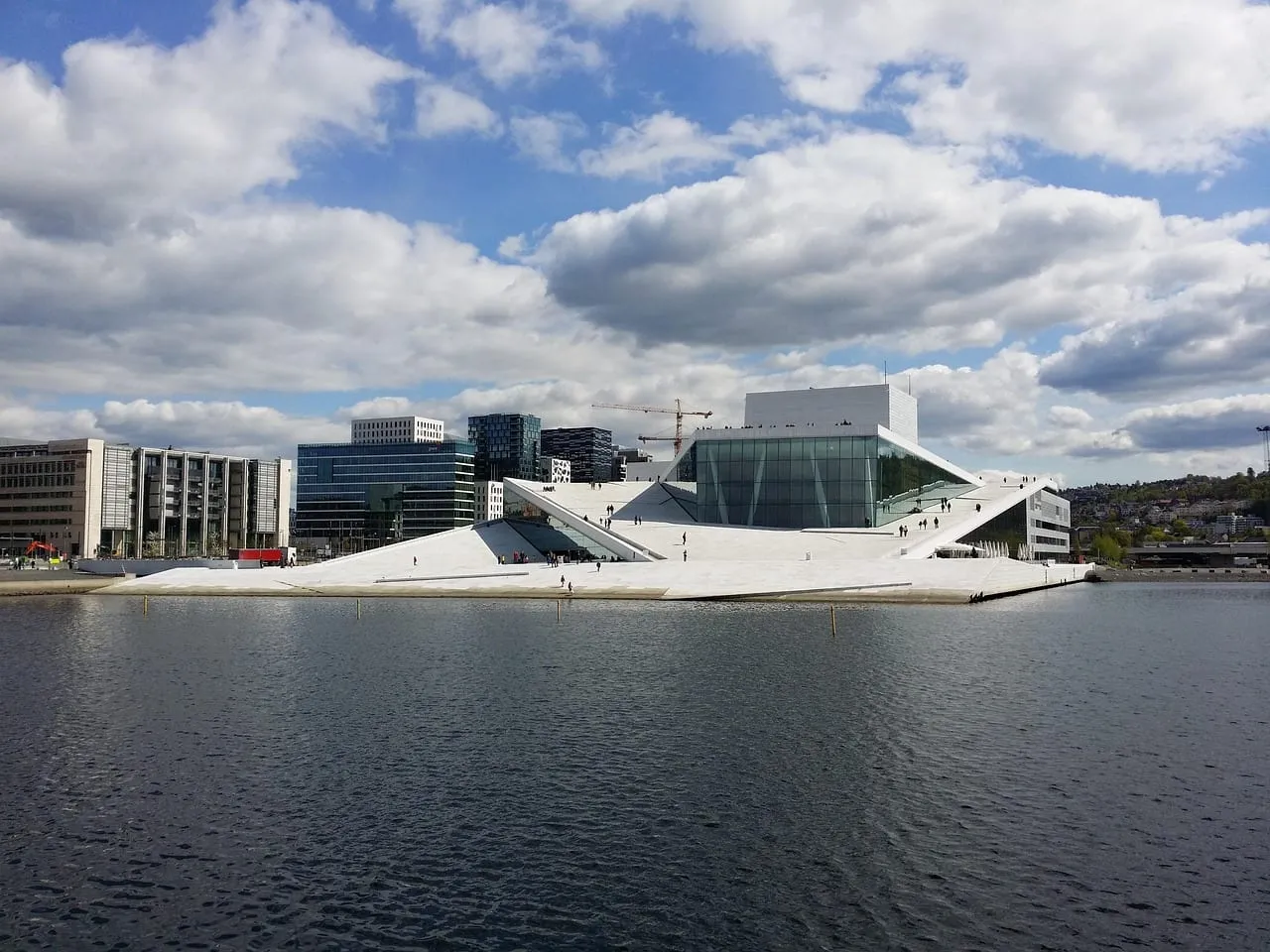
Norway · Road running
DNB Oslo Maraton
Rådhusplassen, Oslo
DNB Oslo Maraton is Norway's biggest road race, held on the third Saturday of September with start and finish at the City Hall square (Rådhusplassen). The marathon is two loops of the half marathon course through Oslo's centre, Frogner and Skøyen, with about 350 m of climb, starting at 09:00 with a 6 hour limit; 3,499 runners finished it in 2026 with a median time of just under 4 hours. It is a big-city marathon with mass support and an official AbbottWMM Wanda Age Group qualifier, but also with the real hills and narrow stretches of the central city.
Official site (opens in a new tab)No. 26 of 41 in the toughness ranking
The race in brief
- Distance
- 42.195 km
- Climb
- 350 m
- Format
- 42.195 km road marathon, two laps of the half marathon course, three start waves from 09:00 (five minutes apart); drink station about every 5 km; also half marathon, 10 km and a 73 km Oslotrippelen
- When
- Third Saturday of September; 18 September 2027 (12 September 2026)
- Mid-pack time
- 3 h 57 min (median of 3,499 marathon finishers, 2026, calculated from the official results)
- Cut-off
- Maximum time 6 h; you must pass the halfway point in under 3 h or be stopped
- Entry fee
- 1 350 kr (Marathon, 2027 edition as listed on the distance page, including a 6.75 per cent + 3 kr booking fee; a 50 kr single-event licence is added; the 2026 price was 1 200 kr + 40 kr fee)
- Field
- 3,499 marathon finishers (2026); the organiser claims over 29,000 participants in all distances (the About page says over 20,000)
- First held
- 1981
- Other distances
- Half marathon 21.1 km (13:00) · 10 for Grete 10 km (16:20) · 10 km wheelchair racing (16:00) · Oslotrippelen 73 km (sold out) · Extra Oslo Mini Maraton for ages 0 to 13
- Organiser
- Oslo Maraton (owned by Sportsklubben Vidar; surplus goes to the club and youth sport)
Next edition: 2027-09-18 · Registration for 2027 is open through the Haku system, with new participant profiles; marathon 1 350 kr · Entries (opens in a new tab)
Checked 2026-10-15
How tough is it?
Four meters, each 1 to 5, rated by our published method. The basis under each one shows the figures behind the score. How we rate.
Median finishing time 3 h 57 min across 3,499 marathon finishers in 2026 (UltimateLIVE results, calculated 2026-10); quartiles 3 h 31 min and 4 h 26 min, slowest tenth over 4 h 55 min. Winner 2 h 21 min 42 s. The organiser gives about 4 h for the average runner. Borderline with 4 for slower runners (the limit is 6 h). As of 2026-09.
Rolling road: the half marathon course has about 175 m of climb, the marathon two laps for roughly 350 m (organiser's route page, 2026), or about 8 m per km. City streets from Skøyen through Frogner, Aker Brygge, Akershus Fortress, Bislett, Frogner Park and Karl Johan, with no trail. The climbs are short but repeated, so it is not a flat road course. As of 2026-09.
Mid September, morning start at 09:00 in Oslo: the September mean was 13.1 C in 2026 against a 12.2 C normal and 60 mm of rain against 82 mm normal (Yr, Oslo Blindern station table, 2026-09). Cool and damp rather than cold; no mandatory kit. Borderline with 1 for runners who run warm. As of 2026-09.
Maximum time 6 h, and runners must pass halfway in under 3 h or be stopped (organiser's distances page, 2026-10), against a median of 3 h 57 min. In the 2026 results a few finishers were recorded over 7 h, so the limit is not always enforced. Entry is open to anyone aged 18 or over; the 73 km Oslotrippelen sold out, but the marathon page shows no sell-out. As of 2026-10.
The course
The marathon starts at 09:00 at Rådhusplassen in front of the City Hall in three waves five minutes apart (waves 1 to 3 at 09:00, 09:05 and 09:10). You run the half marathon course twice, from the harbour area past Skøyen and Frogner and back through the city by Akershusstranda, Aker Brygge, Akershus Fortress, Bislett, Frogner Park and Karl Johan, before finishing back at the square. The course for 2027 will be published closer to the race.
The organiser measures about 175 m of climb for the half marathon and 350 m for the marathon, so it is a rolling course with short ascents repeated over two laps, not a flat one. What makes the second lap hard is meeting the same small hills a second time on tired legs, which is where the pace of many runners falls away.
There is a drink station about every 5 km, 11 for the marathon including the one after the finish, with Maxim energy drink, water and bananas included in the entry fee. You may not accept gels or drink from friends along the course, but you may carry gels yourself. The race follows the World Athletics shoe rules, and pace groups are available for 3 h to 5 h 30 min in 15 or 30 minute steps.
How to enter
Entry is online through the Haku system, new from the 2027 edition: you create a participant profile when you sign up. For 2027 the organiser lists the marathon at 1 350 kr (about €125 at roughly 10.6 kr to the euro) including a 6.75 per cent plus 3 kr booking fee, with a 50 kr single-event licence on top unless you hold an annual licence. The half marathon was 990 kr and 10 km 790 kr in 2026. Students from 16 to 30 get 15 per cent off by e-mail, and para athletes pay 300 kr.
Entry is binding and not refunded under Norwegian consumer law; you can buy MySafety cancellation insurance for 139 kr at sign-up. The organiser has run a resale marketplace for start places which closed in early September in 2026. Changing distance costs 250 kr and only works if the new distance is not full. You give an estimated finish time when entering and are placed in a wave on that time, which you can change on your profile.
You must be 18 or older for the marathon, 15 for the half marathon and 13 for the 10 km. The race is a qualifier for the AbbottWMM Wanda Age Group World Championships. The marathon distance page does not mention a field limit, but the 73 km Oslotrippelen sold out.
How to train for it
Run the loop's rolling hills twice
The marathon course has about 350 m of climb in two identical laps, so prepare for short hills repeated 42 km. Include rolling long runs with 100 to 150 m of climb in 20 km and practise easy running over small hills rather than flat track work.
Plan your wave and pace group from a recent race
You are placed in a wave based on your estimated finish time, and there are pace groups from 3 h to 5 h 30 min. Use a recent half marathon result for your estimate, and note that the median is 3 h 57 min so you will not be alone at 4 hours.
Use the halfway rule as your first checkpoint
You must pass halfway in under 3 h or be stopped. That corresponds to a 6 h marathon pace; if you plan a finish of 5 h 30 min or slower, check your first lap time carefully.
Train with the organiser's calculator
Oslo Maraton publishes a running calculator that gives pace and the amount of fluid and carbohydrate to take during the race. Use it for your plan and practise with the Maxim energy drink served on the course, since you are not allowed to take drink from friends outside the stations.
Prepare for a morning start in cool, damp weather
September in Oslo averages about 12 C with 80 mm of rain. Train in rain and wind, and bring throwaway layers for the 09:00 start; the wave system means you may wait up to 10 minutes after the gun.
What you need
- Road running shoes that follow the World Athletics shoe rules (sole thickness limits); podium and record finishers can be asked to hand in shoes for inspection
- Your own gels if you want them: the course serves Maxim energy drink, water and bananas about every 5 km, and gels from friends are not allowed
- The bib and bag tag collected at the Expo; a t-shirt is optional and bought separately
- A valid licence for Norwegian running events: 50 kr for a single event (or your annual licence registered at sign-up)
- A throwaway layer or bin bag for the start, and a dry change for the finish
- A watch with the course GPX (organiser's route page has files for the 2026 course)
Getting there and staying
The start and finish are at Rådhusplassen in central Oslo, in front of the City Hall, so most of the city's hotels, stations and the harbour are within walking distance. The organiser's own Runners Hotel is the Comfort Hotel Børsparken, which can be booked through the race website; hotels fill early for the race weekend.
Bib numbers, bag drop bags and t-shirts are collected at the Expo, and food and drink at the finish are included in the fee. The organiser publishes details of bag drop, Expo opening hours and arena maps closer to the race. Para and wheelchair-racing participants have their own tent at the start and finish area.
The 2027 marathon is on Saturday 18 September starting at 09:00; the half marathon at 13:00 and 10 for Grete at 16:20 run on the same afternoon, so spectators and supporters can combine them. The Extra Oslo Mini Maraton for children is held on the same day.
History
Oslo Maraton was first held in 1981 and quickly became popular: Grete Waitz set an unofficial half marathon world best of 1:07:50 in 1982, and she and Ingrid Kristiansen crossed the line together in 1983 to share the win in 1:10:32. The organiser says the race was seen as Norway's third national day, after 17 May and the Holmenkollen Sunday, and entries peaked at 14,200 in 1993; in 1992 a police motorbike error made the marathon 1 km short. Yuki Kawauchi holds the men's marathon course record of 2:15:57 (2017), and the women's record is 2:38:13 from 12 September 2026.
Where to find out more
- DNB Oslo Maraton (opens in a new tab): The organiser's site with registration, distances, course and participant information.
- Distances and times (opens in a new tab): Start times, waves, age limits, time limits, pace groups and drink stations for all distances.
- Course 2026 (opens in a new tab): Maps of the 2026 course, elevation figures and GPX files.
- Results and history (opens in a new tab): Result lists back to 1994, course records and the race history.
- Results 2026 (UltimateLIVE) (opens in a new tab): Official 2026 results; the source of the median time.
Questions about DNB Oslo Maraton
How hilly is the Oslo Marathon?
The organiser gives about 175 m of climb for the half marathon and 350 m for the marathon (two laps), and 50 m for the 10 km. The climbs are short but repeated, so it is a rolling city course rather than a flat one.
What is the time limit?
Six hours for the marathon, and you must pass halfway in under three hours or you can be stopped. In the 2026 results a few finishers were recorded after 7 hours.
How many take part?
The organiser's front page says over 29,000 participants across all distances, while its About page says over 20,000; the marathon alone had 3,499 finishers in 2026.
Do I need a licence?
Yes. A single-event licence costs 50 kr on top of the entry fee (40 kr for para classes), or you register your annual licence when entering.
Can I get a refund?
No: entries are binding and not refunded. You can buy MySafety cancellation insurance for 139 kr at sign-up, and the organiser has run a resale marketplace for start places that closes about a week and a half before the race.
Similar races
Finland · Road
Helsinki City Marathon
Helsinki, start by the Paavo Nurmi statue and finish in the Olympic Stadium
42.195 kmSecond Saturday of May; 8 May 2027 (weekend 7–8 May)
Norway · Road
Midnight Sun Marathon
Tromsø, Troms (start Prostneset, finish Kulturhuset)
42.195 kmA Saturday in late June, start 20:30; 19 June 2027

Norway · Trail
Stoltzekleiven Opp
Stoltzekleiven, Sandviksfjellet, Bergen
0.9 kmFriday and Saturday in the last week of September (25–26 September 2026; the 2027 dates were not yet announced in October 2026)
Sweden · Trail
Lidingöloppet
Lidingö, Stockholm
30 kmLast weekend of September; the 30 km is on the Saturday (25 September 2027)
Sources
Figures and rules on this page come from these pages, read on the dates given. Organisers change dates, fees and rules: check the official site before you enter.
- DNB Oslo Maraton: home page (opens in a new tab) (read 2026-10-15)
- DNB Oslo Maraton: distances (marathon, half marathon, 10 for Grete, times, waves, cut-offs) (opens in a new tab) (read 2026-10-15)
- DNB Oslo Maraton: participant information (prices, insurance, resale, registration system) (opens in a new tab) (read 2026-10-15)
- DNB Oslo Maraton: course 2026 (elevation) (opens in a new tab) (read 2026-10-15)
- DNB Oslo Maraton: about us (course records, ownership) (opens in a new tab) (read 2026-10-15)
- DNB Oslo Maraton: results and history (opens in a new tab) (read 2026-10-15)
- UltimateLIVE: DNB Oslo Maraton 2026 results (marathon, used for the median) (opens in a new tab) (read 2026-10-15)
- Haku: Oslo Maraton registration options (opens in a new tab) (read 2026-10-15)
- Yr: Oslo (Blindern) weather statistics (September 2026 and normal) (opens in a new tab) (read 2026-10-15)
- Norges Bank: EUR/NOK exchange rate 14 October 2026 (opens in a new tab) (read 2026-10-15)