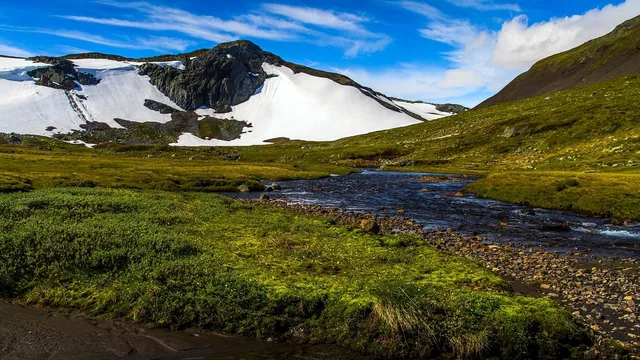
Norway · Trail
Birkebeinerløpet
Birkebeineren Ski Stadium to Håkons Hall, Lillehammer, Innlandet
20.2 kmA Saturday in mid June; 12 June 2027 (29th edition)
DurationHalf-day
TerrainRough
ColdMild
Cut-offsOpen
Countries
Norway races the way it lives outdoors: on skis over the mountain in March, on foot and by bike over the same mountain in summer, and in the sea at any temperature. The big events are mass-participation and well organised, but most are point-to-point in places with one road and few beds, so the first thing a visitor plans is not the training but the logistics. Everything else runs on the right to roam and a public transport network that reaches further than you might expect.
Norway · Trail
Birkebeineren Ski Stadium to Håkons Hall, Lillehammer, Innlandet
20.2 kmA Saturday in mid June; 12 June 2027 (29th edition)
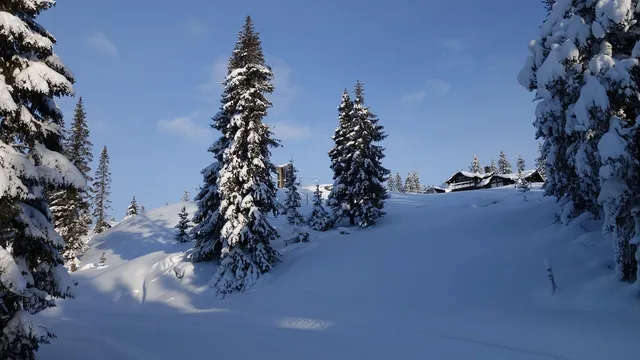
Norway · Ski
Rena to Lillehammer, Innlandet
53 kmA Saturday in mid March; 20 March 2027 (87th edition)
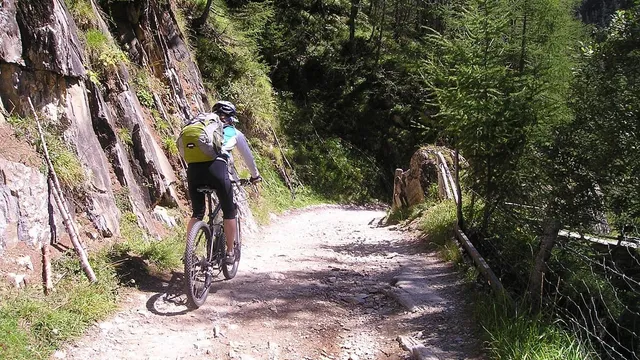
Norway · Bike
Rena to Lillehammer, Innlandet
84 kmLast Saturday of August; 28 August 2027

Norway · Road
Rådhusplassen, Oslo
42.195 kmThird Saturday of September; 18 September 2027 (12 September 2026)
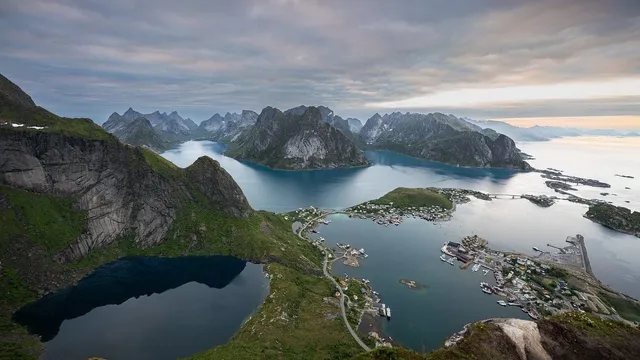
Norway · Trail
Kirkefjorden (Moskenes) to Svolvær, Lofoten, Nordland
165 kmWeek 22, starting Friday; 100 Miles on 4 June 2027, shorter distances on Saturday 5 June
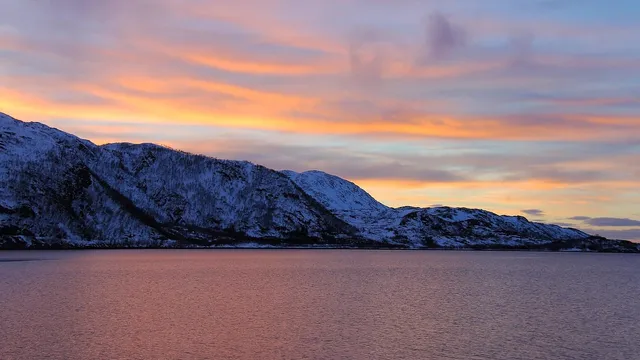
Norway · Road
Tromsø, Troms (start Prostneset, finish Kulturhuset)
42.195 kmA Saturday in late June, start 20:30; 19 June 2027

Norway · Multisport · Swim · Bike
Eidfjord to Mount Gaustatoppen, Vestland to Telemark
226 kmFirst Saturday of August, start at 05:00; 7 August 2027 (24th edition)
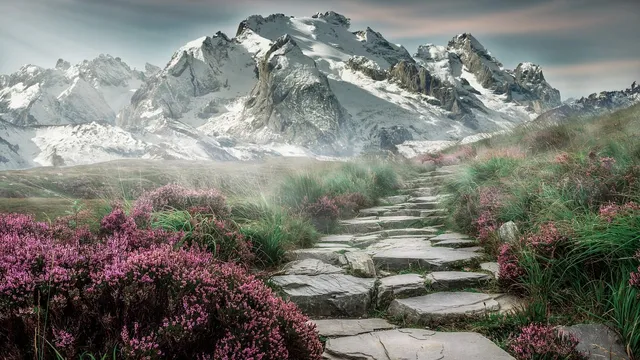
Norway · Trail
Stoltzekleiven, Sandviksfjellet, Bergen
0.9 kmFriday and Saturday in the last week of September (25–26 September 2026; the 2027 dates were not yet announced in October 2026)

Norway · Bike
Trondheim to Oslo (also Lillehammer, Eidsvoll to Oslo)
515 kmThird weekend in June; organiser lists 18 to 20 June 2027, with the ride on the Saturday (19 June) as in earlier years

Norway · Trail
Tromsdalen, Tromsø, Troms
50 kmSaturday and Sunday in the third week of August (21–22 August 2027)
The racing year opens in late winter. Birkebeinerrennet, 53 km on classic skis from Rena to Lillehammer, is held on a Saturday in mid March (14 March 2026, and 20 March 2027 for the 87th edition), with the tracks between the two towns groomed every Saturday from mid February. Lofoten Skimo takes week 11. Then comes Easter, which Store norske leksikon describes as the longest public holiday of the spring half-year and the one Norwegians associate with cabins and ski trips. The road season starts when the snow leaves the lowlands in April and May.
Summer belongs to the mountains and the coast: Lofoten Ultra-Trail in week 22, Birkebeinerløpet and the rest of the Birken running weekend on 12 June 2027, Styrkeprøven from Trondheim to Oslo on 18 to 20 June 2027, the Midnight Sun Marathon in Tromsø on 19 June 2027 and Norseman Xtreme Triathlon from Eidfjord on 7 August 2027. Birkebeinerrittet, 84 km of mountain biking, closes the Birken triple on 28 August 2027. September is the road and hill month: Oslo Maraton on the third Saturday of September and Stoltzekleiven Opp in Bergen in late September. Winter racing exists too: the Polar Night Marathon in Tromsø on 9 January 2027 is run in the blue twilight of the polar night, and the sea-bathing season no longer has an end date, with municipalities such as Bergen noting that year-round bathing has grown year on year.
Use the normals, not the brochures. At Oslo (Blindern) the 1991 to 2020 monthly normal is -2.3 C in January, 1.3 C in March, 15.3 C in June, 17.7 C in July and 12.2 C in September. Lillehammer, the Birken finish, has a March normal of -0.3 C, so race day on the mountain between Rena and Lillehammer is well below that and the pack rule exists for a reason. Bergen (Florida) is mild and wet: a September normal of 12.6 C with 248 mm of rain in the month, and 256 mm in January. Tromsø has a June normal of 9.4 C, July 12.3 C and September 7.8 C, and measured 105 cm of snow in February 2026. Yr, the forecast service run by the Norwegian Meteorological Institute and NRK, shows these normals next to the latest observations for every station.
Daylight is the other variable. MET Norway's sunrise service gives Oslo a day of roughly 18 hours 50 minutes on 21 June (sun up 03:53, down 22:43 local summer time) and just under six hours on 21 December (09:18 to 15:12). In Tromsø the sun does not set on 21 June and does not rise on 21 December; Visit Tromsø puts the midnight sun at about 20 May to 22 July. For kit this means a headtorch is pointless for a June race in the north and essential for anything in November to February, that a Bergen autumn race is a waterproof-shell race, and that every mountain race, including the summer ones, is run with warm layers in the pack.
Allemannsretten is written into the Outdoor Recreation Act (friluftsloven) of 1957 and administered by the Norwegian Environment Agency (Miljødirektoratet). In utmark, which the agency defines as most forest, mountain, bog, shore and water, anyone may travel on foot all year, whoever owns the land, as long as they are considerate and careful. You may also ride a bicycle on roads and paths in utmark and anywhere in the mountains, unless the municipality has closed a stretch with the owner's consent. The right does not cover motor vehicles, e-bikes, hunting or freshwater fishing. Innmark, meaning farmyards, house plots, cultivated fields and meadows, is excluded, except that you may cross it on foot when the ground is frozen or snow-covered, and never between 30 April and 14 October. Roads and established paths through innmark that lead to utmark may be used on foot, by bike or on skis all year, but not by organised events such as cycle races.
You may swim from any shore in utmark at a reasonable distance from inhabited houses and cabins (section 8). You may camp or sleep out in utmark at least 150 m from the nearest inhabited house or cabin, for up to two nights in one place without asking; in the high mountains or far from settlement you may stay longer. Protected areas, drinking-water catchments and some local by-laws restrict camping, so check with the municipality. Between 15 April and 15 September it is forbidden to light a fire in or near forest and other utmark without the municipality's permission, except where it obviously cannot start a fire, and you should never light one on bare rock. Dogs must be on a lead from 1 April to 20 August under the Dog Act (hundeloven, section 6), and municipalities may extend that to marked ski tracks and trails. An organised event needs the landowner's agreement for its start, finish and any barriers, which is why race routes are negotiated well in advance and why you should stick to the marked course.
Avinor runs 43 airports; the ones that matter for racing are Oslo (Gardermoen), Bergen, Trondheim, Stavanger and Tromsø. Flytoget's airport express leaves Oslo Airport every 10 minutes and reaches the city centre in 19 minutes, and ordinary Vy trains also stop at the airport. Entur is the national journey planner and covers every operator, including the ferries. Rail is good for the classics in the east: SJ Nord runs the Dovre line from Oslo through Lillehammer to Trondheim, the Røros line and the Nordland line on to Bodø, and Vy runs the Bergen line. Lillehammer is on the Dovre line; Birken's start at Tingstadjordet is 3 km from Rena. There is no railway to Tromsø or to Eidfjord, so you fly to Tromsø and drive to Norseman: the organisers put the start 150 km from Bergen and 322 km from Oslo Airport, and the finish 367 km from Bergen and 230 km from Oslo.
Point-to-point races mean the organiser's logistics decide your day. Birken runs buses for skiers who drop out, moves kit bags between Rena and Lillehammer, and sells mattress space at Rena the night before (NOK 495 pre-booked in 2027). Norseman tells you to stay in or near Eidfjord until race day and move to the Gausta area afterwards, and to book the moment your slot is confirmed because Eidfjord is very small. Oslo Maraton's longer distances have sold out for years, and its 2026 waiting list closed on 3 August. Beds in Lillehammer in Birken week and in Tromsø in midsummer go first; book those before you book the flight.
Sport in Norway is organised through clubs. The Norwegian Olympic and Paralympic Committee and Confederation of Sports (NIF) lists 1.88 million memberships in 8,991 clubs across 55 federations, in a country of about 5.5 million people, and the mass-participation races are owned by clubs: Oslo Maraton by Sportsklubben Vidar, Stoltzekleiven Opp by IL Varegg. Joining a club is also how you get a full-year licence; without one you buy a single-event licence (engangslisens) at registration for any run organised under the athletics federation from the year you turn 13 until the year you turn 80, and the cycling federation requires a licence for every ritt, with single-event turritt licences at NOK 170 or 220 depending on the entry fee.
In winter the training ground is the groomed track. Skiforeningen, founded in 1883 and with 75,000 members, grooms the Marka forests around Oslo with the municipalities and local clubs and publishes a daily track report, and most towns have a lit loop (lysløype) for evenings after work. The Norwegian Trekking Association (DNT), the country's biggest outdoor organisation, keeps a network of marked routes and mostly self-service cabins that long runs and ski tours are planned around. Easter is spent at the cabin on skis. The sea is used all year: Bergen municipality notes that ice bathing has become more and more popular, lists 24 prepared public bathing spots and reports floating saunas appearing in recent years, and the same pattern holds in Oslo and Tromsø. A newcomer is welcome at a club's open sessions, but do not expect to be chased; you turn up, and you are in.
Birkebeinerrennet is the race every Norwegian can name: 53 km of classic skiing over three mountains from Rena to Lillehammer, first held in 1932 in memory of the two birkebeiner warriors who carried the infant prince Håkon Håkonsson across the same mountain in 1206. Everyone carries a pack, which weighed 5.5 kg until 1993, 3.5 kg until June 2026 and now 2 kg, and the mountain bike race and the run that make up the Birkebeiner triple follow the same tradition. More than 13,000 skiers took part in the 2025 ski weekend, four in ten of them for the first time. Norseman Xtreme Triathlon is the other national myth: a 4 am swim in the Hardangerfjord at Eidfjord and a finish on Gaustatoppen, with 335 slots drawn by ballot for around 250 starters and a EUR 550 entry fee. Oslo Maraton, first run in 1981 and now over 29,000 participants across its distances from Rådhusplassen, is the road classic, and Stoltzekleiven Opp in Bergen is the hill one: 5,100 runners up a stone staircase in 2026, the winners in 8 minutes 10 seconds and 10 minutes 8 seconds. Further north, the Midnight Sun Marathon in Tromsø set a participation record in 2026 with 9,000 runners from 97 nations, and Styrkeprøven has sent cyclists from Trondheim to Oslo since 1967.
Usually yes, and it is bought with your entry. For runs organised under the athletics federation a licence is required from the year you turn 13 to the year you turn 80; non-members buy a single-event licence (engangslisens) at registration, while a full-year licence needs club membership (NOK 450 or 1,050 at the 2022 price). The cycling federation requires a licence for every ritt, with single-event turritt licences at NOK 170 or 220 depending on the entry fee. Norseman requires every athlete to hold a valid licence or personal accident insurance that covers an event of that kind, and makes a federation or race-day licence mandatory for Norwegian residents (checked 14 October 2026).
On foot, almost anywhere in utmark, all year, and by bike on roads and paths in utmark and anywhere in the mountains. Cultivated land and house plots are off limits in summer; you may cross frozen or snow-covered fields outside 30 April to 14 October. You may camp in utmark at least 150 m from an inhabited house or cabin for up to two nights without asking, and longer in the high mountains or far from settlement. No fires in or near forest and other utmark between 15 April and 15 September without the municipality's permission (friluftsloven and Miljødirektoratet, checked 14 October 2026).
Colder than the towns suggest. Lillehammer's March normal is -0.3 C and the Birken course spends about 20 km in the mountains above it; Tromsø's June normal is 9.4 C and the mountain races start at sea level and climb past 1,000 m. Organisers require a pack with warm clothing for a reason: Birken's minimum is 2 kg since June 2026, whatever the forecast (Yr normals 1991 to 2020 and birken.no, checked 14 October 2026).
If you are from the EU, EEA, Switzerland or the United Kingdom, a valid physical EHIC entitles you to medically necessary public healthcare during your stay on the same terms as Norwegians, which means you pay the standard user fee. Helsenorge recommends private travel insurance as well because the card's cover is limited, and a digital card is not accepted. Nordic residents need only show ID and their home address (Helsenorge, checked 14 October 2026).
Oslo Maraton and Stoltzekleiven Opp are city-centre starts. Lillehammer, Birken's finish, is on the Dovre line from Oslo; Birken moves kit between Rena and Lillehammer and runs buses for those who drop out. Tromsø has an airport but no railway. Eidfjord, the Norseman start, has neither: it is 150 km from Bergen by road, and the finish is 230 km from Oslo (organisers' pages, checked 14 October 2026). Entur plans any public transport journey in the country.