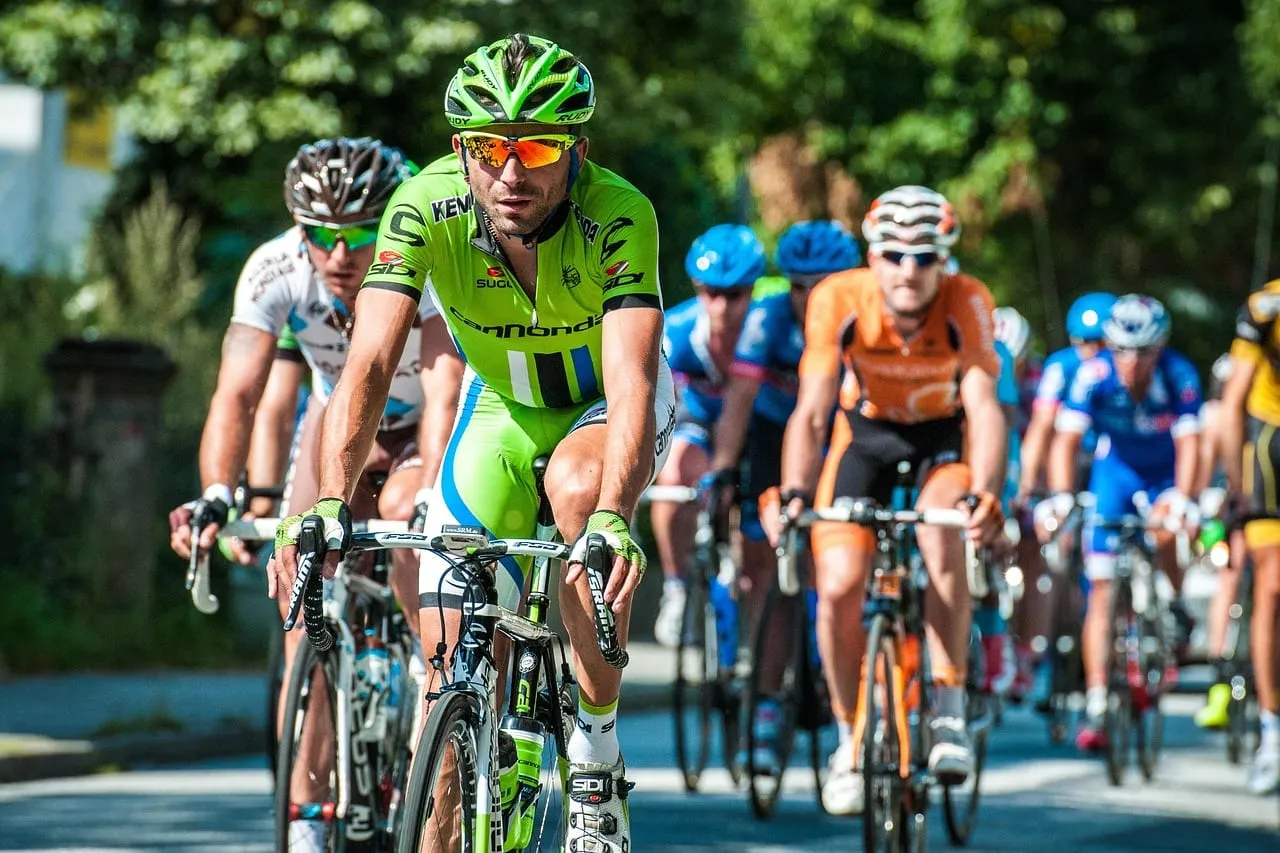
Norway · Gravel and mountain biking
Styrkeprøven
Trondheim to Oslo (also Lillehammer, Eidsvoll to Oslo)
Styrkeprøven (Den Store Styrkeprøven) is a Norwegian touring ride from Trondheim to Oslo, about 515 km on public roads, held since 1967 and billed as the world's oldest and longest touring ride; shorter distances start at Lillehammer (176 km) and Eidsvoll (56 km). It is not a race with closed roads: you ride in traffic, in groups with a self-chosen start wave, supported by food stations and bag transport. The flagship Trondheim to Oslo did not run in 2026 because a permit was first refused and then granted too late, so the latest edition with results is 2025; it is planned again for 18 to 20 June 2027.
Official site (opens in a new tab)No. 8 of 41 in the toughness ranking
The race in brief
- Distance
- 515 km
- Climb
- 4,220 m
- Format
- About 515 km point to point on open public roads, timed touring ride (Norwegian Cycling Federation touring rules), self-seeded start waves from 04:00, bag and clothing transport to Oppdal, Ringebu and Skreia, no support vehicles allowed
- When
- Third weekend in June; organiser lists 18 to 20 June 2027, with the ride on the Saturday (19 June) as in earlier years
- Mid-pack time
- 19 h 02 min (median of 416 timed finishers, 2025, calculated from the official results)
- Cut-off
- Food stations close on a timetable; in the 2026 plan Soknedal (65 km) closed at 08:40, Folldal (195 km) at 16:20 and the last station Frogner (491 km) at 09:40 the next morning
- Entry fee
- 1 900–2 950 kr (Trondheim to Oslo, the 2026 price steps as still published (1 900 kr from 1 October 2025 to 2 950 kr from 1 May 2026); 2027 prices are not yet published)
- Field
- 495 started and 416 timed finishers in Trondheim to Oslo (2025); no Trondheim start in 2026
- First held
- 1967
- Other distances
- Trondheim to Oslo about 515 km · Lillehammer to Oslo 176 km (the most popular, since 1997) · Women Velo Lillehammer to Oslo 176 km · Eidsvoll to Oslo 56 km · Ung i Styrkeprøven for young riders
- Organiser
- Styrkeprøven AS, Sandvika
Next edition: 2027-06-19 · Organiser says dates are 18 to 20 June 2027 and that registration opens soon; the ride manual for 2027 comes a few weeks before the ride · Entries (opens in a new tab)
Checked 2026-10-15
How tough is it?
Four meters, each 1 to 5, rated by our published method. The basis under each one shows the figures behind the score. How we rate.
Median finishing time 19 h 02 min across 416 timed finishers of Trondheim to Oslo in 2025 (EQ Timing results, calculated 2026-10); quartiles 17 h 27 min and 21 h 40 min, the slowest tenth over 23 h 50 min, fastest 15 h 04 min. Well over 10 h; the Lillehammer start is a day-ride with a median of 6 h 17 min in 2026. As of 2025-06.
Public roads, mostly tarmac with some rough sections: the organiser gives 515 km and 4,220 m of climb (it notes the elevation figure is disputed), about 8 m per km, with a mountain crossing south of Oppdal as the high ground and a 2026 note about 9 km of new asphalt north of Feiring. Rolling road rather than trail; the difficulty is distance and wind. Borderline with 3. As of 2026-10.
Mid-June: Oppdal's June mean was 12.2 C in 2026 against a 9.9 C normal (Yr station table, 2026-09) with gusts above 18 m/s, and the ride starts at 04:00 in Trondheim, crosses the mountains south of Oppdal and runs through the evening. Rain and headwinds are the normal worry; organiser's advice is to carry a rain layer, long gloves and extra clothing in the bags sent to Oppdal. Borderline with 3 for riders who cross the high ground in the cool early hours. As of 2026-09.
Food stations close on a timetable, from 08:40 at Soknedal (65 km) to 09:40 the next morning at Frogner (491 km) in the 2026 plan (Styrkeprøven route page, 2026-10). In 2025, 71 of 495 starters did not finish (14 per cent) and the slowest finisher took 27 h 25 min. Entry is open until the day; fees step up from 1 900 kr to 2 950 kr. Permit risk, not a field limit, is the real uncertainty. As of 2025-06.
The course
The ride starts in Trondheim's Munkegata square, with waves from 04:00 to 04:45 chosen by the finish time you give at registration: the fastest start first and clubs are kept together. Food stations (eight between Trondheim and Oslo) are at Soknedal (65 km), Oppdal (107 km), Folldal (195 km), Ringebu (280 km), Lillehammer (340 km), Skreia (410 km), Eidsvoll Verk (459 km) and Frogner (491 km). Bags with spare clothing can be sent to Oppdal, Ringebu and Skreia.
The route follows the old Trondheim to Oslo road: south to Oppdal and over the mountains to Folldal, down to Ringebu in Gudbrandsdalen and on to Lillehammer, and along the west side of Mjøsa through Gjøvik, Skreia and Totenvika to Minnesund, then Eidsvoll and Oslo. In recent years the route has used a new section between Minnesund and Dal, and about 9 km of new asphalt north of Feiring was announced for 2026. The finish area is in the Groruddalen valley in Oslo, at Årvoll school in 2026.
It is a touring ride and normal traffic rules apply: no more than two abreast, no crossing the yellow line, and stop at red lights. Police and guards at junctions can stop riders. Support cars are banned, and any follow vehicle can lead to disqualification; instead, the organiser's neutral service cars and the food stations provide technical help. Headwind is the usual enemy: the organiser's history records riders in the 1970s fighting headwind most of the way, and the stretches after Lillehammer come when fatigue meets afternoon traffic.
At the finish you get a light meal, a cafe, toilets and showers and a rest area with mattresses, and a race office can help with taxis and diplomas. Diplomas are downloaded as PDF from the EQ Timing results.
How to enter
Registration is through EQ Timing; for 2027 the site says it opens soon, and no 2027 prices have been published. The 2026 price steps on the Trondheim to Oslo page show how the price rises: 1 900 kr from 1 October 2025, 2 150 kr from 16 November, 2 450 kr from 7 January, 2 750 kr from 17 March and 2 950 kr from 1 May 2026 (about €180 to €280 at roughly 10.6 kr to the euro). You give an estimated finish time and your club, company or group when you enter, and this decides your start wave.
There is no refund or transfer to the next year if you cannot ride; you can sell the number (the organiser says a sale costs just over 300 kr), switch to a shorter distance or rely on your own insurance. For 2026 the organiser offered Trondheim to Oslo riders a refund route when the event was cancelled; the permit situation means 2027 should be checked for conditions at entry. Bike transport by train and truck from Oslo to Trondheim and Lillehammer can be ordered with the entry, and bicycle boxes can be sent for 150 kr extra.
How to train for it
Train for 19 hours, not 515 km
The median Trondheim to Oslo rider was out for 19 h 02 min in 2025 and a quarter took more than 21 h 40 min. Ride at least one 8 to 10 hour day, ideally two back-to-back long days, and practise eating every 30 to 40 minutes at touring pace rather than race pace.
Prepare for wind in Gudbrandsdalen
The organiser's history records tough headwind in earlier years, and the weather forecast for the ride day matters. Practise riding in a group in wind, take turns, and save your effort for the long drag after Lillehammer.
Plan the three bags
You can send bags to Oppdal, Ringebu and Skreia: they must be waterproof, up to 1.5 kg each, and handed in on the Friday evening in Trondheim between 19:00 and 21:00. Pack for what you will need at each point: a rain layer and long gloves for the high ground, spare tubes and sun cream in the middle, and a windproof vest and dry socks for the evening.
Practise night and low-light riding
You start at 04:00 and, if you finish in 19 hours, ride into the evening. Lights front and rear are mandatory, so test them on a long ride and bring a spare battery.
Choose your wave honestly
You choose your own seeding by giving a finish time. If many riders give 17 to 18 hours, the organiser splits them into groups by club; ride with a group at your own pace instead of going out with the faster groups, because the slowest waves are given the stations that stay open longest.
Respect traffic rules
This is not a closed-road race. Two abreast at most, stop at red lights, obey police and guards, and take care in the places where the manual warns about junctions and traffic lights between Skreia and Minnesund.
What you need
- A road bike in good order with working lights front and rear; the ride runs through the evening
- Spare tubes, CO2 or pump and tyre levers: support is neutral service cars and food stations, not a personal support vehicle
- Clothing for four seasons in a day: a thin rain jacket, long gloves, leg or arm warmers and a windproof vest, with extra layers in the bags to Oppdal and Ringebu
- Waterproof drybags (not ordinary plastic bags) for the bag transport, marked with bib number, name and mobile number, maximum 1.5 kg each, up to three
- Payment card, because stopping or abandoning means paying for your own onward train or bus ticket
- Your own gels and bars: food stations serve baguettes, wraps, soup, sports drink, squash, water and fruit
- The helmet sticker and rear bib number from the pack; the bib goes on your back and a sticker on the front of the helmet
Getting there and staying
Trondheim has an airport and a railway station; Oslo has the finish. The race pack can be collected in Trondheim at the Hank Sport shop on the Friday before (10:00 to 19:00 in 2026) or from the secretariat at the start from 03:00; in Oslo bibs can be collected at Braasport Ullevål on the Wednesday. Luggage handed in at the start is transported to the finish by truck. The organiser sells train and bike transport to Lillehammer and Eidsvoll with the entry; the manual text also describes bikes being trucked to Trondheim Torg on the Friday afternoon.
Accommodation in Trondheim for the Friday night is your own booking; the bag drop in Munkegata is open from 19:00 to 21:00 on Friday evening and again on the Saturday morning. The finish area in Groruddalen has showers, cafe, rest area with mattresses and a race office that can order taxis. Many riders arrange a trip home on the Sunday.
In 2026 the permit process nearly stopped the ride: the organiser said police have for years not wanted dialogue about the event, that the road authority gave a permit after an appeal, and that this came too late for Trondheim to Oslo. Check the organiser's news before booking travel.
History
Styrkeprøven began in 1967 on Midsummer Eve: 121 riders left Nidaros Cathedral in Trondheim, with 25 more joining from Dombås and 5 from Hamar. The idea came from Erik Gjems-Onstad, a former resistance fighter and president of the Norwegian Cycling Federation, who then rode it ten times himself. The maximum time was 48 hours and the finish was by the Akershus fortress. Participation passed 1,000 for the first time in 1979. In 1978, 906 riders started in sleet and rain and only 602 reached Oslo in time.
Mass starts were stopped after 1976 when police objected to the size of the groups, and a fatal accident in 1974 led the road authority in Sør-Trøndelag to ban cycling events on the E6 until politicians intervened. The ride has run every year except 2020 and 2021; 2027 would be the 58th edition. In 2026 Trondheim to Oslo was cancelled after a refused permit.
Where to find out more
- Styrkeprøven (opens in a new tab): The organiser's site with news, registration and distances.
- Trondheim to Oslo (opens in a new tab): Distance, price steps, food station times and the bag transport.
- Ride manual (opens in a new tab): Rules, route changes, time limits and logistics; the 2026 manual is online now and the 2027 one comes weeks before the ride.
- Frequently asked questions (opens in a new tab): Refunds, bag transport, abandonment and diplomas.
- Results 2025 (EQ Timing) (opens in a new tab): Official results for 2025 including Trondheim to Oslo; the source of the median.
- Route on RideWithGPS (opens in a new tab): The organiser's 2026 route map for Trondheim to Oslo (a 2027 version follows).
Questions about Styrkeprøven
Did Styrkeprøven Trondheim to Oslo run in 2026?
No. A permit was first refused, then granted, but too late for the organiser to run the ride safely, so only Lillehammer to Oslo and Eidsvoll to Oslo were held on 20 June 2026. The organiser offered Trondheim riders a self-certified 520 km ride instead, and plans Trondheim to Oslo again for 18 to 20 June 2027.
How long does Trondheim to Oslo take?
The median of 416 timed finishers in 2025 was 19 h 02 min; the fastest was 15 h 04 min, the slowest finisher took 27 h 25 min, and 71 of 495 starters did not finish.
Is it closed to traffic?
No. It is a touring ride on open roads under the Norwegian Cycling Federation's touring rules; you must follow traffic law, ride no more than two abreast and obey police and guards. Support cars are banned.
Can I get a refund?
Not if you simply cannot ride: there is no refund or transfer to next year. You can sell the number, switch to a shorter distance or use private insurance. Check the terms in 2027 given the 2026 cancellation.
Which distance should I choose?
Lillehammer to Oslo is the most popular (since 1997): 176 km, with a median of about 6 h 17 min in 2026. Eidsvoll to Oslo is 56 km. Trondheim to Oslo is the original, about 515 km.
Similar races
Norway · Bike
Birkebeinerrittet
Rena to Lillehammer, Innlandet
84 kmLast Saturday of August; 28 August 2027
Finland · Bike
Tahko MTB
Tahko (Tahkovuori), Nilsiä, Kuopio, North Savo
60 kmFriday and Saturday of the weekend after Midsummer (2–3 July 2027; 26–27 June 2026)

Norway · Multisport · Swim · Bike
Norseman Xtreme Triathlon
Eidfjord to Mount Gaustatoppen, Vestland to Telemark
226 kmFirst Saturday of August, start at 05:00; 7 August 2027 (24th edition)

Norway · Ski
Birkebeinerrennet
Rena to Lillehammer, Innlandet
53 kmA Saturday in mid March; 20 March 2027 (87th edition)
Sources
Figures and rules on this page come from these pages, read on the dates given. Organisers change dates, fees and rules: check the official site before you enter.
- Styrkeprøven: home page (2027 dates, news) (opens in a new tab) (read 2026-10-15)
- Styrkeprøven: Trondheim to Oslo (distance, prices, stations, bag transport) (opens in a new tab) (read 2026-10-15)
- Styrkeprøven: Ride manual 2026 (opens in a new tab) (read 2026-10-15)
- Styrkeprøven: FAQ (opens in a new tab) (read 2026-10-15)
- Styrkeprøven: Parts of Styrkeprøven 2026 can be held after all (23 May 2026) (opens in a new tab) (read 2026-10-15)
- Styrkeprøven: For those who had planned Trondheim to Oslo this year (4 June 2026) (opens in a new tab) (read 2026-10-15)
- Styrkeprøven: History (1967 to 2013) (opens in a new tab) (read 2026-10-15)
- Styrkeprøven: Masterclass on clothing and bag packing (2023) (opens in a new tab) (read 2026-10-15)
- EQ Timing: Styrkeprøven 2025 results (Trondheim to Oslo, used for the median) (opens in a new tab) (read 2026-10-15)
- EQ Timing: Styrkeprøven 2026 results (Lillehammer, Eidsvoll to Oslo) (opens in a new tab) (read 2026-10-15)
- Yr: Oppdal weather statistics (June 2026 and normal) (opens in a new tab) (read 2026-10-15)
- Norges Bank: EUR/NOK exchange rate 14 October 2026 (opens in a new tab) (read 2026-10-15)