Norway · Multisport and adventure · Open water and winter swimming · Gravel and mountain biking
Norseman Xtreme Triathlon
Eidfjord to Mount Gaustatoppen, Vestland to Telemark
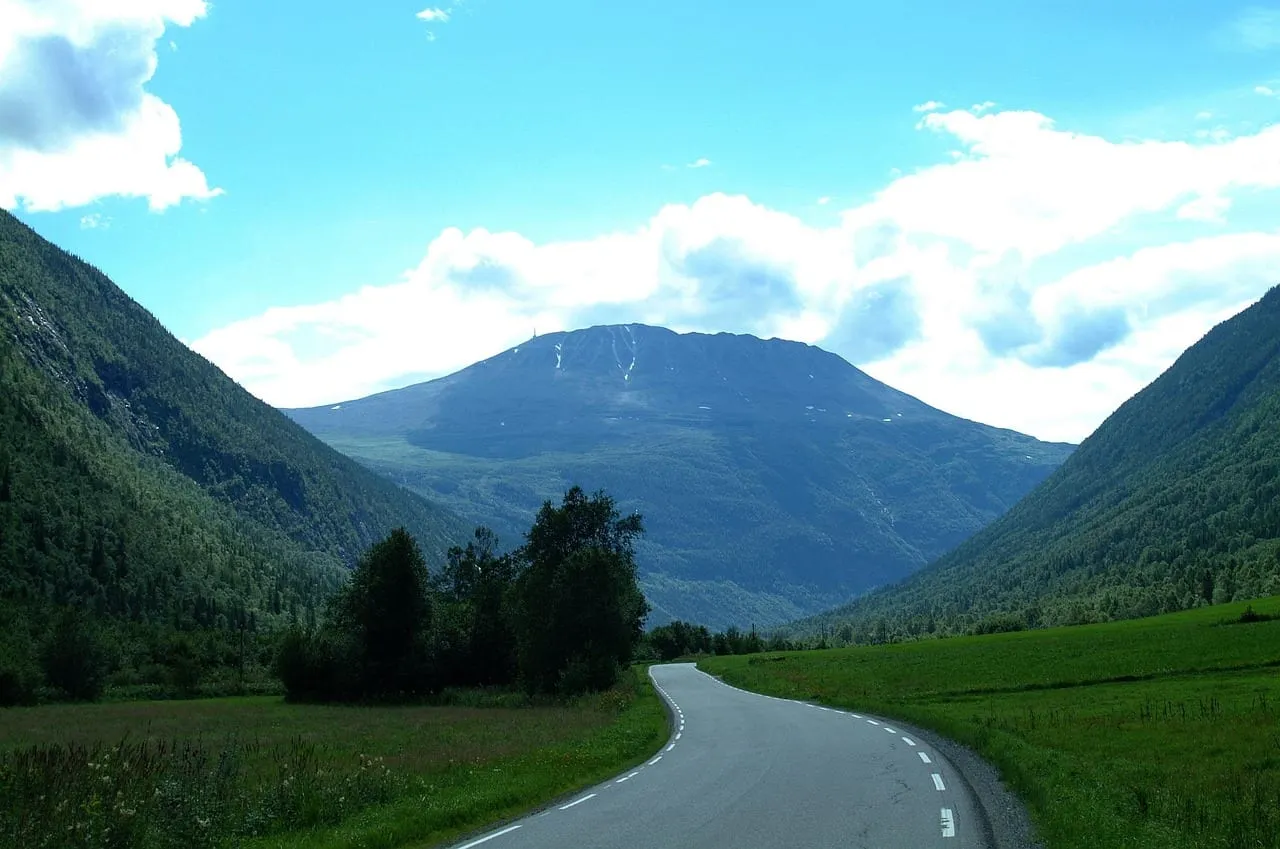
Norseman is a 226 km point-to-point triathlon held on the first Saturday of August: a 3.8 km swim in the Hardangerfjord after jumping off a ferry at 05:00, a 180 km bike across the Hardangervidda plateau, and a marathon that ends, for the first 160 athletes, on top of Mount Gaustatoppen at 1,850 m. It is a race that needs a ballot just to enter: 16,033 people applied for the 2027 edition, which has about 250 places on the start line, and from 2027 stricter cut-offs apply because police have required closed roads. Every athlete must bring a support person and car, and the median finisher in 2026 took 14 h 43 min.
Official site (opens in a new tab)No. 1 of 41 in the toughness ranking
The race in brief
- Distance
- 226 km
- Climb
- 5,235 m
- Format
- 3.8 km fjord swim (jump from a ferry, wetsuit mandatory), 180 km bike on open roads without drafting, 42.2 km run with a final 4.7 km mountain trek; mandatory support person and car, no pacing, no poles
- When
- First Saturday of August, start at 05:00; 7 August 2027 (24th edition)
- Mid-pack time
- 14 h 43 min (median of 236 finishers, 2026, calculated from the official results)
- Cut-off
- New for 2027: swim exit 1 h 50 min after the start, T2 exit 10 h 40 min, 37 km on the run (Stavsro) 14 h 30 min for the black t-shirt and 16 h 30 min for the white; the white finish closes at 17 h 30 min
- Entry fee
- €550 (2027 entry fee, payable only after a start place is won in the ballot; the ballot ticket itself costs a few euros)
- Field
- About 250 athletes on the start line each year; 236 finishers in 2026 (158 black and 78 white finishers)
- First held
- 2003
- Other distances
- Norseman Xtreme Triathlon 226 km (the only distance)
- Organiser
- Norseman Xtreme Triathlon (sanctioned by the Norwegian Triathlon Federation)
Next edition: 2027-08-07 · Ballot ran 1 to 11 October 2026 with 16,033 entrants; the draw was on 14 October 2026 and the results are published on 21 October at 20:00 CEST; drawn athletes must pay the entry fee by 14 November · Entries (opens in a new tab)
Checked 2026-10-15
How tough is it?
Four meters, each 1 to 5, rated by our published method. The basis under each one shows the figures behind the score. How we rate.
Median finishing time 14 h 43 min across the 236 finishers of 2026 (official Race Result list, calculated 2026-10); quartiles 13 h 27 min and 15 h 44 min, the slowest finisher 18 h 37 min. The winner took 9 h 54 min. Cut-offs for 2027 allow up to 17 h 30 min for the white finish (race manual 2027). As of 2026-08.
226 km with 5,235 m of climb (race manual 2027): a 3.8 km open-water fjord swim, a bike over Måbødalen, Hardangervidda and Imingfjell on open roads, then a run whose last 17 km climb to 1,850 m, ending with a 4.7 km rocky mountain trek that needs a mandatory backpack. The mountain can close in bad weather and the swim can be shortened or the race run as a duathlon. As of 2026-10.
Early August: fjord water usually 13 to 17 C on race morning (14.7 C in 2026) and wetsuits are mandatory; 3 C at Dyranut on the plateau in 2026; the manual gives 2 C with strong wind and rain as typical on Gaustatoppen. Both backpacks must contain waterproof jacket and trousers, hat, gloves and a wool or fleece top. Borderline with 5 because the mountain is the cold season of an Alpine summit even in August. As of 2026-08.
Entry is a ballot: 335 start places for 2027, of which 125 are drawn and 100 go by X-Points, for 16,033 entrants (Norseman press release, 2026-10). From 2027 a dozen new cut-offs apply, including 1 h 50 min for the swim exit and 10 h 40 min for T2, and only the first 160 athletes at Stavsro within 14 h 30 min get the black t-shirt. By my calculation, about 5 per cent of 2026 finishers would have missed the new T2 cut-off. Borderline with 4. As of 2026-10.
The course
The race starts at 05:00 in Eidfjord. Athletes jump from a ferry 15 to 20 minutes before the horn and swim 200 to 500 m to the start line in the Hardangerfjord, then 3.8 km to shore in Eidfjord. Water at the start has been 13 to 17 C in recent years; in 2026 it was 14.7 C and a head current slowed the swim times, although the surface looked calm. The swim exit cut-off is 1 h 50 min and T1 closes at 2 h. If the fjord is unsafe, the swim can be shortened, moved further out or turned into a circuit, and there are plans to run the race as a duathlon.
The bike is 180 km on public roads open to traffic: along the fjord and up Måbødalen past Vøringsfossen (16 km), across the Hardangervidda plateau by Dyranut (36 km) to Geilo (90 km), over Dagalifjell on National Road 40 to Uvdal, then county roads over Imingfjell and down Tessungdalen to the transition in Austbygde by Lake Tinnsjøen. There are more than 3,000 m of climbing and five major uphills, and drafting is not allowed. Lights front and rear are mandatory, and aero positions are banned in marked sections after 113, 125, 135, 153, 155 and 178 km. Support is not allowed during the first 30 km.
The run starts with a marathon-length 25 km alongside Lake Tinnsjøen with only 200 m of climb, then climbs 17.2 km on the steep Zombie Hill to 1,850 m. The first 160 athletes to reach Stavsro at 37 km within the cut-off continue the final 4.7 km up the rocky path to the summit of Gaustatoppen and receive the black t-shirt; everyone else finishes on a lower course at Bygget (42.8 km) for the white t-shirt. Your support person can walk with you from Zombie Hill, but pacing in front of you is forbidden and poles are not allowed. The summit finish can close at any time in severe weather, and the black finishers then turn at Stavsro.
The place where races are lost is the transition to the climb: 25 km of flat road running followed by a hike on tired legs. Timing is by chip with a GPS tracker, and live tracking and results run on the race website. Close to 90 per cent of penalties are given to support teams for breaking rules, so the support person has to learn the rules as well as you.
How to enter
Norseman is a ballot, not first-come, first-served. For 2027 the ballot opened on 1 October 2026 and closed on 11 October, the draw was on 14 October and the result is announced on 21 October at 20:00 CEST on YouTube, with e-mails to everyone on 23 October. Drawn athletes must register and pay the entry fee by 14 November. A ticket costs a few euros, you must be 18 or older on race day, and the ballot fee is not refunded. Each consecutive unsuccessful year adds one extra ticket, up to as many tickets as years applied, and the count resets when you are drawn or skip a year.
Of 335 start places for 2027, 125 go to the ballot, 100 to athletes with the most X-Points (points earned by finishing races in the XTRI series), 57 to qualifiers from XTRI World Tour races and Norseman's top three men and women, and 53 to partners, research, professionals, locals, media and other projects. The ballot has a maximum of 25 per cent Norwegian athletes and a minimum of 15 per cent women. Because of withdrawals, about 250 to 255 athletes start. A record 16,033 entered for 2027, 7,956 for 2026.
The 2027 entry fee is 550 euros (about 5,800 NOK at 10.60 NOK to the euro). Start places are strictly personal and cannot be sold or transferred; using someone else's number means disqualification and a five-year ban. Optional refund protection is sold at registration, and cancellations go through a web page on the race site. All athletes must have insurance or a licence valid for the event; Norwegian residents need a full-year or race-day licence, and the one-day licence is sold at registration in Eidfjord.
How to train for it
Train the bike for 180 km of climbing, not speed
There is no drafting and more than 3,000 m of climbing across Hardangervidda and Imingfjell. Long rides of five to seven hours with sustained climbs are the specific work, and the 2027 cut-offs of 6 h 10 min at Geilo (90 km) and 8 h 20 min at the Imingfjell climb (135 km) are what you are riding against.
Practise running after a long bike, then walking uphill
The run is 25 km on the flat then 17 km of near-continuous steep climb. Brick runs of 60 to 90 minutes after long rides, and loaded hiking or power-walking up steep ground for two hours or more, prepare you for Zombie Hill better than flat road mileage.
Swim open water in a wetsuit at cold temperatures
The fjord is usually 13 to 17 C, you must wear a full wetsuit, and a 1 h 50 min swim-exit cut-off applies from 2027. Train at least a few 3.8 km sessions in open water in a wetsuit, with gloves and swim socks if you use them, and practise sighting and a jump into the water from a height.
Rehearse with your support person
Your support person drives the car, feeds you and must follow tight rules; Norseman states that most penalties come from support breaking the rules. Do at least one long day together practising the rules about parking on the right, no pacing, and who may follow on foot.
Plan for the 2027 cut-offs, not the old ones
All cut-offs are stricter than in previous editions: the swim exit cut-off is 25 minutes earlier than in 2026 and T2 exit is 1 h 20 min earlier. Build your pacing plan backwards from 14 h 30 min at Stavsro for the black t-shirt and from 10 h 40 min at T2.
Practise the cold, wet mountain at the end
The typical weather on Gaustatoppen is wind, rain and about 2 C. Do long training days where you finish cold and wet, test your waterproof layers, and practise eating and navigating with a headlamp when tired.
What you need
- Full wetsuit (mandatory); thickness is not limited, and non-webbed gloves, swim socks, neoprene hood and vest are allowed
- Two mandatory backpacks at registration, one for you and one for support, each with a waterproof jacket and trousers with taped seams, hat, gloves, a long-sleeved wool or fleece top, at least two energy bars and 0.75 litres of energy drink, a pressure bandage, an emergency bag, cash or card, a charged headlamp and a mobile phone
- A road bike in working order with front and rear lights of at least 200 lumens, switched on throughout the bike leg; the reflective vest from the race pack for the first 30 km
- Insurance or licence valid for the race (Norwegian residents: NTF licence or a one-day licence bought at registration), and a passport for registration
- Run shoes with grip for the rocky path above Stavsro; hiking and running poles are not allowed
- A support car no longer than 5.4 m with a clear rear window, the Norseman stickers and bib number; campers and motorhomes are banned
- The athlete's backpack carried on the shoulders from 37 km to the finish, whether on the black or the white course
Getting there and staying
The start in Eidfjord is 150 km from Bergen and 322 km from Oslo Airport; the finish at Gaustatoppen is 367 km from Bergen and 230 km from Oslo. Both airports work, Oslo having more flights, and because the race is point to point you need a plan for your own return and for your bike after T2. Your support car carries all gear and brings the bike back from Austbygde.
Eidfjord is very small. The organiser tells athletes to book accommodation as soon as the place is confirmed, warns that booking sites may place you far from Eidfjord, and runs a TRI-Camp in Eidfjord for budget travellers; there is none at Gausta. Near the finish the partner hotel Gaustablikk Fjellresort and Gausta Sportell offer lodging, with cabins and apartments at gausta.com and Visit Rjukan.
Registration in Eidfjord requires the athlete and at least one support person, both mandatory backpacks, passport and insurance. After the finish, the lift down from Gaustatoppen is prioritised for athletes; support teams should plan to walk down to Stavsro in about two hours, or pay 430 NOK per person for the lift if there is space (September 2026).
History
The race was conceived in 2001 by Hårek Stranheim at a time when only nine Norwegians had completed a long-distance triathlon. His idea was an experience rather than a time: a journey across Norway with family and friends as support, ending on top of a mountain. The route links the Hardangerfjord at Eidfjord with Gaustatoppen over the Hardangervidda plateau, and the first race was held in July 2003.
Norseman is also the XTRI World Championship, which it hosts for the sixth time in 2027. The organiser calls the 2027 format Norseman 2.0: the police require closed roads, which means shorter cut-offs, and demand has more than doubled.
Where to find out more
- Norseman: Registration and slots (opens in a new tab): The ballot dates, ticket system, slot allocation and entry fee.
- Norseman race manual 2027 (opens in a new tab): The official 26-page manual with the new cut-offs, equipment, support rules and course.
- Norseman: Getting here (opens in a new tab): Distances from Bergen and Oslo and lodging in Eidfjord and at Gausta.
- Norseman results 2026 (Race Result) (opens in a new tab): Official final results with splits for the black and white finishers.
- Norseman FAQ (opens in a new tab): Ballot, X-Points and race date answers.
Questions about Norseman Xtreme Triathlon
How do I get a place?
By ballot: the 2027 ballot ran from 1 to 11 October 2026 and had 16,033 entrants for about 125 ballot places, plus 100 places for the athletes with most X-Points. Each consecutive unsuccessful year gives you an extra ticket in later ballots.
What are the black and white t-shirts?
Only the first 160 athletes to reach Stavsro (37 km on the run) within 14 h 30 min in 2027 are allowed to continue to the summit of Gaustatoppen and receive the black t-shirt. Everyone else who reaches Stavsro by 16 h 30 min finishes on a lower course at Bygget and gets the white one.
Do I need a support crew?
Yes. You must have one or two registered support people and one car, and at least one of them must register with you in Eidfjord and speak English or Norwegian. The support person can give only drink, nutrition and clothing, and is not allowed to help in the first 30 km of the bike leg.
What is new in 2027?
Police and road authorities require closed roads, so all cut-off times are new and stricter: the swim exit cut-off is 25 minutes earlier than in 2026 and the T2 exit cut-off 1 h 20 min earlier than before. The organiser calls it Norseman 2.0.
Is the ballot open to foreigners?
Yes, but the ballot has a maximum of 25 per cent Norwegian athletes and a minimum of 15 per cent women. Entrants in 2027 came from 110 countries, and the UK had the most from abroad with 1,740.
Similar races
Norway · Bike
Birkebeinerrittet
Rena to Lillehammer, Innlandet
84 kmLast Saturday of August; 28 August 2027

Norway · Trail
Tromsø Mountain Challenge
Tromsdalen, Tromsø, Troms
50 kmSaturday and Sunday in the third week of August (21–22 August 2027)
Norway · Trail
Lofoten Ultra-Trail
Kirkefjorden (Moskenes) to Svolvær, Lofoten, Nordland
165 kmWeek 22, starting Friday; 100 Miles on 4 June 2027, shorter distances on Saturday 5 June

Norway · Trail
Stoltzekleiven Opp
Stoltzekleiven, Sandviksfjellet, Bergen
0.9 kmFriday and Saturday in the last week of September (25–26 September 2026; the 2027 dates were not yet announced in October 2026)
Sources
Figures and rules on this page come from these pages, read on the dates given. Organisers change dates, fees and rules: check the official site before you enter.
- Norseman: Registration and slots 2027 (opens in a new tab) (read 2026-10-15)
- Norseman: Race manual 2027 (PDF) (opens in a new tab) (read 2026-10-15)
- Norseman: FAQ (opens in a new tab) (read 2026-10-15)
- Norseman: This is Norseman (opens in a new tab) (read 2026-10-15)
- Norseman: Getting here (opens in a new tab) (read 2026-10-15)
- Norseman: Insurance (opens in a new tab) (read 2026-10-15)
- Norseman: Cancelling your slot (opens in a new tab) (read 2026-10-15)
- Norseman: The early years (opens in a new tab) (read 2026-10-15)
- Norseman press release: Interest in Norseman more than doubles for 2027 (14 Oct 2026) (opens in a new tab) (read 2026-10-15)
- Norseman press release: The fjord looked calm, but the clock told another story (1 Aug 2026) (opens in a new tab) (read 2026-10-15)
- Race Result: Norseman Xtreme Triathlon 2026, final results (used for the median and cut-off calculation) (opens in a new tab) (read 2026-10-15)
- Norges Bank: EUR/NOK exchange rate 14 October 2026 (opens in a new tab) (read 2026-10-15)