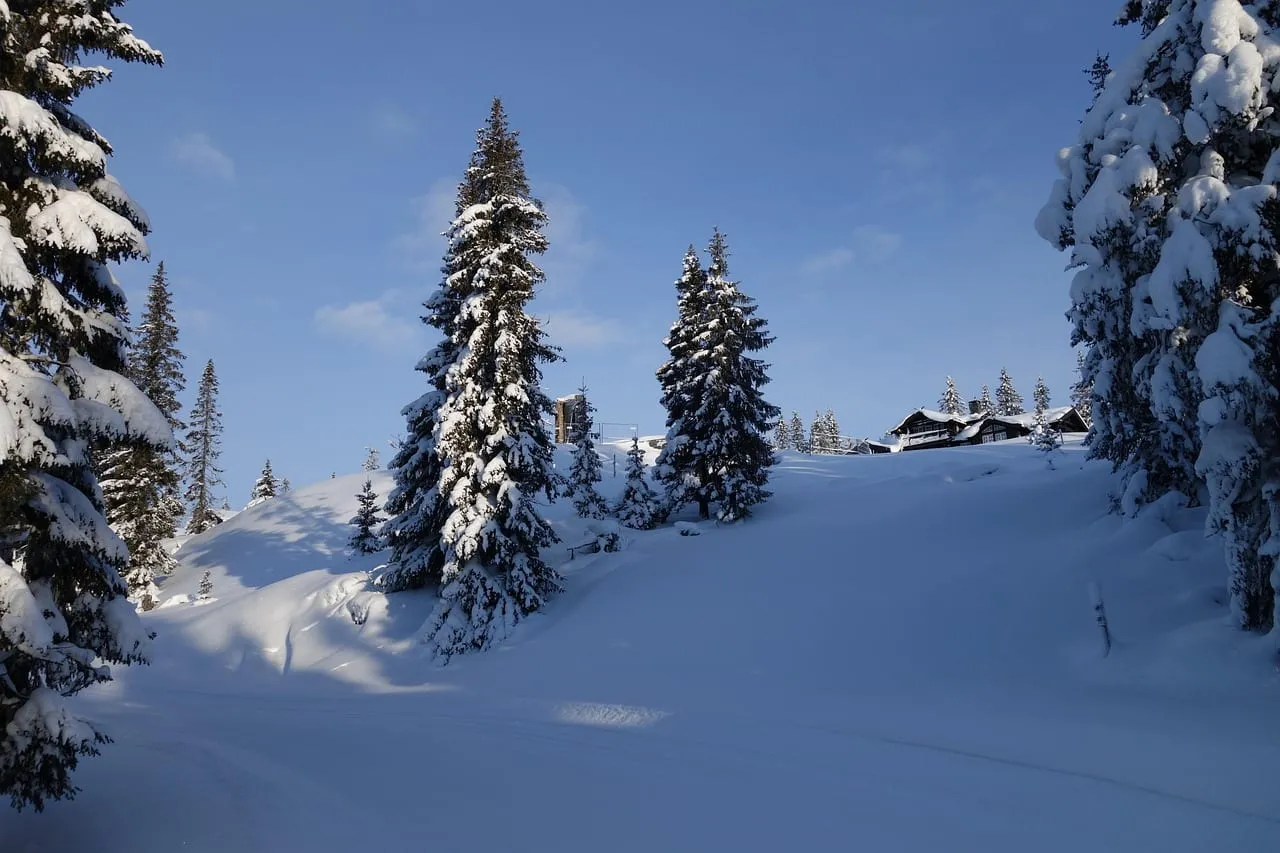
Norway · Cross-country skiing
Birkebeinerrennet
Rena to Lillehammer, Innlandet
Birkebeinerrennet is a 53 km classic-technique ski race from Rena over three mountain areas to the Olympic ski stadium in Lillehammer, skied every March since 1932 with a backpack that symbolises the infant prince carried across the same mountains in 1206. It is the hardest climb of any Worldloppet race, two thirds of it above the tree line, and the pack is a safety rule rather than a gimmick: the minimum weight was cut from 3.5 kg to 2 kg in 2026, but it must still hold windproof clothing, dry base layers, a hat and gloves. Around 8,400 skiers started in 2026 and 96 per cent of them finished, with a median time just under five hours; entry is open to anyone aged 16 or over and does not sell out, but the cut-offs and the mountain weather are real.
Official site (opens in a new tab)No. 20 of 41 in the toughness ranking
The race in brief
- Distance
- 53 km
- Climb
- 1,121 m
- Format
- 53 km point to point, classic technique only, 2 kg mandatory backpack, seeded wave start (about 22 waves from 07:45 to 10:55), elite classes start first
- When
- A Saturday in mid March; 20 March 2027 (87th edition)
- Mid-pack time
- 4 h 53 min (median of 8,069 finishers, 2026; 4 h 28 min in the faster 2025 edition)
- Cut-off
- Skramstadsetra (9 km) by 12:15, Kvarstad (28 km) by 15:30, Sjusjøen (40 km) by 17:30; everyone is expected to finish by 19:00
- Entry fee
- 1 595–2 125 kr (2027 edition: early bird 1 595 kr (15 to 23 March 2026), 1 800 kr to 31 October 2026, 1 965 kr to 15 February 2027, then 2 125 kr; 1 695 kr for ages 16 to 28; one-day ski licence 120 or 250 kr for Norwegian residents)
- Field
- 9,257 entered, 8,381 started, 8,065 finished (2026)
- First held
- 1932
- Other distances
- SkøyteBirken 53 km (free technique, Friday) · TurBirken 53 km (untimed tour, Friday) · HalvBirken 28 km Sjusjøen to Lillehammer (Saturday) · Right To Play StafettBirken relay (Friday) · UngdomsBirken 15 km, ages 12 to 16 (Sunday)
- Organiser
- Birken AS, Rena (non-profit; surplus goes to local sports clubs)
Next edition: 2027-03-20 · Entries opened 15 March 2026 with an early-bird price to 23 March; the price rises on 1 November 2026 and 16 February 2027 and entries close 19 March 2027 at 20:00. No sell-out in recent years · Entries (opens in a new tab)
Checked 2026-10-14
How tough is it?
Four meters, each 1 to 5, rated by our published method. The basis under each one shows the figures behind the score. How we rate.
Median finishing time 4 h 53 min across 8,069 finishers in 2026 (official results on tiur.birken.no, 2026-03); quartiles 3 h 55 min and 6 h 10 min, the slowest tenth over 7 h 30 min. The 2025 median from the official results PDF was 4 h 28 min in better snow. Winners 2 h 20 min (men) and 2 h 44 min (women) in 2026. Borderline with 4: a mid-pack skier in a slow year is out for five to six hours. As of 2026-03.
Groomed classic track, but 1,121 m of climb over 52.9 km (Birken track data 2026, about 21 m per km), with 20 km of near-continuous climbing from Rena (about 250 m) over Skramstadsetra (640 m) and Dølfjellet (820 m) to Raudfjellet (880 m), a second climb from Kvarstad (660 m) to Midtfjellet (910 m), then a 400 m descent over the last 14 km (Worldloppet and Ski Classics course descriptions). Two thirds is open mountain with the track reachable by road at only three points, and Worldloppet rates it the hardest of its races for climb. As of 2026-03.
Mid March at 800 to 900 m in the Norwegian interior: Lillehammer's March normal is -0.3 °C (Yr, 1991-2020) and Sjusjøen at 842 m averaged -1.1 °C in March 2026 and -10.2 °C in February 2026 (Yr station table). Wind on the open mountain has cancelled the race (2007, 2014) and moved the start (2026). The rules require a 2 kg pack with windproof jacket and trousers, dry warm underwear, hat, buff and gloves (Birken race rules, 2026-10). As of 2026-03.
Cut-offs at Skramstadsetra 12:15, Kvarstad 15:30 and Sjusjøen 17:30 with the finish expected by 19:00; the last wave starts around 10:55, giving roughly eight hours, against a median of 4 h 53 min. 96 per cent of 2026 starters finished (8,065 of 8,381; 190 withdrew, 107 DNF, Birken statistics 2026). Entry is first come, first served and has not sold out: 9,257 entered in 2026 against over 16,000 in 2013. Seeding by previous results decides the wave, not whether you get in. As of 2026-03.
The course
The start is at Tingstadjordet, 3 km west of Rena in the Østerdalen valley, and the first 9 km climb through forest to the Skramstadsetra feed station at 640 m. The climbing barely stops: the track continues up over Dølfjellet (820 m), drops briefly to Dambua at 15 km (760 m) and then climbs again to the first real mountain crossing at Raudfjellet (880 m) after about 20 km. Ski Classics describes it as a 20 km uphill with one short descent at 13 km, and it is where the race is decided for the elite and where first-timers who went out too hard discover the problem.
From Raudfjellet the course runs through forest past Nysætra down to Kvarstad at 28 km (660 m), the third feed station and the second cut-off, then climbs for the second time to Midtfjellet (910 m) at about 34 to 35 km, the highest point and the most exposed. The 6 km west across open mountain to Sjusjøen (880 m, 40 km) is where the wind hits: this stretch is why the pack rule exists and why the 2007 and 2014 editions were cancelled. Sjusjøen itself is the big spectator point, with the Red Bull 100 m sprint prize and the HalvBirken start.
The final 13 km from Sjusjøen fall about 400 m to the Birkebeineren ski stadium at 490 m, the 1994 Olympic arena above Lillehammer. The descent is fast and in places crowded and rutted, and tired legs are the usual cause of falls; Birken's own advice to former participants is that it is not all downhill from Sjusjøen, and to keep something for the last kilometres. Feed stations at Skramstadsetra, Dambua, Kvarstad, Midtfjellet and Sjusjøen serve sports drink, water, lemonade, bananas and pastries, with cured ham at Kvarstad and coffee at Sjusjøen; all of it is included in the fee. Littering costs a 15 minute penalty.
Timing is real time from the moment you cross the start line for every wave except the elite classes, with a chip on the left ankle that must be handed back (500 kr if not). Pole service from KV+ and loan skin skis from Madshus are available at the feed stations. A fluor ban applies and skis are spot-checked after the finish.
How to enter
Entries for the following March open in mid March, days after the previous race: for 2027 the early-bird window was 15 to 23 March 2026 at 1 595 kr, then 1 800 kr until 31 October 2026, 1 965 kr until 15 February 2027 and 2 125 kr (about €200 at 10.60 NOK to the euro) until entries close on 19 March 2027 at 20:00. There is a 1 695 kr youth price for ages 16 to 28 and a Birkebeiner Triple package (ski, bike and run) at 3 350 kr. The race does not sell out; the field has grown from 5,375 in 2022 to 9,257 in 2026 against a peak of 16,999 in 2013, and the site simply warns of the next price step.
Everyone is seeded into a start wave from results in Birkebeinerrennet, HalvBirken, TurBirken or SkøyteBirken 2023 to 2026 or from a list of approved seeding races; skiers without a result go into the unseeded waves starting around 09:50 to 10:55. A preliminary seeding table is published in November and the final one one to two weeks before the race; seeding results must be submitted by 10 March (9 March for reseeding). The elite classes need an active FIS code and under 100 FIS distance points or a qualifying time from recent editions. Minimum age is 16 in the calendar year.
There are no refunds for any reason, including illness or injury, and if the race is cancelled before race day the organiser keeps up to 50 per cent of the fee; Birken sells cancellation insurance through Mysafety at checkout. Entries can be sold on and re-registered to another person online until 13 March at 20:00 for 295 kr. Norwegian residents aged 13 to 79 must have a Norwegian Ski Federation licence, bought with the entry (120 kr for ages 16 to 25, 250 kr for 26 to 79) unless they hold an annual one; skiers who do not pay tax in Norway do not need a licence but must accept an athlete's declaration on My Page before bib collection.
The fee includes the feed stations, luggage transport from the start to Håkons Hall in Lillehammer and a finisher pin. A Birkebeiner medal (merke) goes to anyone finishing within the average of the top five in their class plus 25 per cent; in 2026 that was between about 3 h 57 min (men 25 to 29) and 5 h 09 min (women 50 to 54), and 34 per cent of starters earned one.
How to train for it
Build for a 20 km climb with a pack
The first 20 km are almost all uphill, so train diagonal stride and herringbone on long gradients with the 2 kg pack on, not just double poling on the flat. Birken's own three-month plan from DRIV Trening asks for one easy ski of two to three hours plus at weekend, two strength sessions a week (step-ups, split squats, pull-ups and triceps work for double poling) and intervals of six to ten minutes in zone 3 by December, moving to 5 to 10 x 3 minutes in January.
Practise skiing fast when tired
In the last two months Birken suggests ending a long session of three hours or more with 10 x 1 minute efforts, because the decisive Midtfjellet climb comes after 30 km and the race is lost by people who have nothing left there. A long session of three hours should feel easy; the quality is in the final intervals.
Race once before March for a better wave
Your wave comes from results in the last four editions or in approved seeding races (list on the race page), and results must be submitted by 10 March. One timed race in January or February puts you in a seeded wave instead of the unseeded waves that start after 09:50, which means fewer skiers to pass in the tracks on the first climb and more margin against the cut-offs.
Hold back to Skramstadsetra and Dølfjellet
The advice Birken collects from past participants is consistent: use the first kilometres to find a rhythm, do not fight for places on the way up to Skramstadsetra, and do not empty yourself before Dølfjellet. The elite median in 2026 was 2 h 20 min; for a mid-pack skier at 4 h 53 min, a minute gained in the first hour is lost several times over on Midtfjellet.
Rehearse the descent and the feed stations
The last 13 km drop 400 m into Lillehammer on a track that is crowded and worn by the time the main field arrives; practise controlled descending in a track and snowplough turns with poles out of the way. Eat from the first feed station at 9 km rather than waiting until you feel empty, and carry your own gels: the stations serve drink, bananas and pastry, not gels.
Taper for 7 to 14 days and bring wax options
Birken's one-month advice is to keep the number of sessions but halve anything over two hours, keep one interval session a week until the final week, and rest or do very light activity for the last two to three days. Conditions change from Rena (around 250 m) to the mountain at 900 m and down again, so carry wax in the pack and take the grip-wax tip of the day from the Rode service at the start.
What you need
- A backpack of at least 2 kg at the finish (bum bags are not allowed); it is weighed at random after the line and a light or badly equipped pack means disqualification or penalty time
- In the pack, mandatory: windproof jacket and trousers (long sleeved), dry warm underwear, hat, buff or balaclava, gloves or mittens
- In the pack, strongly recommended by the organiser: food, drink, grip wax, sun cream and blister plasters; anything used on the way still counts towards the weight if you carry it to the finish
- Classic skis with grip wax or skins: Madshus lends a limited number of skin skis at the start and feed stations if your grip fails, but bringing your own is faster
- Fluor-free glide and grip products only; the Norwegian Ski Federation spot-tests skis after the finish and fluor means disqualification
- The bib visible at all times and the timing chip on the left ankle, returned after the race (500 kr otherwise)
- Spare gloves and a dry shirt in the luggage bag for the finish at 490 m, where you may wait for buses or the prize desk in Håkons Hall
- No headphones or audio of any kind: the rules ban them for safety on the mountain
Getting there and staying
Rena and Lillehammer are both about two hours by train from Oslo Airport, Lillehammer on the Dovre line and Rena on the Røros line via Hamar, and the two towns are an hour and a half apart by road. Private cars cannot reach the start at Tingstadjordet: you park in Rena town centre (paid, 110 kr for all arenas) and take the free shuttle, 15 to 20 minutes. Birken runs pre-booked race-day buses to the start from Lillehammer, Hamar (free parking at the Vikingskipet arena, which saves two hours of driving round trip) and Sjusjøen, booked on My Page by 20:00 the day before; booking opens in January and unused tickets are not refunded. Return buses run from Lillehammer back to Hamar and Rena, and free shuttles stop at Skramstadsetra, Kvarstad and Sjusjøen for anyone who abandons.
Beds in Lillehammer go first, and Birken warned in 2025 that clashing events in Hamar and Lillehammer left fewer rooms than usual; alternatives are Hafjell and Hunderfossen (with buses), Sjusjøen, Hamar, Brumunddal and Elverum, plus private lets. Birken's own option is mattress accommodation with breakfast in schools and a sports hall in Rena the night before the race, 495 kr if pre-booked by 16 March and 650 kr on arrival, with your own sleeping bag; it lets you collect the bib in Rena and walk or take a shuttle to the start.
Choose your bib collection point (Lillehammer, Håkons Hall, or Rena, Åmot kulturhus) when you enter; it can be changed on My Page until 1 March, and anyone entering after 10 March collects in Rena. Both open from Thursday afternoon, and on race day bibs are at the start from 06:00. You need the QR code from your start card on your phone. Rode waxing service and the Sport 1 expo are at both sites on Thursday and Friday; skis for the waxing service must be dropped by 19:00 on Friday and collected the same evening, and nothing is transported from Lillehammer to Rena.
Luggage goes on the truck marked with your wave at the start (tags are in the bib envelope; use a waterproof bag) and is collected north of Håkons Hall in Lillehammer until 19:00. Håkons Hall has showers and changing rooms until 18:00, the diploma and prize desk, and the prize ceremonies from 13:00. Free shuttles run between the ski stadium and Håkons Hall all day. Expect a wait for buses after the finish; the race is broadcast live on NRK from 07:30 to 11:00.
History
The race remembers the Birkebeiner warriors Torstein Skevla and Skjervald Skrukka who, around New Year 1206 during the civil war with the Baglers, skied the 18-month-old prince Håkon Håkonsson from Lillehammer over the mountains towards Østerdalen and on to safety in Trondheim; he became the king who ended the civil wars. The author and forester Haakon Lie proposed a commemorative race in 1930, six men formalised it on Raufjellet on 10 January 1932, and 155 men started the first 59 km race that March, Trygve Beisvåg winning in 4 h 51 min. The pack weight was set in 1932 by weighing what a Lillehammer sports shop thought a skier needed on the mountain: 5.5 kg. It fell to 3.5 kg in 1993 and to 2 kg from June 2026, both times because equipment had become lighter.
Women's classes came in 1976, the field passed 1,000 in 1969, 5,000 in 1987 and peaked at 16,999 entries in 2013. Wind on the mountain stopped the race in 2007 and cancelled it in 2014, the pandemic cancelled 2020 and 2021, and entries fell to 5,375 in 2022 before recovering to 9,257 in 2026. The race was a World Cup final in 2002, is a founding member of Worldloppet and is the last Grand Classic of the Ski Classics pro tour. Course records stand at 2:19:28 (Petter Eliassen, 2015) and 2:41:46 (Therese Johaug, 2015); Erling Jevne won seven times and Anita Moen five.
Where to find out more
- Birkebeinerrennet race information (opens in a new tab): The organiser's page with course data, feed stations, start times, seeding, cut-offs, buses, accommodation and the full rules.
- Price list SkiBirken 2027 (opens in a new tab): Entry fees by date for Birkebeinerrennet, SkøyteBirken, TurBirken and HalvBirken, licence prices and the mattress accommodation.
- Birken results search (opens in a new tab): Official results for every edition since 1932, searchable by year, wave and class; the source of the median time.
- Birkebeiner medal time limits (opens in a new tab): PDFs of the merke time limits per class and year, plus starters, finishers and medal statistics for every Birken race.
- Worldloppet: Birkebeinerrennet (opens in a new tab): The international ski-marathon federation's page with the course profile and altitudes; the race counts towards the Worldloppet passport.
- Race day map (opens in a new tab): Interactive course map with GPX download, linked from the race page.
Questions about Birkebeinerrennet
How heavy does the backpack have to be, and what goes in it?
At least 2 kg when you cross the finish line, down from 3.5 kg since the change announced on 29 May 2026. It must contain a windproof jacket and trousers, dry warm underwear, a hat, a buff or balaclava and gloves; Birken also recommends food, drink and wax. Packs are weighed at random after the finish, and a light pack means a time penalty or disqualification. Bum bags do not count.
How long will it take me?
Half of the 8,069 finishers in 2026 were slower than 4 h 53 min; a quarter took more than 6 h 10 min and the slowest tenth over 7 h 30 min. In 2025, with better snow, the median was 4 h 28 min. Elite men finish in about 2 h 20 min.
Do I need a licence or club membership as a foreign skier?
No. The Norwegian Ski Federation licence is only compulsory for skiers aged 13 to 79 who pay tax in Norway (120 or 250 kr with the entry). Everyone else accepts an athlete's declaration on My Page before collecting the bib.
What are the cut-offs and what happens if I miss one?
You must reach Skramstadsetra by 12:15, Kvarstad by 15:30 and Sjusjøen by 17:30, and everyone is expected to finish by 19:00. Skiers stopped at a cut-off are taken to Lillehammer on free buses from Skramstadsetra, Kvarstad and Sjusjøen, with some waiting. In 2026, 96 per cent of starters finished.
Does it sell out, and can I get a refund?
It has not sold out in recent years; the price simply rises on 1 November and 16 February. There are no refunds for any reason, but you can sell your entry and re-register it to another person online until 13 March for 295 kr, and cancellation insurance is offered at checkout.
Which technique, and can I skate?
Birkebeinerrennet is classic only. The same course is skated in SkøyteBirken on the Friday, and TurBirken on the Friday allows either technique with no timing. Fluorinated wax is banned and skis are spot-checked at the finish.
Similar races
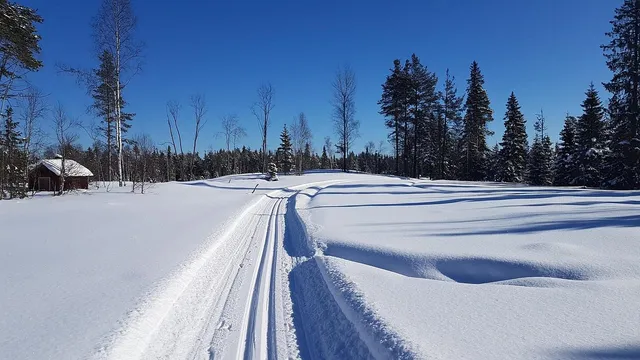
Sweden · Ski
Vasaloppet
Sälen (Berga by) to Mora, Dalarna
90 kmFirst Sunday of March (7 March 2027)
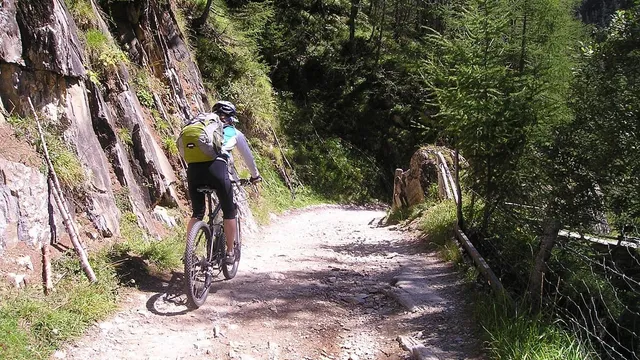
Norway · Bike
Birkebeinerrittet
Rena to Lillehammer, Innlandet
84 kmLast Saturday of August; 28 August 2027
Norway · Trail
Birkebeinerløpet
Birkebeineren Ski Stadium to Håkons Hall, Lillehammer, Innlandet
20.2 kmA Saturday in mid June; 12 June 2027 (29th edition)
Finland · Ski
Finlandia-hiihto
Lahti Sports Centre, Lahti and Hollola, Päijät-Häme
62 kmThird or fourth weekend of February; 20–21 February 2027

Iceland · Ski
Fossavatnsgangan
Seljalandsdalur above Ísafjörður, Westfjords
50 kmThe last Saturday of the Icelandic winter, mid April: 18 April 2026, 17 April 2027, 8 April 2028, 14 April 2029
Sources
Figures and rules on this page come from these pages, read on the dates given. Organisers change dates, fees and rules: check the official site before you enter.
- Birken: Birkebeinerrennet 53 km (race information, rules, cut-offs, logistics) (opens in a new tab) (read 2026-10-14)
- Birken: Birkebeinerrennet 53 km (Norwegian page, licence prices) (opens in a new tab) (read 2026-10-14)
- Birken: SkiBirken overview (opens in a new tab) (read 2026-10-14)
- Birken: Price list SkiBirken 2027 (opens in a new tab) (read 2026-10-14)
- Birken: Price list 2027 (youth price, Birkebeiner Triple) (opens in a new tab) (read 2026-10-14)
- Birken: Sign-up terms and conditions (opens in a new tab) (read 2026-10-14)
- Birken: The Birken backpack weight requirement is being updated (29 May 2026) (opens in a new tab) (read 2026-10-14)
- Birken: FAQ SkiBirken (opens in a new tab) (read 2026-10-14)
- Birken: This is why the start was changed in SkøyteBirken and Birkebeinerrennet 2026 (opens in a new tab) (read 2026-10-14)
- Birken: Everything you need to know about SkiBirken 2026 (opens in a new tab) (read 2026-10-14)
- Birken: Birken 2025 in numbers (opens in a new tab) (read 2026-10-14)
- Birken: Accommodation SkiBirken 2025 (opens in a new tab) (read 2026-10-14)
- Birken: How to get ready for the Birkebeinerrennet (three months to go) (opens in a new tab) (read 2026-10-14)
- Birken: 2 months to go, building capacity (opens in a new tab) (read 2026-10-14)
- Birken: 1 month to go, focus on fresh legs (with tips from previous participants) (opens in a new tab) (read 2026-10-14)
- Birken: The Birkebeiner history (opens in a new tab) (read 2026-10-14)
- Birken: About Birken (opens in a new tab) (read 2026-10-14)
- Birken: Statistics and Birkebeiner medal time limits (2026 SkiBirken statistics PDF, medal times PDF, participants all years PDF) (opens in a new tab) (read 2026-10-14)
- Birken results service: Birkebeinerrennet 2026 (all waves, used for the median) (opens in a new tab) (read 2026-10-14)
- Birken: Results PDF SkiBirken 2025 (used for the 2025 median) (opens in a new tab) (read 2026-10-14)
- Worldloppet: Birkebeinerrennet race page (course altitudes) (opens in a new tab) (read 2026-10-14)
- Worldloppet: Syrstad wins Birkebeinerrennet 2026 (conditions, winning times) (opens in a new tab) (read 2026-10-14)
- Ski Classics: Birkebeinerrennet course description (opens in a new tab) (read 2026-10-14)
- Store norske leksikon: Birkebeinerrennet (history, cancellations, records) (opens in a new tab) (read 2026-10-14)
- Yr: Lillehammer weather statistics (March normal) (opens in a new tab) (read 2026-10-14)
- Yr: Sjusjøen weather statistics (February and March 2026) (opens in a new tab) (read 2026-10-14)
- Norges Bank: EUR/NOK exchange rate 14 October 2026 (opens in a new tab) (read 2026-10-14)