Sweden · Gravel and mountain biking
Cykelvasan
Sälen (Berga by) to Mora, Dalarna
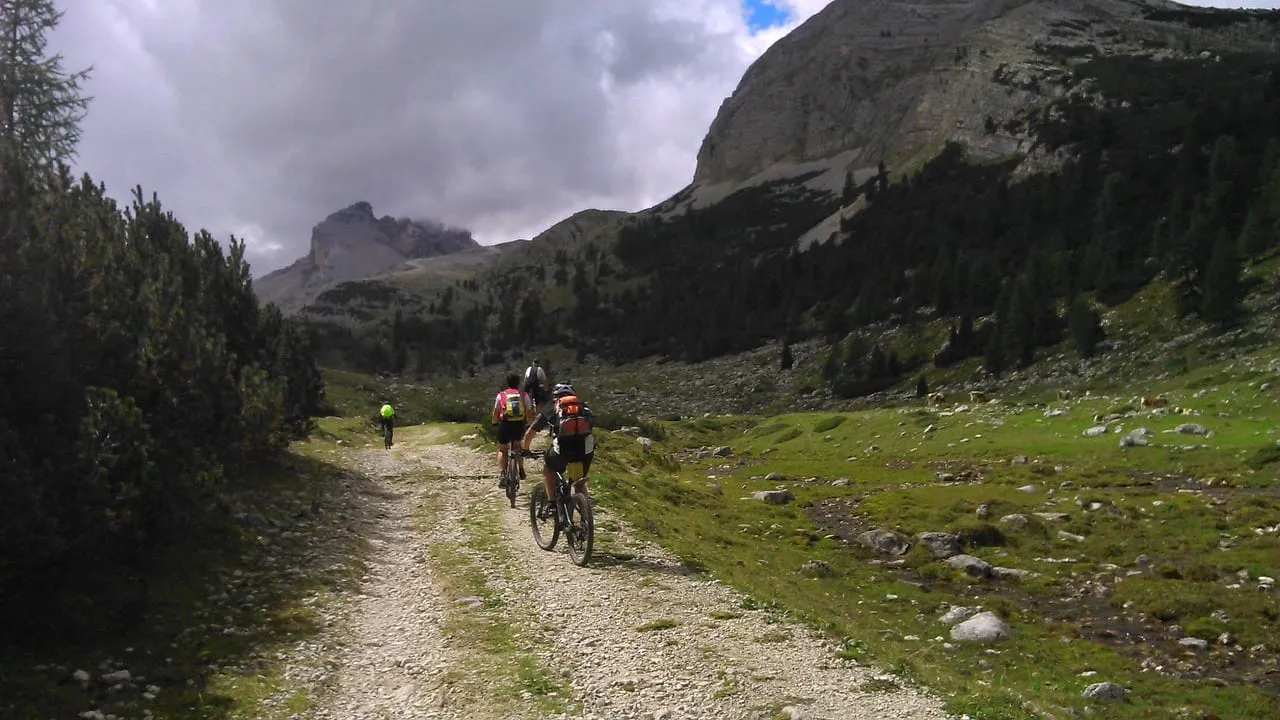
Cykelvasan 90 is a 92 km mountain bike race and ride along the Vasaloppet ski course from Berga by in Sälen to the finish in Mora, held in August and billed as the Nordic region's biggest MTB event. Elite riders race it for a prize pot and a place on Swedish television, while most of the roughly 8,000 starters ride it as a long day on forest roads, gravel and boardwalks. It is a manageable first big off-road ride: the median leisure rider took 4 h 18 min in 2026, and the finish stays open until 20:00.
Official site (opens in a new tab)No. 24 of 41 in the toughness ranking
The race in brief
- Distance
- 92 km
- Format
- 92 km point to point on forest roads, gravel and boardwalks along the Vasaloppet course, with 3 km of asphalt; competition class (separate women's and men's starts) and a leisure class in start groups of about 200 every five minutes
- When
- Saturday in mid-August (14 August 2027)
- Mid-pack time
- 4 h 18 min (median finisher, leisure class, 2026); winners 2 h 31 min (men) and 2 h 54 min (women)
- Cut-off
- Four cut-offs: Evertsberg 16:30, Oxberg 17:45, Hökberg 18:30 and Eldris 19:15; the finish in Mora closes at 20:00
- Entry fee
- 1 644–2 405 kr (Adult fee, 2027 edition; four periods from 5 August 2026 to race week, and 330 kr for riders under 17)
- Field
- Nearly 8,000 registered for Cykelvasan 90 (2026); more than 16,000 across all the week's events
- First held
- 2009
- Other distances
- Cykelvasan 90 (92 km, Saturday) · Cykelvasan Öppet Spår (92 km, Friday) · Cykelvasan 45 (from Oxberg) · Cykelvasan 30 (32 km, from Oxberg) · Ungdomscykelvasan (32 km, youth competition)
- Organiser
- Vasaloppet (Vasaloppsföreningen Sälen-Mora, the clubs IFK Mora and Sälens IF)
Next edition: 2027-08-14 · Open on the organiser's page in October 2026; adult fee rises in four periods up to race week, and the first period listed ends 27 August · Entries (opens in a new tab)
Checked 2026-10-15
How tough is it?
Four meters, each 1 to 5, rated by our published method. The basis under each one shows the figures behind the score. How we rate.
Median net time 4 h 18 min among 6,615 finishers in the leisure class (official 2026 results, Cykelvasan 90 Motion, 2026-08); the fastest tenth took 3 h 29 min and the slowest tenth 5 h 37 min. Winners 2 h 31 min and 2 h 54 min. Inside the 2.5-5 h band, with the slowest tenth over 5 h 30 min. As of 2026-08.
92 km on forest roads and gravel with built boardwalks over marshes and 3 km of asphalt; the organiser calls the course technically straightforward and suitable for any bike that handles gravel (2026-08). The one big early climb is 178 m in the first 3 km to the course's high point of 528 m. Total climb is not published, so the score is a judgement. As of 2026-08.
Mid-August with starts between 08:00 and 12:25, a summer race in inland Dalarna. The organiser described conditions as close to perfect in 2026 (race report, 2026-08). No temperature readings were collected, so this is a judgement; a wet or windy day would feel cooler. There is no mandatory clothing. As of 2026-08.
Cut-offs at four checkpoints (Evertsberg 16:30 to Eldris 19:15) and a 20:00 finish; a median rider finishes in under 5 h, and about 90 per cent of the 7,351 leisure entries in the 2026 results have a finish time (the list includes riders who did not start). No lottery: leisure start group follows registration date unless you seed. No sell-out is reported (organiser, 2026-08). As of 2026-08.
The course
The start is on the field at Berga by in Sälen, the same start as the ski race. The competition women go at 08:00, the men at 09:00, and the leisure groups from 09:15 in groups of about 200 every five minutes. An ATV leads the field for about a kilometre at a limited speed to the road crossing before the first hill, and nobody may pass it. Then comes the one big early effort: a 3 km climb of 178 vertical metres to the highest point on the Vasaloppet course, 528 m above sea level.
From there the course passes seven checkpoints with the classic Vasaloppet names: Smågan (11 km), Mångsbodarna (26 km), Risberg (36 km), Evertsberg (49 km), Oxberg (64 km), Hökberg (74 km) and Eldris (83 km). It runs on forest roads and gravel, with built boardwalks over the marshes, and only about 3 km is asphalt, through Evertsberg and Gopshus and on the finishing stretch into Mora. In 2026 more than 7 km moved from road onto the ski trail between Tennäng and Risberg and between Risberg and Evertsberg, and the distance fell from 95 to 92 km.
When you see the church tower of Mora you are close. At the finish you get a medal, drinks and snacks, then cycle to the showers at Prästholmens IP, where your bag has been delivered by lorry, and back to the finish area for your diploma. All seven checkpoints serve drink and energy, offer simple bike repairs (billed afterwards), and have toilets and medical staff. A time penalty of 15 minutes applies for littering outside the marked zones and bins.
How to enter
Entry is first come, first served and runs online through the organiser; the 2027 race was open on 14 October 2026. In the leisure class your start group depends on your registration date: register early and you start early. You can improve your group by seeding, either automatically from earlier results or by riding a seeding race, and there are separate women's groups in the leisure class (group 18 at 10:20 for under 5 hours and group 30 at 11:20 for over 5 hours).
The adult fee for 2027 is 1,644 kr in period 1 (to 27 August), 2,055 kr from 28 August to 30 April 2027, 2,155 kr from 1 May to 10 August, and 2,405 kr in race week, which is roughly 150 to 215 euros. Riders under 17 pay 330 kr, and you can ride the leisure class from the year you turn 12. The competition class needs a licence from the Swedish Cycling Federation, which the rules say applies to foreign riders as well; the leisure class does not.
Bus booking to the start opens in May 2027 and the bus carries your bike. Start numbers and chips are collected at the race office in Mora the day before or at the Bike Expo at Lindvallen in Sälen in the days before.
How to train for it
Ride four to five hours on gravel
A median leisure finisher is out for about 4 h 18 min, so the key sessions are long rides on forest roads and gravel at an even effort, not intervals. Aim for two or three of 3 to 4 hours before the race, practising eating and drinking on the bike.
Practise the first climb and the queue
The 3 km, 178 m climb comes right after a controlled start, with the whole group on the same hill. Train a steady 10 to 15 minute climb at a pace you can hold, and expect some walking or stop-start riding if you start in a late group.
Get comfortable on boardwalks and loose gravel
The course uses built boardwalks over marshes and gravel roads. Practise riding in a straight line at moderate speed on narrow planks and cornering on loose surfaces, because riders around you will be tired and close together.
Use the checkpoints to eat
There are seven checkpoints with drink and energy, 10 to 15 km apart. Plan to take something at each one and carry your own bar or gel for the first 11 km to Smågan, where the first station is.
Ride with others of your pace
Start groups leave every five minutes, so pack riding is natural. Practise riding in a group at a steady wheel, calling hazards and passing on the left, as the organiser asks riders to call out keep right and passing on the left.
What you need
- Approved cycling helmet, worn throughout, including in the start area and between the finish and the showers
- A bike that handles gravel: any mountain bike, gravel bike or cyclocross bike; drop handlebars are allowed in the leisure class but not in the competition class
- Bib and timing chip; both are needed to start
- Not allowed: headphones, e-bikes, tow bikes, trailers, child seats and tandems in the competition class and early leisure groups
- A drink bottle that fits your bottle cage; bottles unsuited to the cage are not allowed
- Puncture repair kit, spare tube and a pump; checkpoint mechanics help with simple repairs but not between stations
- A dry change of clothes in a bag for the lorry to Mora, handed in at the start
Getting there and staying
The start is in Sälen and the finish is in Mora, 92 km apart. The organiser recommends the official bus to the start and asks riders to use it to protect the environment and avoid queues; the ticket includes bike transport, and your bike must carry a start number or sticker when handed in. Bus booking opens in May 2027. You should be in the start area at least 30 minutes before your start.
The Vasaloppet Bike Festival, with the shorter races and an expo, runs at Lindvallen in Sälen through the week. After the finish there is guarded, free bike parking at the finish area and at Prästholmen. Accommodation is through the region; the race page lists no accommodation, so look to the Sälen and Mora tourist offices and book early for race week.
History
Cykelvasan was first held in 2009, when about 40 km of the course ran on asphalt; today only 3 km is paved, after repeated moves onto the ski trail, most recently in 2026. The competition winner receives 40,000 kr, and the 2026 race added a points-based sprint competition across all seven checkpoints.
Where to find out more
- Cykelvasan 90 (opens in a new tab): Organiser's page with fees, start times, checkpoints, cut-offs, seeding and bus booking.
- Rules and equipment (opens in a new tab): Helmet and bike rules, minimum ages, licence for the competition class and the littering penalty.
- Results 2026 (opens in a new tab): Official finishing times for Cykelvasan 90 (Motion), the leisure class.
Questions about Cykelvasan
How long does Cykelvasan 90 take?
The median leisure-class finisher in 2026 took 4 h 18 min net. The fastest tenth were under 3 h 30 min and the slowest tenth over 5 h 30 min. The winners took 2 h 31 min (men) and 2 h 54 min (women), both course records on the new 92 km route.
What are the cut-off times?
Evertsberg 16:30, Oxberg 17:45, Hökberg 18:30 and Eldris 19:15, with the finish in Mora closing at 20:00. You must leave a checkpoint within 10 minutes of its limit. If you are too late you are bussed to Mora.
How much does it cost to enter?
For 2027 the adult fee is 1,644 kr in the first period (to 27 August 2026), then 2,055, 2,155 and 2,405 kr in race week; roughly 150 to 215 euros. Riders under 17 pay 330 kr.
Do I need a special bike or a licence?
Any bike that handles gravel roads will do, and drop handlebars are allowed in the leisure class. A licence from the Swedish Cycling Federation is only needed for the competition class. An approved helmet is mandatory; e-bikes and headphones are not allowed.
Is Cykelvasan the same course as the ski race?
It follows the Vasaloppet route from Sälen to Mora and passes the same seven checkpoints, but the 2026 route is 92 km, 3 km shorter than before, and runs on forest roads, gravel and boardwalks rather than on the ski track throughout.
Similar races
Sweden · Bike
Vätternrundan
Motala, around Lake Vättern (Östergötland, Jönköping and Västra Götaland counties)
315 kmFriday evening to Saturday in mid-June (18-19 June 2027; 12-13 June 2026)
Sweden · Ski
Vasaloppet
Sälen (Berga by) to Mora, Dalarna
90 kmFirst Sunday of March (7 March 2027)
Norway · Bike
Birkebeinerrittet
Rena to Lillehammer, Innlandet
84 kmLast Saturday of August; 28 August 2027
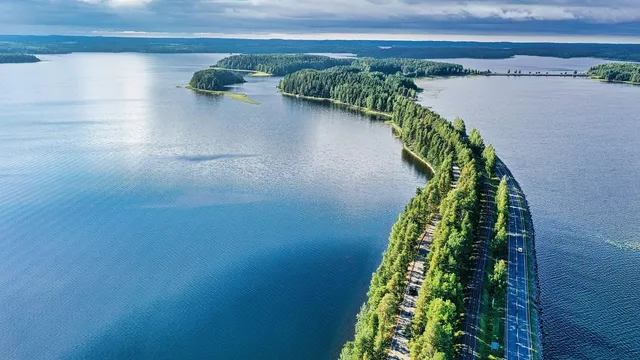
Finland · Bike
Tahko MTB
Tahko (Tahkovuori), Nilsiä, Kuopio, North Savo
60 kmFriday and Saturday of the weekend after Midsummer (2–3 July 2027; 26–27 June 2026)
Sources
Figures and rules on this page come from these pages, read on the dates given. Organisers change dates, fees and rules: check the official site before you enter.
- Cykelvasan 90 (race page: fees, start times, cut-offs, checkpoints) (opens in a new tab) (read 2026-10-15)
- Vasaloppet - Rules (bike rules, licence, helmet, litter penalty) (opens in a new tab) (read 2026-10-15)
- Ahead of Cykelvasan 90 2026 - news, facts and trivia (5 August 2026) (opens in a new tab) (read 2026-10-15)
- Double course records in Cykelvasan 90 2026 (8 August 2026) (opens in a new tab) (read 2026-10-15)
- Vasaloppet results 2026 - Cykelvasan 90 (Motion), full list read for the median (opens in a new tab) (read 2026-10-15)