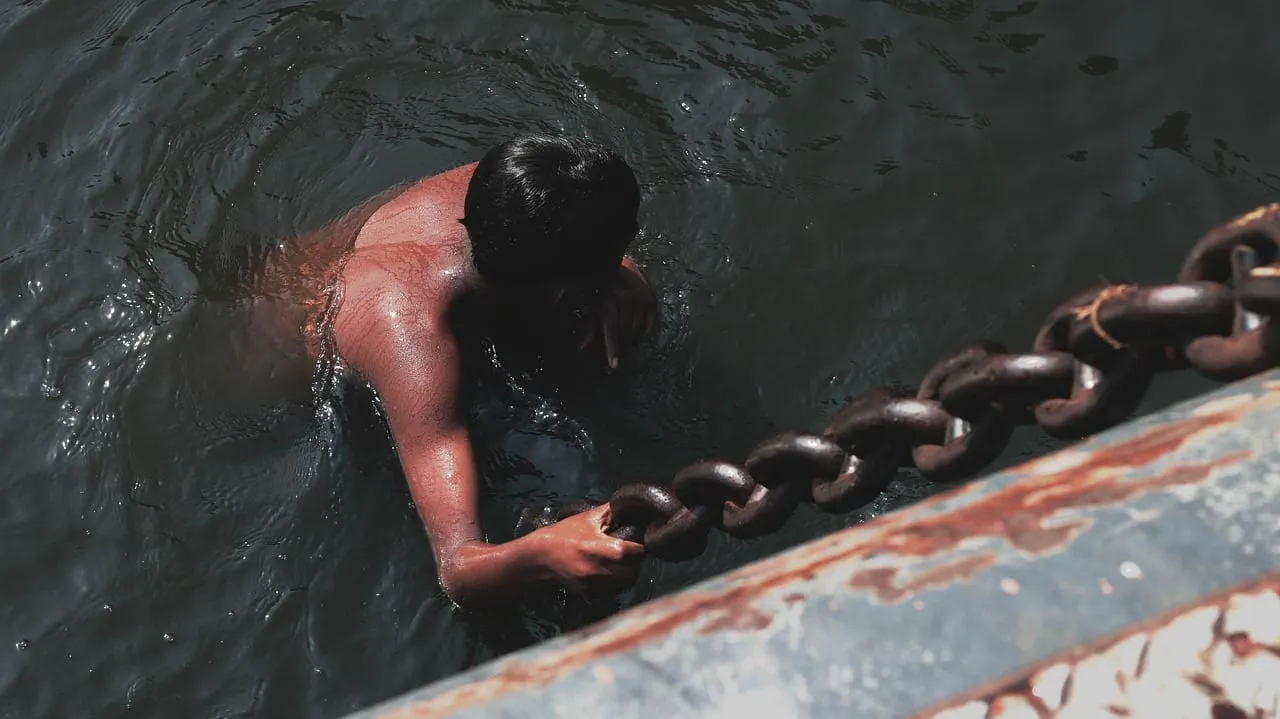
Sweden · Open water and winter swimming
Vansbrosimningen
Vansbro, Dalarna (Vanån and Västerdalälven)
Vansbrosimningen is Sweden's biggest open-water swim: 3,000 m in two rivers in Vansbro, started in 1950 and one of the five En Svensk Klassiker races. The first 2,000 m run with the current in Vanån and the last 1,000 m against it in Västerdalälven. Around 5,900 people entered in 2026, mostly recreational swimmers in wetsuits, and fewer than one per cent of all swimmers that week gave up.
Official site (opens in a new tab)Joint no. 33 of 41 in the toughness ranking
The race in brief
- Distance
- 3 km
- Format
- 3,000 m in two rivers: 2,000 m downstream in Vanån, then 1,000 m upstream in Västerdalälven; individual starts every few minutes for recreational swimmers, mass start for the licensed elite; wetsuit allowed
- When
- A Saturday in early July (10 July 2027; 4 July 2026), in a swim week of about 10 days
- Mid-pack time
- About 1 h 10 min (the organiser's own average for recreational swimmers, 1 h 09 min 54 s; winners finished in 29 min 55 s and 33 min 35 s in 2026)
- Cut-off
- No cut-off time is published. The race is cancelled if the water is under 12 degrees C and the 3 km needs at least 14 degrees; start groups fill up
- Entry fee
- 1 345–1 545 kr (2027 edition: 1,345 kr to 30 November 2026, 1,445 kr to 30 April 2027, 1,545 kr to 9 July (about 120 to 140 euros); 345 kr for under-18s. Includes hot food, a hot shower, medal, diploma and clothes transport from start to finish)
- Field
- About 5,900 registered for the 3 km in 2026 (12,600 across the whole event week)
- First held
- 1950
- Other distances
- Vansbrosimningen 3,000 m · Vansbro Öppen Älv 3,000 m (same course, other dates) · Vansbro Halvsim 1,500 m · Vansbro Kortsim 1,000 m · Vansbro Tjejsim 1,000 m · Vansbro 10K · Vansbro Vintersim
- Organiser
- Vansbrosimningen (local clubs and Vansbro Simsällskap)
Next edition: 2027-07-10 · Entries open for summer 2027 at 1,345 kr to 30 November; Vansbro Vintersim entries open 25 November; swim week 3 to 10 July 2027 · Entries (opens in a new tab)
Checked 2026-10-15
How tough is it?
Four meters, each 1 to 5, rated by our published method. The basis under each one shows the figures behind the score. How we rate.
The organiser gives an average finishing time of 1 h 09 min 54 s for recreational swimmers (history page, undated). It is an average, not a median from a results file I could read. Winners in 2026: 29 min 55 s (men) and 33 min 35 s (women). Course record 28 min 42 s (2025). As of 2026-07.
Open water in two rivers: 2 km with the current in Vanån and 1 km against it in Västerdalälven, with 1,900 m of piers beside the course and rescue boats and paddleboards where there are none. No technical sections, so it could be rated 3. Water flow can change the course length. As of 2026-07.
Early July. The water was 19 to 20 degrees C in 2026; wetsuits are recommended between 12 and 22 degrees. The race needs at least 14 degrees for 3,000 m and is cancelled below 12. Neoprene gloves, socks and hood are allowed in the recreational classes. Borderline 2 to 3. As of 2026-07.
No cut-off time is published; swimmers may rest at piers or boats in the free-stroke classes. Entry is online and open to all from age 10 (licence only for the elite and youth competitive groups). Start groups can fill: in 2026 the first free group was at 15:10 the day before. Borderline 1 to 2. As of 2026-07.
The course
You swim 3,000 m in two stretches: 2,000 m with the current in Vanån, then 1,000 m against it in the main river Västerdalälven, finishing at the arena. The organiser says the race was first swum in 1950 under the six bridges of Vansbro. Vansbro Öppen Älv is the same distance and course on other days if the Saturday is full.
Starts for the recreational classes are in groups throughout the day, from 10:55 to 14:55 in the 2027 programme, with each swimmer registered through a start pen and timed individually. Elite men and women go off first on a rope start. Seeded groups exist for those under 52 and under 56 minutes.
Most of the difficulty is mental: swimming in a river beside piers, sighting without lane lines, and the last kilometre against the flow. Water level and flow can change the route and length, and in that case there is no refund.
How to enter
Entry is through the organiser's site (entry.vansbrosimningen.se); for 2027 it opened in autumn 2026. The fee rises in steps (1,345 kr to 30 November, 1,445 kr to 30 April, 1,545 kr to 9 July). The minimum age is 10, and a competitive licence from Open Water Licens is needed only for the elite and youth competitive start groups, plus a swim club membership.
The race is part of En Svensk Klassiker, together with Vasaloppet, Engelbrektsloppet, Lidingöloppet and Vätternrundan. Seeding for the competitive groups uses results from the last two years or from listed external races (such as Stockholm Swim Festival or Karl-Oskarsimmet).
How to train for it
Practise swimming in a river, not a pool
The race has no lane lines or wall to push off. Do open-water sessions where you sight every few strokes, and swim some of your distance against a current or wind.
Prepare for the upstream last kilometre
The final 1,000 m is against the flow, when you are already tired. Do sets that get harder in the second half and practise holding your stroke rate.
Test your wetsuit before the date
The organiser advises trying the suit well in advance; check the fit around the shoulders and neck over several swims.
Swim 3,000 m continuously before race week
Do at least one continuous 3 km swim, in a lake or sea, so the distance holds no surprises. Rest at a pier is allowed in the free-stroke classes.
Use a seeding race if you want a fast group
For the faster start groups the organiser accepts results from listed races such as the Stockholm Swim Festival, Runn Open Water and Karl-Oskarsimmet.
What you need
- A wetsuit tested in open water; recommended between 12 and 22 degrees, not recommended above 23.
- Vansbrosimningen's own swim cap (worn over your own if you have one), provided at pick-up.
- The timing chip on your wrist and your start proof, released in June.
- Warm dry clothes: your bag is transported from start to finish, and a warm tent and a hot shower wait at the end.
- Goggles; a safety buoy is allowed only in the 10K.
Getting there and staying
Vansbro is in western Dalarna and has no passenger trains. The organiser runs same-day coach trips from Stockholm and from Gothenburg to the event, with times updated for 2027, and recommends car-sharing; traffic is heavy on race days.
Accommodation in Vansbro and nearby can be booked through the organiser and Visit Dalarna, and sells out early for the event week. Clothes go by lorry from start to finish, and a mobile health centre with four doctors, eight pick-up points with nurses and ambulances stand ready.
History
Two Vansbro men, Einar Anselius and Mats Qvarfot, started the swim in 1950 to promote swimming; ten people swam and nine finished. It became a competition in 1956 and has grown to more than 12,000 participants a year (organiser's history page and 2026 summary).
Where to find out more
- Vansbrosimningen 3 km (opens in a new tab): The organiser's race page with prices and start groups.
- Competition rules (opens in a new tab): Wetsuit, cap and water temperature rules.
- Vansbro Vintersim (opens in a new tab): The winter swim in a pool sawn in the river ice, 13 February 2027.
Questions about Vansbrosimningen
Is the 3 km with the current?
Only partly. The first 2,000 m are downstream in Vanån and the last 1,000 m are upstream in Västerdalälven (vansbrosimningen.se, 2027 race page).
Do I need a wetsuit?
It is allowed, and recommended between 12 and 22 degrees. The recreational classes may also use neoprene gloves, socks and a hood. The race is cancelled below 12 degrees and the 3 km needs 14 degrees (competition rules, 2026).
What about the winter swim?
Vansbro Vintersim is on 13 February 2027 in Västerdalälven next to the finish area: 25 m or 50 m swims or a 4 x 25 m relay in an ice pool of about 8 x 25 m, plus a dip in the ice hole. The minimum age is 18, entries open on 25 November and start at 395 kr per swim, 150 kr for the dip.
How many people swim?
About 5,900 entered the 3 km in 2026, 12,600 across the whole event week; fewer than one per cent did not finish their swim (organiser, July 2026).
Similar races
Denmark · Swim
TrygFonden Copenhagen Swim (Christiansborg Rundt)
Slotsholmen canals and harbour, central Copenhagen (start and finish at the Black Diamond)
2 kmThe last full weekend in August: 27 and 28 August 2027 (2026 was 28 and 29 August)
Sweden · Swim
Skellefteå Winter Swim (World Cup Winter Swimming)
Kurjovikens Havsmarina, Skelleftehamn, Västerbotten
0.025 kmThird weekend of February (19 to 21 February 2027; 27 February to 1 March 2026)
Sweden · Ski
Vasaloppet
Sälen (Berga by) to Mora, Dalarna
90 kmFirst Sunday of March (7 March 2027)
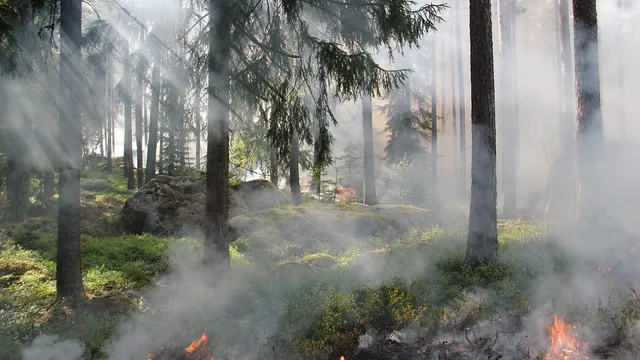
Sweden · Trail
Lidingöloppet
Lidingö, Stockholm
30 kmLast weekend of September; the 30 km is on the Saturday (25 September 2027)
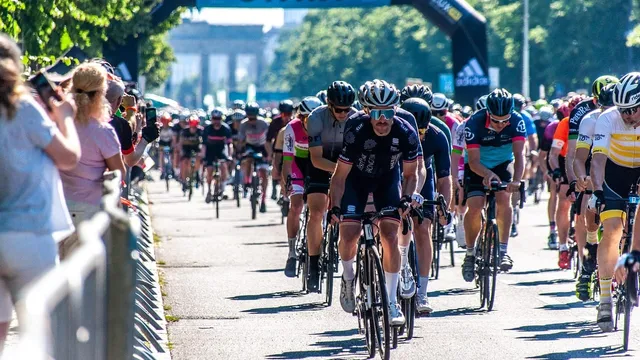
Sweden · Bike
Vätternrundan
Motala, around Lake Vättern (Östergötland, Jönköping and Västra Götaland counties)
315 kmFriday evening to Saturday in mid-June (18-19 June 2027; 12-13 June 2026)
Sources
Figures and rules on this page come from these pages, read on the dates given. Organisers change dates, fees and rules: check the official site before you enter.
- Vansbrosimningen: 3 km race page (opens in a new tab) (read 2026-10-15)
- Vansbrosimningen: home page (opens in a new tab) (read 2026-10-15)
- Vansbrosimningen: competition rules (opens in a new tab) (read 2026-10-15)
- Vansbrosimningen: start times 2027 (opens in a new tab) (read 2026-10-15)
- Vansbrosimningen: seeding (opens in a new tab) (read 2026-10-15)
- Vansbrosimningen: safety (opens in a new tab) (read 2026-10-15)
- Vansbrosimningen: facts and statistics (opens in a new tab) (read 2026-10-15)
- Vansbrosimningen: history (opens in a new tab) (read 2026-10-15)
- Vansbrosimningen: travel, stay and do (opens in a new tab) (read 2026-10-15)
- Vansbrosimningen: summary of the 2026 event (opens in a new tab) (read 2026-10-15)
- Vansbrosimningen: Lithuanian win in 2026 (opens in a new tab) (read 2026-10-15)
- Vansbrosimningen: notice on start groups 2026 (opens in a new tab) (read 2026-10-15)
- Vansbro Vintersim (opens in a new tab) (read 2026-10-15)